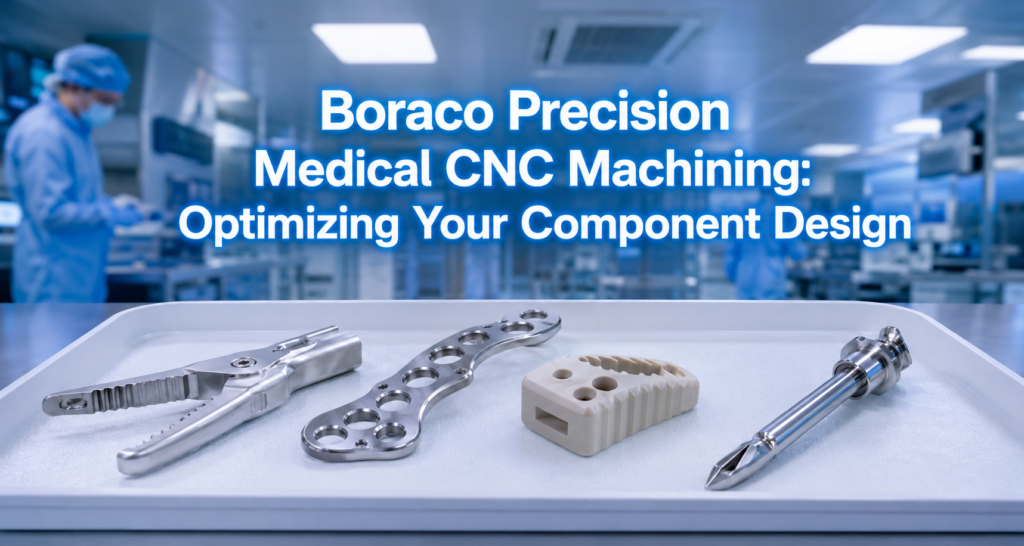
Boraco Precision Medical CNC Machining: Optimizing Your Component Design
The Intersection of Precision Automotive Machining and Medical Manufacturing
While the application fields differ, the underlying requirements for high-precision medical cnc and complex automotive machining share identical demands for accuracy, reliability, and material traceability. Engineers navigating the complex landscape of medical device machining often find that the strategies employed in automotive machining—such as lean production, rapid tool compensation, and strict heat management—are directly transferable to the production of high-end surgical tools and diagnostic equipment. Achieving success in medical cnc machining requires a commitment to a “Zero Defect” culture that mirrors the rigorous safety protocols found in the automotive industry. At Boraco Machining, we leverage our deep background in precision manufacturing to provide medical machining services that exceed standard industrial expectations. Whether producing cnc medical parts for robotic surgery or high-wear components for diagnostic scanners, the goal remains the same: delivering a product that maintains its dimensional stability under the most demanding conditions. By utilizing advanced 5-axis automotive machining platforms adapted for biocompatible materials like Titanium and 316L Stainless Steel, we provide the accuracy that modern medical device precision machining demands.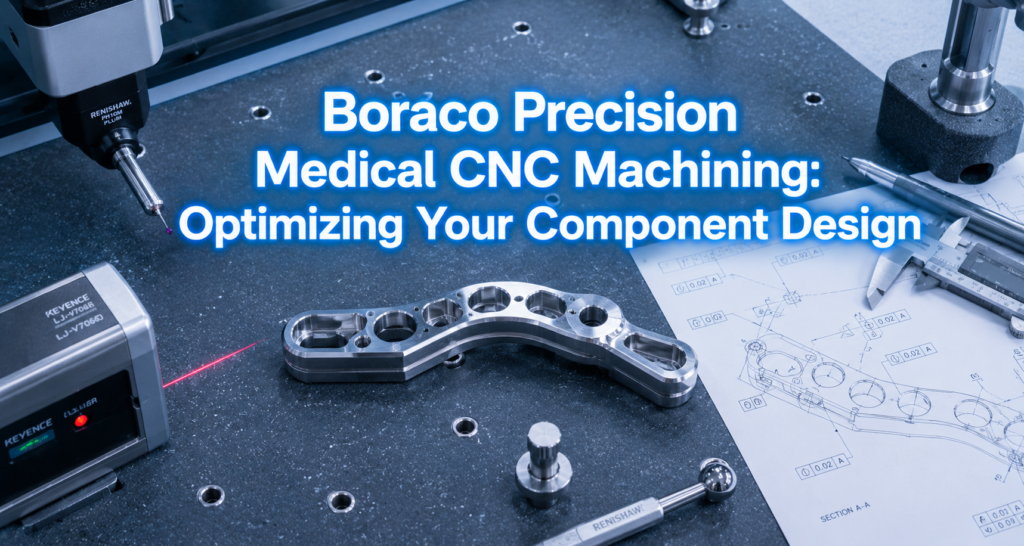
Material Science and Biocompatibility in Medical CNC Machining
Selecting the correct material for medical instrument machining is arguably more critical than the machining process itself. Unlike automotive machining, where material choices often focus on tensile strength and fatigue resistance, medical cnc machining requires materials that pass strict biocompatibility testing—such as those dictated by ISO 10993 standards. Titanium (Grade 5/Ti6Al4V) is the gold standard for its strength and osseointegration properties, yet it presents significant challenges to the medical device machine shop due to its low thermal conductivity and work-hardening tendencies. Effective precision medical machining requires that the tooling strategy be tuned specifically to the material’s work-hardening rate. When we execute custom medical cnc machining, our engineers utilize high-pressure coolant delivery and specific chip-breaking geometries to prevent the tool from “rubbing” against the part, which would otherwise lead to surface hardening and subsequent failure of the tool. This expertise in material-specific automotive machining protocols is what separates top-tier medical cnc machining company providers from standard job shops. The following table outlines key parameters for common materials utilized in high-end cnc machining for medical industry applications:| Material | Typical Application | Tolerance Range (mm) | Surface Finish (Ra) |
|---|---|---|---|
| Titanium Grade 5 | Implants/Surgical tools | ±0.005 – 0.01 | 0.4 – 0.8 µm |
| Stainless Steel 316L | Surgical instruments | ±0.01 – 0.02 | 0.2 – 0.4 µm |
| PEEK (Plastic) | Spinal cages/connectors | ±0.02 – 0.05 | 0.8 – 1.6 µm |
What is Machinability?
Machinability refers to the relative ease with which a material can be cut, shaped, or drilled by a machine tool. In medical device machining, it is not merely a measure of how fast a part can be produced, but how well it maintains its dimensional integrity and surface finish after the cutting force is applied. Higher machinability ratings (e.g., free-cutting brass) imply lower tool wear and faster cycle times, whereas low machinability materials (like Titanium or Inconel) require specialized, slower feeds and high-performance, heat-resistant tooling. Mastering these variations is the core differentiator in high-quality custom medical machining.Tolerance Strategies and Metrology in Precision Medical Machining
In the realm of medtech machined components, “close enough” is never acceptable. Surgical robots and micro-invasive tools often require tolerances that push the physical limits of standard medical cnc platforms. When you need precision parts for medical devices, you are essentially asking for a marriage between traditional mechanical engineering and microscopic quality control. Much like the critical tolerances managed in automotive machining for fuel injection components, medical parts must function flawlessly on the first attempt. To achieve these results, we utilize advanced metrology, including coordinate measuring machines (CMM) and optical scanning, to verify that every component meets the original design intent. Procurement managers evaluating potential manufacturing partners should prioritize those who provide transparent inspection reports. At Boraco Machining, our commitment to quality control ensures that even the most complex medical machined components are verified to the micron, providing the assurance required for life-critical applications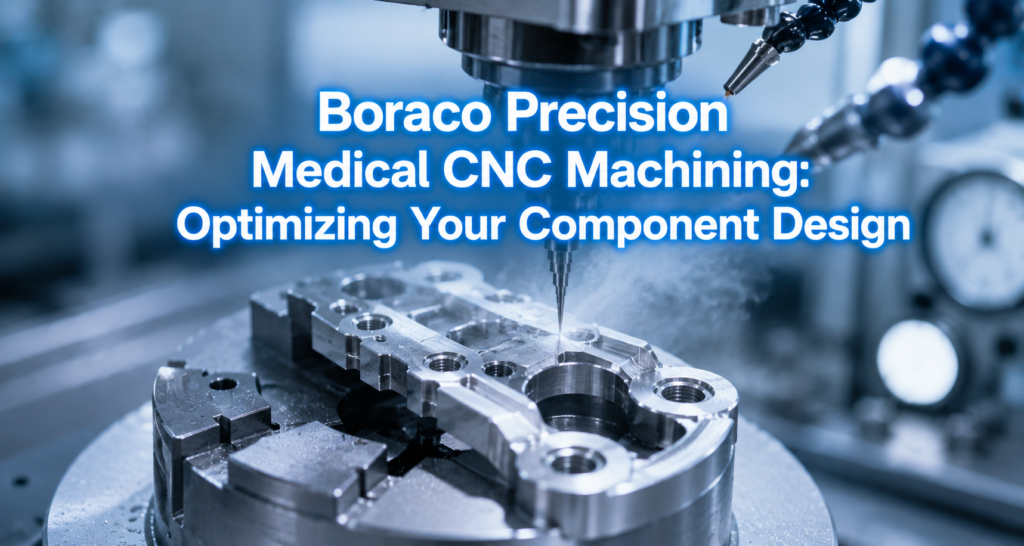
Rapid Prototyping for Medical Devices: Speeding Up Time-to-Market
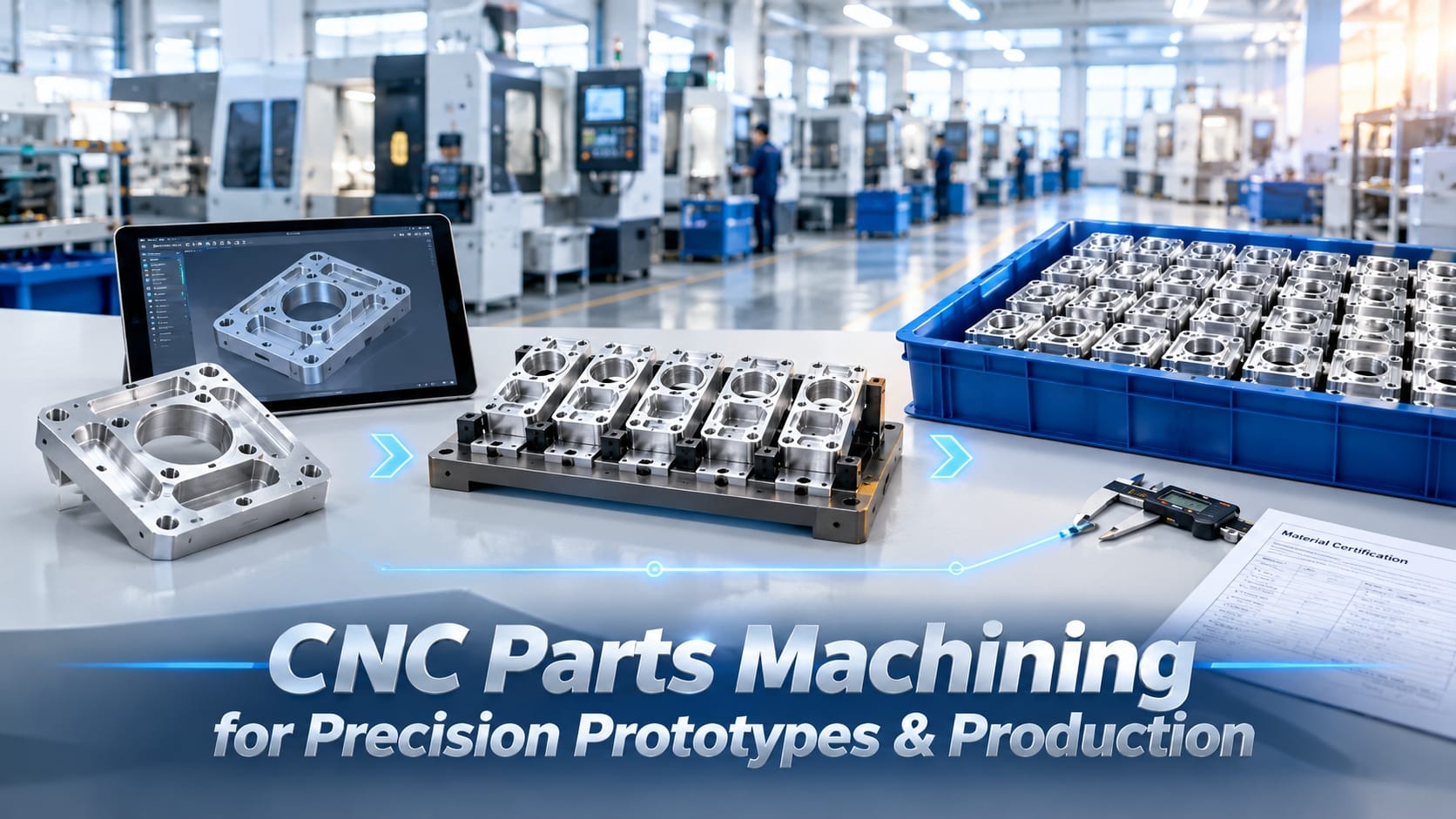
The medical industry is under constant pressure to iterate quickly. Rapid prototyping for medical devices is essential for testing new surgical techniques or diagnostic concepts. While many firms rely on 3D printing for early-stage models, functional validation requires the structural density provided by cnc machining for medical industry. Boraco Machining facilitates this transition by providing high-speed prototyping that uses the exact same production-grade materials and automotive machining precision as the final design. Whether you are developing a new medical device cnc machining assembly or need a quick turn on a prototype, our workflow is optimized for speed and accuracy. By utilizing our state-of-the-art facility, we can often move from a conceptual 3D model to a functional, certified prototype in record time. This capability is particularly important for medical machining specialists who need to satisfy both clinical feedback and regulatory requirements simultaneously. Sourcing managers who leverage our medical machining services benefit from a streamlined process that minimizes communication gaps. By handling the cnc medical parts manufacturing in-house, we eliminate the need for secondary vendors, ensuring that your prototype remains consistent throughout the development cycle. For those who need to scale from a prototype to mass production, our expertise in custom medical cnc machining ensures that the design is “ready for manufacturing” before the first production run ever begins.Request a Quote for Your Medical CNC Project
Strategic Global Sourcing: The Advantage of Professional Manufacturing
In an era where supply chain stability is paramount, choosing from reputable china cnc machining suppliers provides a significant strategic advantage. Modern facilities in Dongguan are at the forefront of precision machining for the medical sector, integrating advanced technologies with lean manufacturing principles. While some buyers worry about distance, the reality is that expert medical device machine shop providers offer a level of technical support that is increasingly rare in domestic markets. When you choose Boraco Machining, you are choosing a partner that understands the intersection of custom cnc requirements and global quality standards. Our facility is ISO 9001:2015 certified, and we maintain rigorous documentation for every component we manufacture. This level of traceability is essential for medical cnc machining, where documentation is as important as the part itself. By streamlining the sourcing process, we allow your team to focus on the innovation and development of your medical device, rather than the logistics of manufacturing. Furthermore, our expertise in automotive machining provides us with a unique perspective on managing high-volume production without sacrificing the precision required for medical machined components. We don’t just “cut metal”—we engineer manufacturing processes that ensure your parts are produced efficiently, consistently, and to the highest industry standards. Whether you need a small batch of medical device cnc machining prototypes or a mass production run, our team is equipped to meet your demands with precision and integrity.Contact Our Engineering Team to Start Your Project
Conclusion
Selecting the right partner for medical cnc machining is a strategic decision that impacts the quality, reliability, and market viability of your medical devices. By leveraging the technical precision of automotive machining combined with strict biocompatible manufacturing standards, you ensure a smoother production lifecycle and higher component fidelity. If you are ready to optimize your component design and ensure flawless quality, contact the experts at Boraco Machining today. We are prepared to assist with your most demanding cnc machining medical projects.Frequently Asked Questions (FAQ)
How does Boraco ensure quality in medical CNC machining?
We maintain strict adherence to ISO 9001:2015 standards, utilize advanced CMM and optical inspection equipment, and provide full material traceability for every batch of medical components.
Can you machine biocompatible materials like Titanium?
Yes, we have extensive experience in machining Titanium Grade 5 and other biocompatible materials using specialized tooling and process parameters designed to maintain material integrity and surface finish.
What is the advantage of using your CNC services for prototyping?
We use production-grade materials and professional-grade machining processes, meaning our prototypes provide accurate structural and mechanical data that 3D-printed models cannot offer.
Do you support DFM (Design for Manufacturability) reviews?
Absolutely. Our engineering team reviews all CAD designs to suggest optimizations that reduce production costs, improve tool life, and ensure the part is fully manufacturable before production begins.