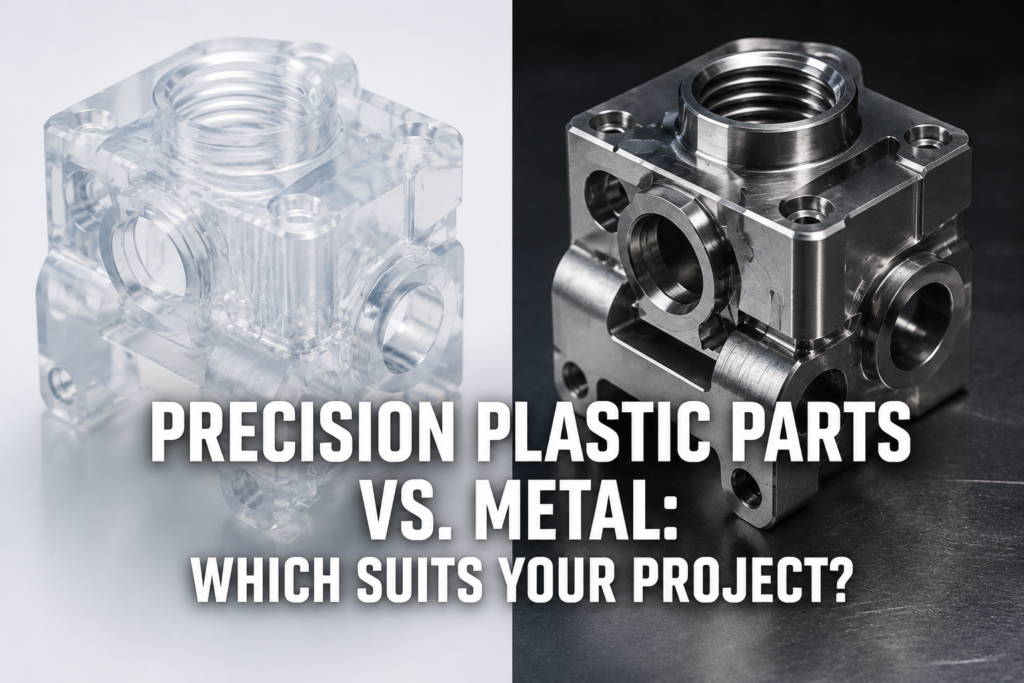
Plastic vs Metal for Custom Precision Parts
Selecting between high-performance polymers and advanced alloys for tight-tolerance components directly impacts your project’s cost, lead time, and operational performance. This guide analyzes the structural differences, manufacturing constraints, and cost drivers to help procurement managers and OEM engineers source the optimal custom precision parts.
Mechanical and Thermal Properties of Precision Components
When engineering custom precision parts, raw material selection forms the foundation of component longevity and geometric integrity. Metal precision parts machined from aluminum, stainless steel, and titanium offer high tensile strength, exceptional yield strength, and superior thermal stability. These characteristics make them ideal for heavy precision machining applications within the automotive, industrial machinery, and aerospace sectors, where parts must withstand intense mechanical stress without undergoing permanent deformation.
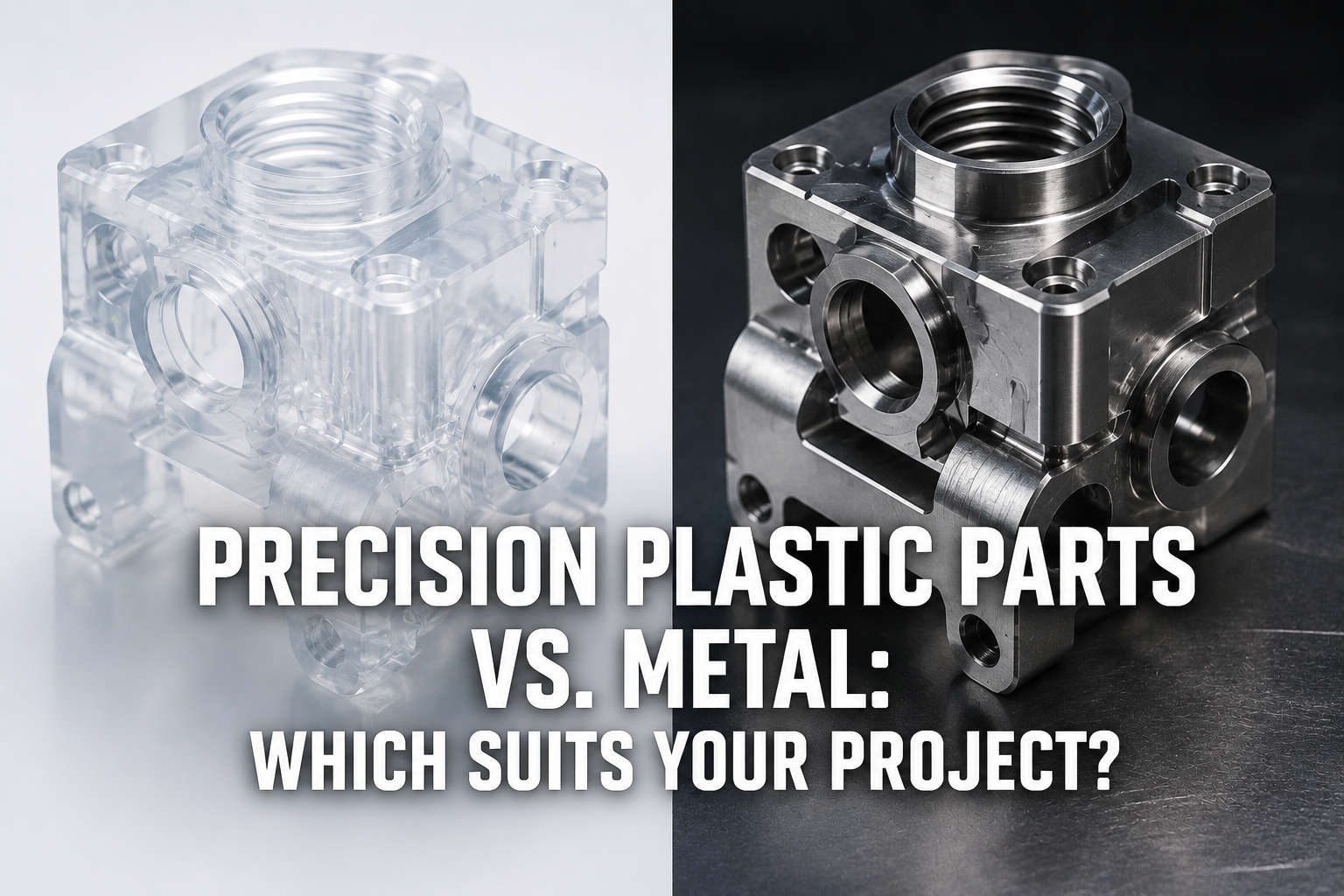
Conversely, advanced polymers have evolved to challenge metals in specific high-performance environments. High-quality precision plastic parts utilize engineering-grade resins like PEEK, Delrin (POM), and PTFE. While these materials exhibit lower absolute tensile strength than precision metal components, they offer exceptional strength-to-weight ratios, chemical resistance, and electrical insulation properties. For instance, in modern electronics and aerospace designs, substituting metal precision parts with lightweight polymers can significantly reduce total system mass while maintaining mechanical performance.
Thermal performance remains a critical separator between structural metals and engineering plastics. Metals expand and contract predictably under fluctuating temperatures, making them highly stable across wide thermal windows. Plastics, however, possess a much higher coefficient of thermal expansion (CTE). When processing custom precision parts from polymers, engineers must account for environmental operating temperatures to prevent localized thermal expansion from compromising tight tolerances. Utilizing an experienced precision machine shop ensures these environmental variables are factored into the initial machining strategies.
| Material Class | Common Grade | Tensile Strength (MPa) | Thermal Expansion (10^-6/K) | Achievable Tolerance (mm) | Surface Finish (Ra µm) |
|---|---|---|---|---|---|
| Precision Metal | Aluminum 6061-T6 | 310 | 23.4 | ±0.005 | 0.4 to 0.8 |
| Precision Metal | Stainless Steel 316 | 515 | 16.0 | ±0.005 | 0.2 to 0.4 |
| Precision Plastic | PEEK (Virgin) | 100 | 47.0 | ±0.025 | 0.8 to 1.6 |
| Precision Plastic | POM (Acetal) | 65 | 85.0 | ±0.020 | 0.8 to 1.6 |
Manufacturing Constraints in Precision CNC Machining
The manufacturing strategy for custom precision parts depends strictly on how material structural characteristics interact with cutting tools. Processes like precision cnc turning and precision cnc milling require highly specific machine setups to achieve standard blueprint callouts. In metal machining, tool deflection, chip management, and heat dissipation represent the primary engineering challenges. Machining harder metals requires rigid setups, robust cutting inserts, and precise coolant distribution to maintain dimensional consistency across high-volume production batches.
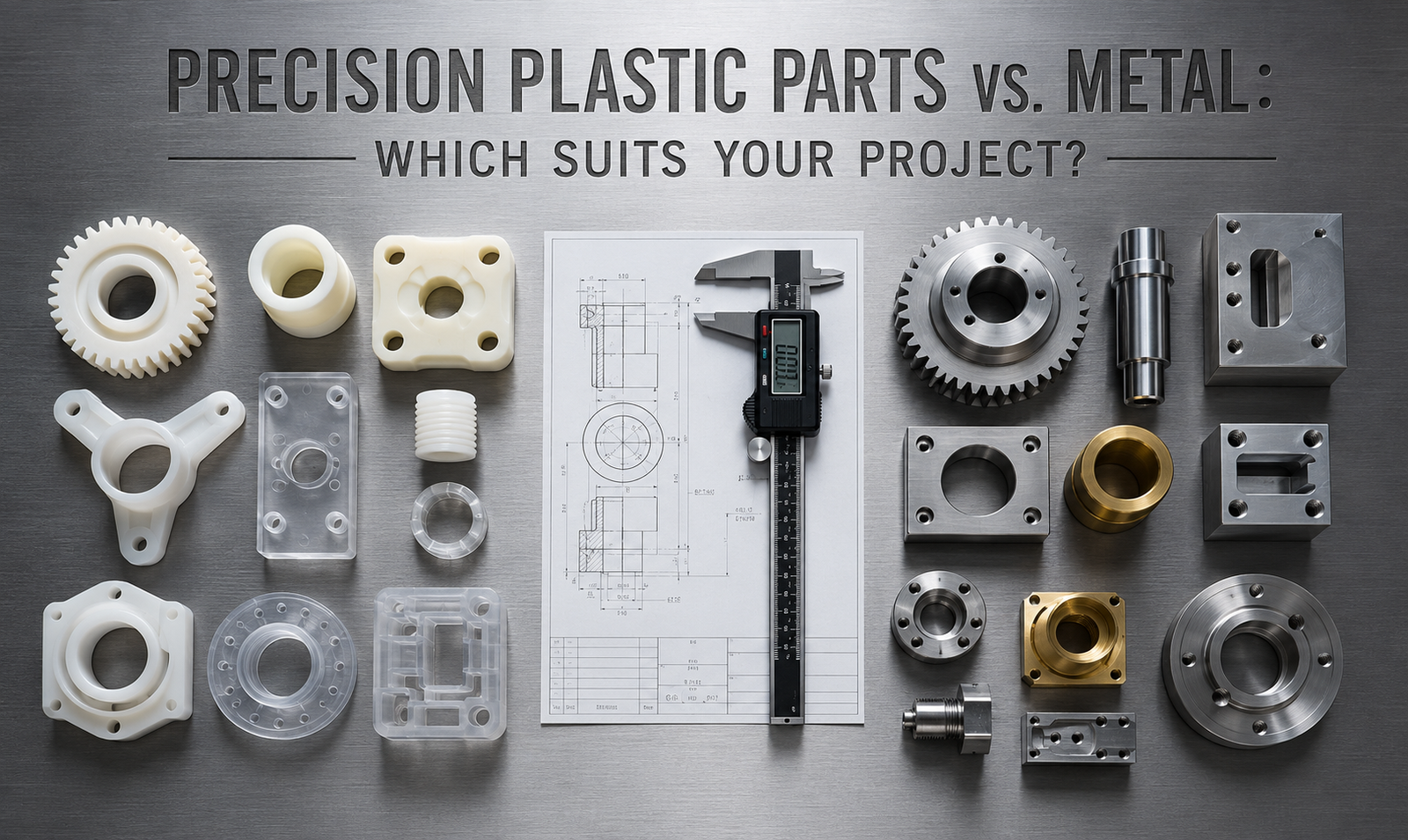
When executing precision turned components or precision milling parts out of polymers, the engineering constraints change completely. Plastics are susceptible to elastic deformation and localized melting during material removal. If a cutting tool generates excessive friction, the plastic workpiece will soften, warp, or gum up the cutter, resulting in out-of-tolerance custom precision parts. Consequently, machinists must utilize razor-sharp tool geometries, high spindle speeds, and optimized feed rates specifically tailored to polymer physics.
Advanced subtractive methods like precision micromachining and heavy precision machining demand distinct equipment configurations. While a standard precision parts factory can execute basic geometry, components featuring multi-axis configurations or intricate internal channels require advanced precision cnc services. High-end multi-axis machining centers allow for single-setup processing of complex custom precision parts, significantly reducing geometric errors associated with part repositioning.
Machinability defines the ease with which a raw material can be cut while maintaining an acceptable surface finish and maximizing tool life. In precision machining parts processing, machinability is quantified using variables such as cutting forces, chip formation characteristics, power consumption, and resulting surface roughness (measured in Ra). Metals like precision brass machining stocks exhibit high machinability ratings due to clean chip fracturing, whereas elastic polymers require specialized tool paths to prevent material deflection away from the cutting edge.
Cost Drivers in Precision Parts Processing
To accurately evaluate the total cost of ownership for custom precision parts, procurement managers must look beyond raw material pricing. While engineering plastics like PEEK carry high material purchase prices, their rapid material removal rates often reduce machine cycle time. Conversely, metal precision parts processing typically demands longer cycles, higher tool wear costs, and intensive secondary operations like deburring, anodizing, or heat treating to achieve finalized functional requirements.
Volume represents another major variable influencing the financial metrics of custom cnc manufacturing. For prototyping and low-volume production, high-precision subtractive machining avoids the steep upfront tooling expenses associated with processes like injection molding or die casting. If your component geometry requires specialized operations like precision laser cut blanks, precision sheet metal fab, or post precision castings machining, integrating these services under one roof minimizes external supply chain markups.
To optimize your manufacturing budget, consult with a qualified technical engineering team during the design phase. Sourcing from a comprehensive provider that handles precision machining company workflows helps identify geometric features that drive up production costs unnecessarily, such as excessively deep blind holes or overly restrictive radius requirements. For detailed pricing analysis tailored to your technical specifications, you can submit your design blueprints directly to our engineering department via our Request a Quote Contact Page.
Industry-Specific Applications for High-Precision Components
Sourcing requirements for custom precision parts are ultimately dictated by the compliance standards and operational conditions of the target industry. In precision medical machining, biocompatibility, sterilization tolerance, and chemical inertness are non-negotiable. Here, advanced precision plastic parts like implantable PEEK housings or surgical instruments often replace metal components to prevent imaging artifacts under MRI scans while maintaining structural rigidity.
In contrast, the aerospace, aviation, and automotive fields frequently favor precision mechanical parts manufactured from structural alloys. Components operating inside propulsion systems, hydraulic systems, or high-vibration environments demand the extreme fatigue resistance and thermal capacity of precision metal products. Advanced 4-axis and 5-axis setups enable the production of aerospace-grade custom precision parts featuring complex lightweighting pockets that do not sacrifice structural safety margins.
For the consumer electronics and industrial automation sectors, components must offer a balance of EMI shielding, heat dissipation, and precise electrical insulation. Whether your assembly requires precision brass machining for conductive terminals, precision grinding services for tight-tolerance shafts, or specialized CNC plastic milling for insulating spacers, aligning material selection with functional stress vectors ensures the long-term reliability of your manufactured precision components.
Selecting the Right Precision Machine Shop for Strategic Sourcing
Partnering with trustworthy china cnc machining suppliers requires a systematic evaluation of quality management infrastructure and technical capabilities. A professional precision parts factory must maintain robust quality systems to ensure that every shipment conforms perfectly to engineering drawings. Verifying that a supplier utilizes standardized, ISO 9001:2015 certified processes provides procurement managers with confidence regarding dimensional consistency and material traceability.
Beyond certifications, inspect the technical inspection assets of the precision machining company you are auditing. Achieving tight tolerances on custom precision parts is meaningless without the metrology equipment required to verify those dimensions. Leading suppliers utilize calibrated Coordinate Measuring Machines (CMMs), optical comparators, and surface roughness testers to validate that all precision turned parts and milled features match the customer’s GD&T specifications exactly.
Boraco Machining integrates advanced technology with extensive process expertise to deliver high-tolerance manufacturing solutions for global B2B clients. Operating a modern 2,000 square meter plant equipped with multi-axis CNC centers, precision laser cutting, and full finishing capabilities, our engineering team manages production from initial prototyping through mass assembly. To discuss your production requirements, review material selections, or receive an engineered cost estimation, connect with our technical sales office through our dedicated Contact Boraco Machining portal.
Conclusion
Choosing between plastic and metal for custom precision parts requires balancing mechanical demands, thermal environments, and production volume. Partnering with an experienced manufacturer ensures that your material choice translates into reliable, cost-effective components that match your exact engineering tolerances. Contact our technical team today at our Contact Us Page to receive a detailed quote and manufacturability review for your upcoming project.
Frequently Asked Questions Regarding Custom Precision Parts
What are the tightest tolerances achievable for plastic custom precision parts compared to metal?
Due to the high thermal expansion rates and elasticity of polymers, high-precision plastics can generally hold tolerances down to ±0.020 mm to ±0.025 mm. In contrast, precision metal parts can regularly be machined to tighter tolerances of ±0.005 mm or less on advanced multi-axis CNC equipment under climate-controlled conditions.
How does material selection impact the lead time of cnc precision parts?
Engineering plastics generally offer higher machinability ratings, allowing for faster feed rates and shorter machine cycle times. However, metals may require post-processing operations like anodizing, heat treatment, or plating, which add to the total manufacturing lead time compared to self-lubricating or corrosion-resistant polymers.
When should I choose engineering plastics over metals for structural applications?
Engineering plastics should be chosen when your application requires significant weight reduction, chemical resistance, electrical insulation, or self-lubrication properties, provided the operational mechanical loads and temperatures do not exceed the polymer’s material thresholds.