Consumer Electronics Machining: A Practical Guide to Parts, Tolerances, and Partner Selection
Consumer electronics machining is the CNC-based production of the metal and plastic components that sit inside and on the outside of your product — enclosures, heatsinks, connectors, brackets, and micro-parts — typically held to ±0.05 mm or tighter, with cosmetic surfaces that survive close-up camera shots. In plain terms, it’s the step between “approved CAD” and “parts that actually fit together and look right on the shelf.”
Here’s the uncomfortable truth most hardware teams learn the expensive way: the enclosure that survived your prototype round fails on the second run, not because the design changed, but because the factory couldn’t repeat the anodize finish, the thin wall warped on the 500th unit, or the threaded inserts drifted 0.15 mm and your PCB wouldn’t seat. A front-row seat? When Sarah, a hardware PM at a connected-device startup, ran her first 500-unit enclosure batch through a job shop that outsourced anodizing to a third vendor, she got 112 parts back with visibly different gold tones across the same batch. The launch slipped three weeks while she re-ran inspection and re-ordered. The root cause wasn’t the CAD — it was a fragmented supply chain nobody owned.
This guide walks through what consumer electronics machining actually covers, which materials make sense for which part, the tolerances and finishes your drawings need, the failure points that sink launches, and how to choose a partner that scales from first prototype to mass production without re-qualifying every step.
Key Takeaways
- Most consumer electronics parts are CNC-machined from aluminum 6061-T6 or 7075-T6, held to ±0.05 mm, with Type II or III anodize for cosmetic surfaces.
- The biggest launch risk isn’t tolerance — it’s repeatability of cosmetic finishes and thin-wall geometry across a production ramp.
- CNC makes sense from 1 to ~2,000 units; above that, die-casting or injection molding wins on cost, but only after your design is frozen.
- The right machining partner offers DFM feedback within hours, no MOQ, and finishes in-house (not outsourced), so one vendor owns the result.
- Boraco runs a 2,000 sqm integrated facility in Dongguan with 13 years of consumer-electronics experience and 12-hour DFM turnaround.
What Is Consumer Electronics Machining (and Why It’s Different)
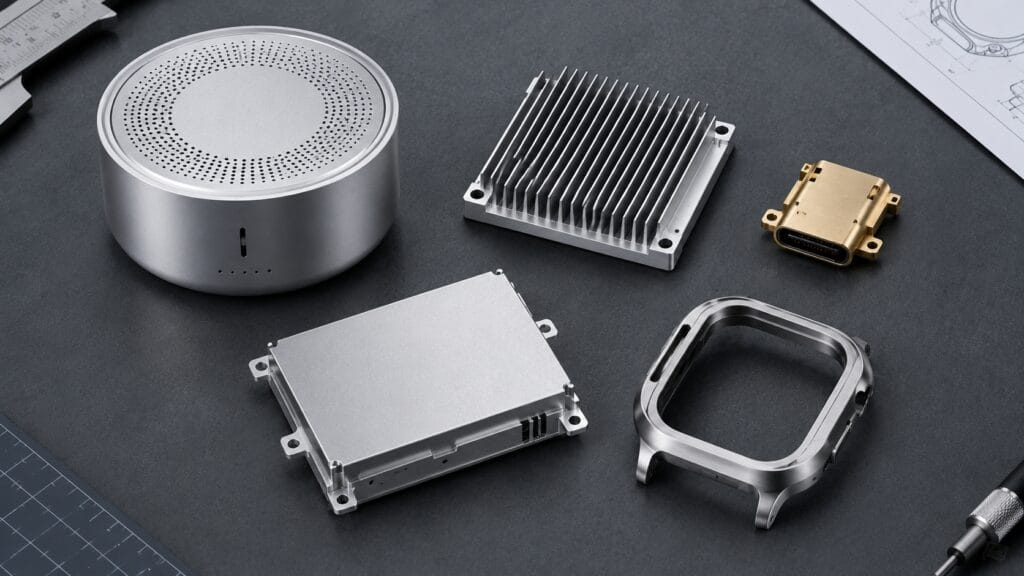
Every consumer product — wireless earbuds, smartwatches, laptop docks, smart-home speakers, camera accessories — is a stack of machined components. Some are structural. Some are thermal. Some are purely cosmetic. What unifies them is that they must hit three bars at once: functional fit, tight tolerance, and a surface finish that looks deliberate under studio lighting.
That combination is what separates consumer electronics machining from general precision machining. A bracket for an industrial machine can be ±0.2 mm and painted. A phone mid-frame needs ±0.05 mm, a Class-A visible surface, and a consistent anodize color across 100,000 units.
The tolerance and cosmetic bar
For visible consumer-electronics parts, design for ±0.05 mm positional tolerance as your baseline, with critical interfaces (PCB standoffs, connector openings, glass seating surfaces) specified to ±0.02–0.03 mm. Cosmetic zones — the surfaces the customer sees — need explicit callouts: which faces are Class A (no visible scratches under 30 cm), which are Class B (minor defects allowed), and what finish process applies. If you don’t draw this, your supplier will guess, and the guess usually shows up in reviews.
Prototype-to-ramp pressure
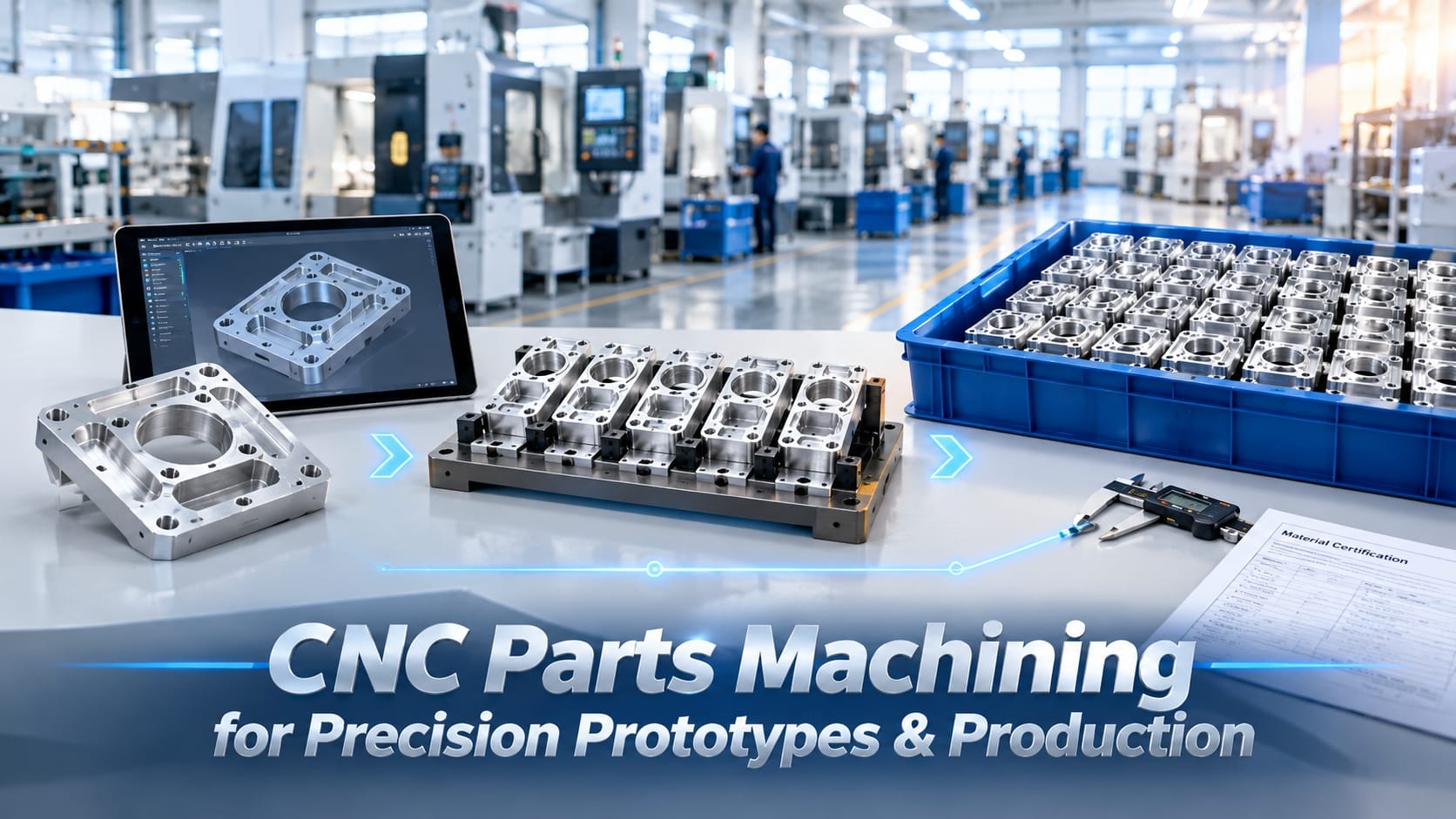
The second difference is schedule. Consumer hardware runs on launch windows. You need 5–10 prototype parts in days, a 100–500 unit bridge before design freeze, and then a jump to 10k–100k+ units without re-validating. A shop that only does prototypes can’t hold quality at volume. A shop that only does mass production won’t touch your first 10 pieces. You need one partner that lives on both sides of that line.
Want a DFM read on your CAD before you quote? Send your files and get feedback in 12 hours →
The Parts You’ll Actually CNC in Consumer Electronics
You don’t need to machine everything. You need to machine the parts that justify it.
Enclosures and unibody housings
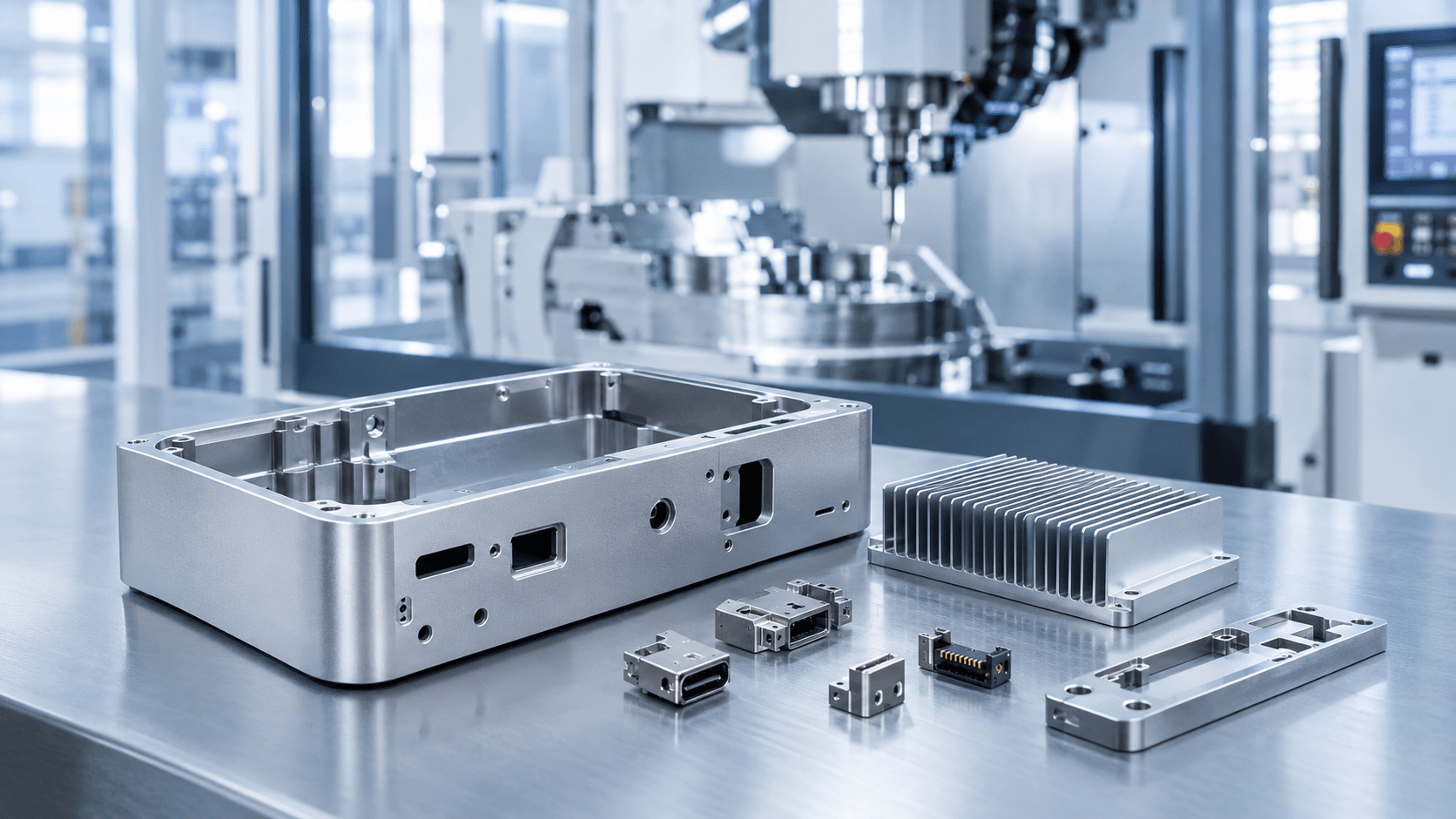
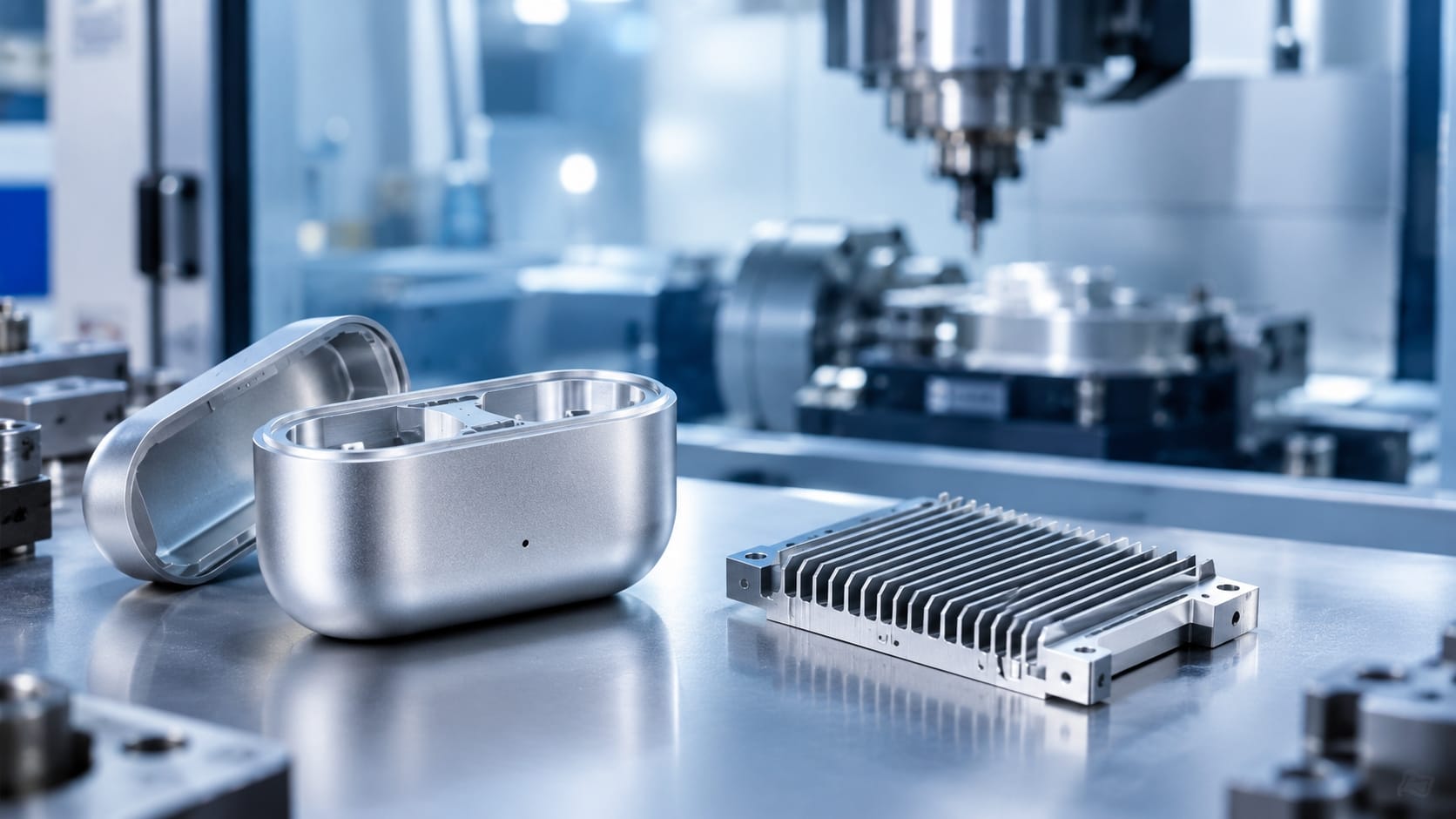
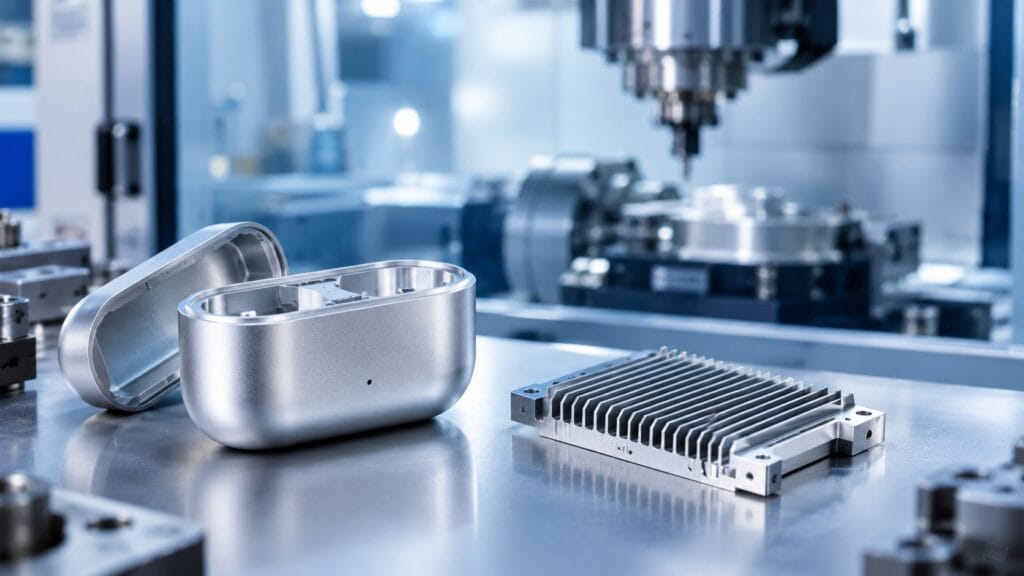
This is the category everyone pictures: the aluminum shell of a laptop, the unibody frame of a tablet, the housing of a smart speaker, the case of a wireless earbud charger. These are typically 3- or 5-axis milled from extruded aluminum billet, with walls as thin as 0.6–1.0 mm, then bead-blasted and anodized. Tolerance on the glass seating surface is ±0.05 mm flatness. Get a feel for our CNC milling services if this is what you need.
Heatsinks and thermal components
Every device with a processor dumps heat somewhere. Heatsinks are milled from aluminum (sometimes copper for high-performance chips), with fin pitches as tight as 1.5–2.0 mm and base flatness held to 0.03 mm for thermal interface contact. The machining challenge isn’t the fin geometry — it’s avoiding burrs at the fin roots and keeping the base flat after anodize.
Connectors, contacts, and contact pins
Small Swiss-turned parts — USB-C shells, contact pins, connector frames, spring contacts — usually run in brass, stainless steel, or copper, with plating (nickel, gold, tin) applied post-machining. Tolerance here is measured in microns, and the bar for burr-free, flash-free parts is high because these mate with other connectors at volume.
RF shielding, EMI cans, and mounting brackets
Inside every phone and board are thin sheet-metal or milled aluminum shields that block EMI and hold the PCB off the enclosure. These are often a hybrid: CNC-machined or sheet-metal-fabricated, with screw bosses, grounding pads, and connector cutouts held to ±0.1 mm. Boraco runs sheet metal processing alongside CNC so these parts come from one facility, not two.
Wearable, camera-module, and micro components
Smartwatch frames, lens rings, camera module brackets, smart-ring hardware — these mix micro-milling (features under 2 mm) with micro-turning, often in stainless steel or titanium. Cosmetic requirements are brutal because wearables sit on skin and get photographed in product shots.
Materials: Which Alloy or Plastic for Which Part
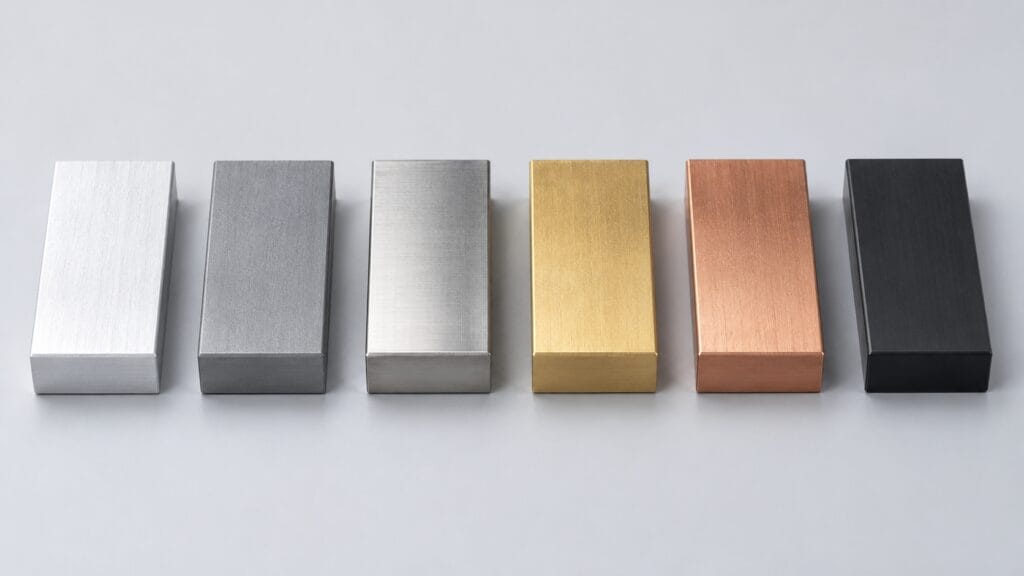
Picking the right material is 80% of avoiding a redesign.
Aluminum 6061-T6 vs. 7075-T6
- 6061-T6 is the workhorse. It machines cleanly, anodizes beautifully (Type II and III), and is cheap. Use it for 90% of enclosures, brackets, and heatsinks.
- 7075-T6 is stronger and stiffer, but it machines slightly worse and anodizes to a duller gray. Reach for it when wall thickness is below 0.8 mm or when structural loads justify it — usually structural frames, not cosmetic shells.
We detail this on our aluminum machining page, but the short version: start with 6061 unless your engineer says otherwise.
Stainless steel, brass, and copper
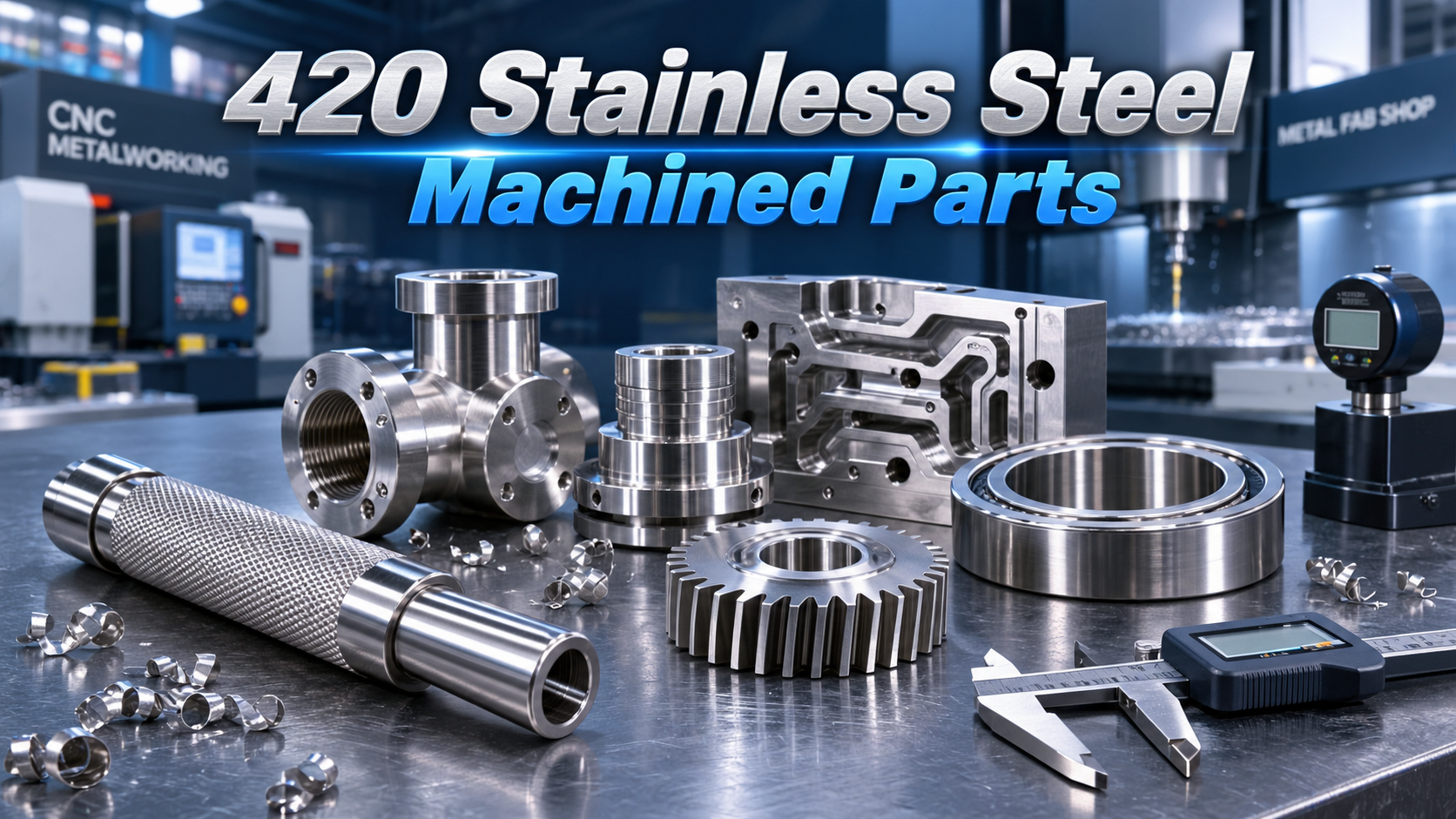
- Stainless steel (303/316) for structural brackets, contact pins, and anything that needs corrosion resistance or a brushed metal look.
- Brass for connectors, contacts, and anything that gets plated.
- Copper for high-performance heatsinks and thermal plates where aluminum can’t move enough heat.
Engineering plastics
For internal non-structural parts — spacers, insulator blocks, knob skirts — use POM (acetal), ABS, PC, or PEEK. These machine on the same CNC mills, just with different tooling and feeds. We machine engineering plastics regularly for electronics clients.
When to switch to die-cast or injection-mold
Here’s the call most teams get wrong: CNC is cheap at low volume because there’s no tooling, but the per-part cost stays flat. Injection molding and die-casting have high tooling costs ($10k–$80k+), but the per-part price drops dramatically after ~2,000–5,000 units.
| Volume | Best process | Why |
|---|---|---|
| 1–100 units | CNC machining | No tooling, fast, design still changing |
| 100–2,000 units | CNC (bridge tooling) | Avoids locking geometry into mold steel too early |
| 2,000–10,000 units | CNC or die-cast | Depends on part complexity and cosmetic bar |
| 10,000+ units | Die-cast / injection molding | Tooling amortizes; per-part cost wins |
The trap? Teams lock a design into a $40k mold at unit 800, then discover a fit issue at unit 1,500 and have to rebuild the tool. Run the bridge on CNC first.
Tolerances, Finishes, and Cosmetic Zones
What ±0.05 mm really means on a thin wall
People see “±0.05 mm” and think it’s a loose tolerance. On a 0.8 mm wall, 0.05 mm is 6% of the wall thickness — and that’s before you account for fixturing deflection, tool wear, and thermal growth of the part mid-cut. The way shops hit this is with multi-pass roughing and finishing, custom fixtures that clamp on non-cosmetic surfaces, and in-process CMM checks. If a supplier promises ±0.02 mm on thin-wall aluminum without describing the fixturing, push back.
Anodize, bead blast, and Class-A surfaces
The standard cosmetic recipe for aluminum consumer parts is: machine → bead blast → Type II anodize (decorative) or Type III (hard anodize for wear surfaces). The failure mode isn’t the anodize itself — it’s consistency. Bead blast pressure, media age, and anodize bath temperature all shift the color. When Sarah’s startup got mismatched gold tones, it was because the machine shop sent parts to a third-party anodizer, and no one owned the batch-to-batch delta.
That’s why integrated finishing matters. Boraco runs finishing services in-house — anodizing, powder coating, plating, polishing — so the same facility that cuts the parts also finishes them.
Inspection: CMM, optical comparator, surface roughness
Your supplier should deliver an inspection report with every batch. At minimum:
- CMM (coordinate measuring machine) on critical dimensions
- Optical comparator on small geometries and radii
- Surface roughness (Ra) measurements on cosmetic faces
- Material certificates for traceability
If a shop quotes without mentioning inspection reports, ask explicitly. The cost of a bad batch of 2,000 enclosures dwarfs the cost of inspection.
Common Failure Points (and How a Good Shop Prevents Them)
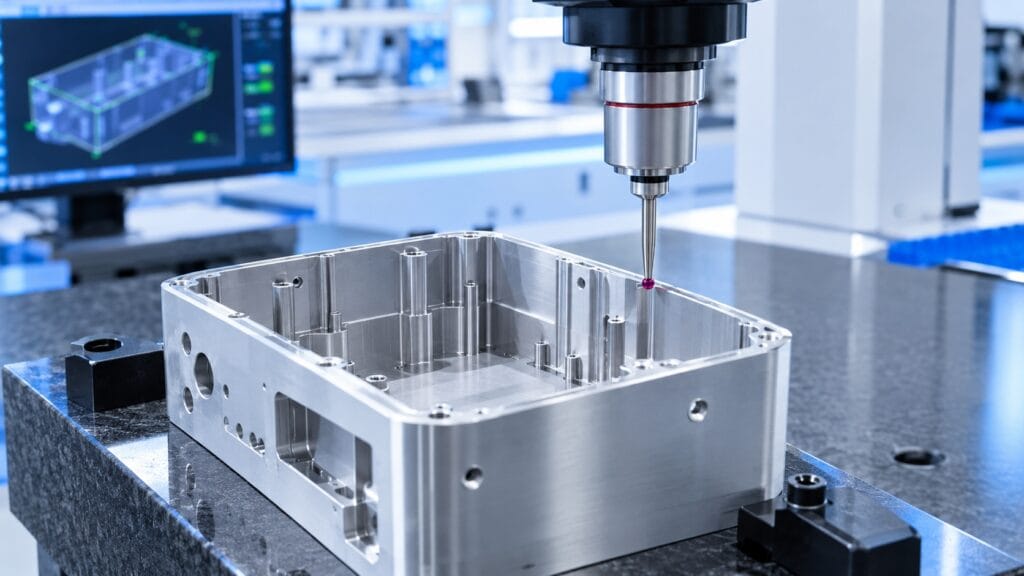
You can read a hundred capability pages and still get burned. Here are the three failure modes that actually sink consumer-electronics launches.
Thin-wall warping
When you hollow a solid billet into a 0.8 mm-wall enclosure, residual stress in the aluminum releases as you cut. The part moves. The fix isn’t magic — it’s symmetric roughing (cut from both sides), stress-relief passes, and slow finishing feeds. A shop that ignores this delivers parts that look right at first article and twist on the 200th piece.
Anodize color and texture mismatch
Covered above, but worth repeating: the fix is in-house finishing, batch-to-batch sample locks, and a written cosmetic spec you approve before production.
Threaded insert and PCB standoff misalignment
Your PCB has screw holes at fixed positions. Your enclosure has threaded inserts (usually brass, heat-set). If those inserts drift 0.15 mm off nominal, the PCB won’t seat — and you’ll find out at final assembly, not at incoming QC. The fix: specify insert position tolerance explicitly on the drawing (±0.05 mm is standard) and ask for first-article inspection against a real PCB fit-check fixture.
Here’s a scenario worth remembering. Mike, a product engineer at a portable-audio brand, ran his first enclosure batch through a low-price shop. At unit 300, assembly reported three out of ten PCBs wouldn’t seat. Inspection found the heat-set inserts had been placed by hand without a fixture — positional variance ran ±0.3 mm across the batch. The rework cost more than the original order, and the launch slipped six weeks. A fixture-driven insert process and a ±0.05 mm callout would have prevented it.
Choosing Your Machining Partner: A Checklist
When you compare quotes, you’re not comparing price — you’re comparing who owns the problems when they show up.
Integrated facility vs. fragmented supply chain
Ask: “If I order 2,000 enclosures with bead-blast and anodize, does your shop do the machining and the anodize under one roof, or do you subcontract?” A fragmented shop has no incentive to control finish consistency. An integrated shop — like Boraco’s 2,000 sqm Dongguan facility where CNC, sheet metal, die casting, and finishing all sit in one plant — owns the whole result.
DFM response time and engineering bandwidth
A quote is easy. Design for manufacturing (DFM) feedback is the real signal. When you send a CAD file, does the supplier come back in 12 hours with suggested fixes (wall thickness tweaks, radii that need to be larger, tolerance relocations)? Or do they come back in 5 days with a price and no engineering notes? Fast DFM means an engineer actually looked at your part. Slow or missing DFM means the salesperson sent it to the floor and someone reads it at machining time.
MOQ, ramp, and prototype-to-production path
You should be able to order 5 pieces and 50,000 pieces from the same supplier, with the same quality, on the same tooling logic. “No MOQ” isn’t a marketing line — it’s what lets you start at prototype and scale without re-qualifying. Boraco’s model is built exactly this way: start with one part, scale when you’re ready.
Certifications and traceability
For consumer electronics exporting to North America and Europe, expect ISO 9001:2015 (quality system), CE marking support, and RoHS compliance documentation. Boraco holds all three. You’ll also want material certificates on every batch — the traceability chain that lets you answer a customer’s recall question in hours, not weeks.
Boraco: Built for the Consumer Electronics Ramp
Boraco has been machining in Dongguan since 2013 — 13 years of precision CNC work for clients in North America, Europe, and Southeast Asia. The facility covers 2,000 sqm, with milling (3-axis, 4-axis, 5-axis), turning, sheet metal, die casting, and finishing all on one floor.
What that means for your project:
- No MOQ. Start with one prototype. Scale to 100,000 units when the design is locked.
- 12-hour DFM feedback. Our engineers review your CAD before quoting, not after.
- Integrated finishing. Anodizing, powder coating, plating, and polishing happen in-house, so one team owns the cosmetic result.
- Documented quality. ISO 9001:2015 process, CMM inspection, material traceability, inspection reports with every batch.
- Full material range. Aluminum, steel, stainless, brass, copper, titanium, and engineering plastics — see our materials page for the full list.
We work across electronics, automotive, aerospace, and medical — but consumer electronics is where most of our volume sits.
Frequently Asked Questions
How much does consumer electronics CNC machining cost? Per-part cost depends on material, tolerance, and volume. At prototype volumes (1-100 units), simple aluminum enclosures typically run $30-$150 per part; at 10,000+ units, the same part can drop to $5-$25 as CNC yields to die-cast or injection molding with amortized tooling.
What tolerance is needed for consumer electronics enclosures? Design for +/-0.05 mm positional tolerance as a baseline. Critical interfaces – PCB standoffs, connector openings, glass seating surfaces – should be specified to +/-0.02-0.03 mm. Cosmetic surfaces need a separate finish and inspection callout, not a tolerance number alone.
Can I start with a prototype and scale to mass production with the same shop? Yes, and you should. Re-qualifying a new supplier at production volume introduces new tolerances, new finish batches, and new failure modes. Pick a partner up front that supports no-MOQ prototypes, bridge volumes (500-2,000 units), and mass production – ideally with machining and finishing under one roof.
Conclusion
Consumer electronics machining isn’t a commodity service. The difference between a launch that lands on schedule and one that slips six weeks is rarely the CAD — it’s who owns the cosmetic consistency, the thin-wall fixturing, and the DFM feedback between prototype and production.
When you evaluate your next partner, come back to five questions: Do they finish in-house? Can they start at 5 pieces and scale to 50,000? Will an engineer give you DFM feedback in 12 hours? Do they deliver CMM inspection reports? Are the certifications and material traceability actually documented, not just claimed on a homepage?
If the answer is yes to all five, you’ve found a shop that grows with your product, not one that drops you the moment your volume changes.
Send your CAD for a free DFM quote — response within 12 hours →