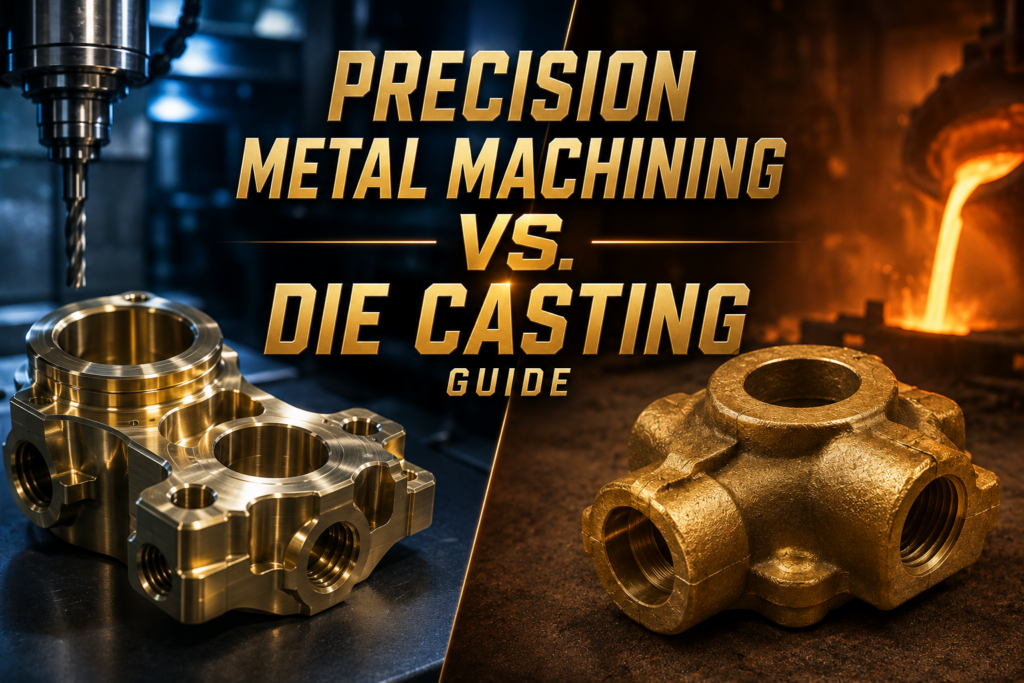
Selecting between precision metal machining and die casting is critical for aerospace and medical procurement. This guide analyzes tolerances, material integrity, and cost-efficiency to help you identify the optimal manufacturing route for high-complexity components and reliable CNC service providers.
Precision Metal Processes: Machining vs. Die Casting
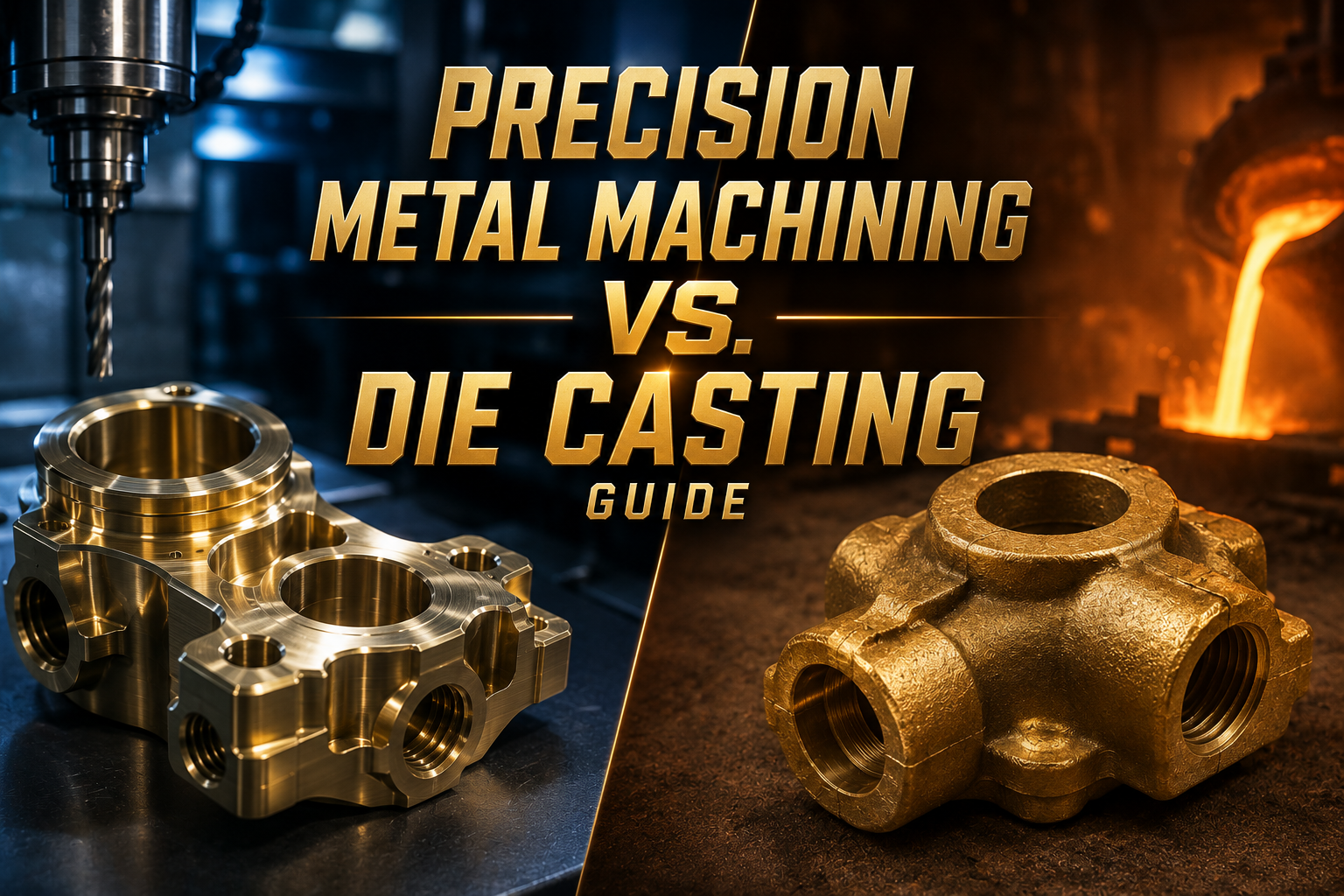
For B2B procurement managers, the choice often hinges on the trade-off between geometric complexity and dimensional accuracy. Precision metal fabrication via CNC machining involves subtractive processes—milling and turning—where material is removed from a solid billet. In contrast, die casting involves forcing molten metal under high pressure into a mold cavity.
In industries like aerospace, where a single micron can dictate the success of a fuel system component, precision maching offers a level of consistency that die casting struggle to match. While die casting is superior for high-volume, thin-walled components, it often introduces porosity—tiny gas bubbles trapped within the metal—which can compromise the structural integrity of a part under high-pressure cycles.
Technical Definition: What is GD&T?
Geometric Dimensioning and Tolerancing (GD&T) is a symbolic language used on engineering drawings to communicate the allowable variation in form, orientation, and location of part features. Unlike plus/minus dimensioning, GD&T defines the “True Position” and “Material Condition,” ensuring that precision metal parts from different production lots will always interface correctly during assembly.
At Boraco Machining, we often see engineers from the industrial and automotive sectors utilize low-volume production via CNC milling to validate designs before committing to expensive die-casting tooling. This “machining-first” approach mitigates the risk of costly mold revisions.
| Parameter | CNC Precision Machining | High-Pressure Die Casting |
|---|---|---|
| Typical Tolerance | ±0.005 mm to ±0.01 mm | ±0.1 mm to ±0.5 mm |
| Surface Finish (Ra) | 0.4 – 3.2 μm | 1.6 – 6.3 μm |
| Initial Tooling Cost | Near Zero (Fixturing only) | $5,000 – $50,000+ |
| Material Range | Unlimited (Metals/Plastics) | Limited (Al, Zn, Mg, Brass) |
For urgent project consultations, you can reach our engineering team directly at the Boraco Contact Page.
The Nuances of Precision Brass Machining in B2B Sourcing
Precision brass components are foundational in the electronics and fluid power industries due to their exceptional electrical conductivity and corrosion resistance. When sourcing precision metal parts, understanding the machinability of different brass alloys is paramount.
C36000 (Free-Cutting Brass) is the gold standard for precision turning. Its lead content acts as an internal lubricant, allowing for high-speed spindle operations and excellent chip control. This results in significantly lower cycle times compared to stainless steel. However, for medical or consumer electronics applications requiring lead-free compliance, alloys like C46400 (Naval Brass) are preferred, though they require more specialized tooling geometries to maintain precision maching standards.
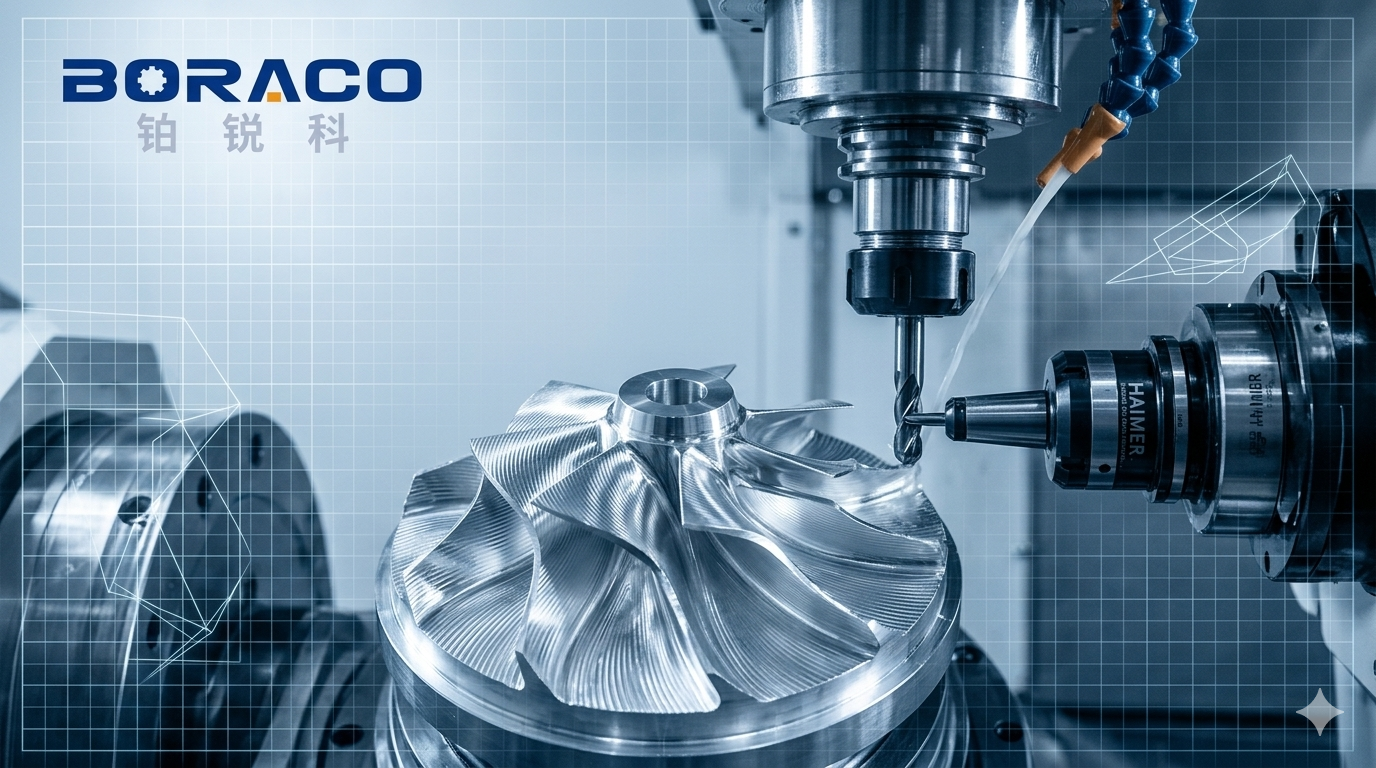
According to the Copper Development Association (CDA), the thermal conductivity of brass is nearly four times that of carbon steel. This property is vital for heat dissipation in high-density electronic housings. At our ISO 9001:2015 certified facility in Dongguan, we leverage 5-axis CNC milling to produce intricate brass manifolds that would be impossible to cast without significant internal defects.
Furthermore, precision plastic components often complement brass assemblies in industrial sensors. Our ability to switch between metals and high-performance polymers like PEEK or PTFE ensures that your entire BOM (Bill of Materials) is handled under one roof, maintaining strict quality control across disparate materials.
Solving the Tight-Tolerance Aerospace Supplier Dilemma
Aerospace procurement is plagued by the “Gap of Reliability.” Many suppliers claim precision metal capabilities but lack the metrology equipment to verify them. When parts are destined for aviation or motorcycle engine systems, “close enough” is never an option.
Achieving precision turning for aerospace-grade aluminum (such as AL7075-T6) requires more than just a modern machine. It requires thermal stability in the workshop and advanced tool-path optimization. High-speed machining (HSM) techniques are employed to minimize heat transfer into the workpiece, preventing the thermal expansion that leads to dimensional drift.
Our 2,000 sqm plant integrates 4-axis and 5-axis machining centers to reduce the number of setups. Every setup introduces a potential for error; by completing a complex precision metal part in one or two operations, we maintain the geometric relationships between features far more effectively than traditional 3-axis methods.
Learn more about our quality philosophy on our About Page or view our full range of precision metal capabilities on the Service Page.
Cost-Benefit Analysis: When to Switch to Die Casting
While precision maching is the king of accuracy, die casting is the king of scale. For an OEM producing 10,000+ units of a non-critical bracket, the high initial investment in steel dies is offset by the incredibly low per-part cost and rapid cycle times.
However, “secondary operations” are the hidden cost of die casting. Most cast parts require precision turning or milling to achieve functional tolerances on bearing seats, threaded holes, or mating surfaces. In these cases, you are paying for both a casting mold and CNC machining time.
For mid-volume production (500 to 2,000 units), we often recommend precision metal machining directly from extruded profiles. This eliminates the $20,000 mold cost while providing superior mechanical properties.
Industry data from market research reports suggests that the global CNC machining market is expanding precisely because of this flexibility in “low-to-mid” volume production.
If you are unsure which process fits your volume, submit your 3D files for a DFM (Design for Manufacturing) review at the Boraco Contact Page.
Frequently Asked Questions
What is the tightest tolerance Boraco can achieve for precision metal parts?
Our 5-axis CNC machining centers can reliably achieve tolerances of ±0.005 mm, depending on the material geometry and thermal requirements.
Can you perform precision maching on hardened steels?
Yes, we utilize specialized carbide and CBN (Cubic Boron Nitride) tooling to machine hardened tool steels and aerospace alloys up to 60 HRC.
Do you provide surface finishing for precision brass components?
We offer a full suite of finishing services including passivation, electroless nickel plating, and ultrasonic cleaning for medical and electronic applications.
Boraco Machining provides the technical expertise and state-of-the-art equipment necessary to meet the most demanding precision metal specifications in the world. Whether you require rapid prototyping or mass production, our team ensures “Quality First.”
Ready to elevate your supply chain? Request an Instant Quote Today