How Precision Aluminum Machining Service Optimizes Aerospace Parts
In the demanding aerospace industry, engineers and purchasing managers frequently search for a reliable aluminum machining service capable of delivering lightweight, high-strength components with exacting tolerances. This guide details how a precision aluminum machining service optimizes aerospace parts through advanced CNC processes, material expertise, and rigorous quality controls, addressing key challenges in performance, compliance, and supply chain efficiency.
The Critical Role of Aluminum in Aerospace Manufacturing
Aluminum remains the material of choice for a vast array of aerospace components due to its exceptional strength-to-weight ratio, corrosion resistance, and thermal conductivity. In commercial aircraft, military transports, and satellite structures, aluminum alloys account for a significant portion of structural weight, enabling fuel efficiency and payload increases that directly impact operational costs and mission success.
According to the Aluminum Association, aluminum alloys are the overwhelming choice for commercial planes and military cargo/transport aircraft because they balance high strength, low weight, and design versatility while managing extreme temperatures effectively. This makes aluminum machining service indispensable for producing fuselage skins, wing spars, bracketry, and engine housings where every gram matters.
Precision aluminum machining service providers excel at transforming raw billets or plates into complex geometries that traditional fabrication methods cannot achieve economically. For aerospace OEMs, this translates to reduced assembly time and improved fatigue life. Common aerospace-grade alloys such as 6061, 2024, and 7075 each offer distinct advantages: 6061 provides excellent weldability and corrosion resistance for secondary structures, while 2024 and 7075 deliver superior fatigue resistance and tensile strength for primary load-bearing elements.
When evaluating an aluminum machining service, B2B buyers prioritize suppliers who understand aerospace-specific requirements, including traceability, material certification, and adherence to standards like AS9100 (though many facilities maintain ISO 9001:2015 as a foundational benchmark). The ability to machine thin-walled structures without distortion is particularly valuable, as aerospace designs often push material limits to minimize weight. A well-executed aluminum CNC process ensures dimensional stability across temperature fluctuations encountered during flight cycles.
Furthermore, the integration of aluminum machining service into the broader supply chain helps mitigate risks associated with composite alternatives, which, while lighter in some applications, introduce higher costs and more complex repair protocols. By leveraging aluminum’s recyclability and established global supply networks, precision providers support sustainable aerospace manufacturing goals without compromising performance. This foundational understanding of material behavior underpins every successful aluminum fabrication project in the sector.
Key Advantages of Precision Aluminum Machining Service for Aerospace Applications
A precision aluminum machining service delivers measurable advantages that directly address the pain points of aerospace engineers: weight reduction, part consolidation, and rapid iteration during prototyping. Unlike casting or forging, CNC-based aluminum machining allows for intricate internal features, such as cooling channels or lightweight lattice structures, that enhance thermal management in avionics housings or hydraulic manifolds.
One primary benefit is the elimination of secondary operations. With modern 4-axis and 5-axis CNC capabilities, a single setup can produce multi-face geometries that would otherwise require multiple fixtures and increased risk of tolerance stack-up. This streamlines production and reduces lead times—critical when aerospace programs operate under tight certification schedules.
Cost optimization is another core value. While raw aluminum is relatively affordable, the true savings emerge from design-for-manufacturability (DFM) feedback provided by experienced aluminum machining service teams. Engineers receive recommendations on wall thicknesses, fillet radii, and tool-access constraints early in the design phase, preventing costly redesigns downstream. For small-batch or prototype runs common in aerospace R&D, this approach proves far more economical than hard tooling required for die casting.
Additionally, precision aluminum machining service supports compliance with stringent regulatory frameworks. Parts can be produced with full material traceability and process documentation, facilitating easier FAA or EASA certification. Surface integrity is maintained through optimized feeds, speeds, and coolant strategies that minimize residual stresses—factors that directly influence fatigue performance in cyclic loading environments.
For purchasing managers evaluating suppliers, these advantages manifest as lower total cost of ownership. Reliable aluminum CNC partners reduce scrap rates, shorten qualification periods, and provide scalability from rapid prototyping to series production. When combined with secondary services like anodizing or chemical conversion coating, the result is a complete, flight-ready component ready for integration into larger assemblies.
Real-world aerospace programs have demonstrated up to 30% weight savings through optimized aluminum designs compared to legacy steel or titanium alternatives, underscoring why forward-thinking OEMs continue to invest in advanced aluminum machining service capabilities.
Advanced CNC Techniques Employed in Aluminum Machining Service
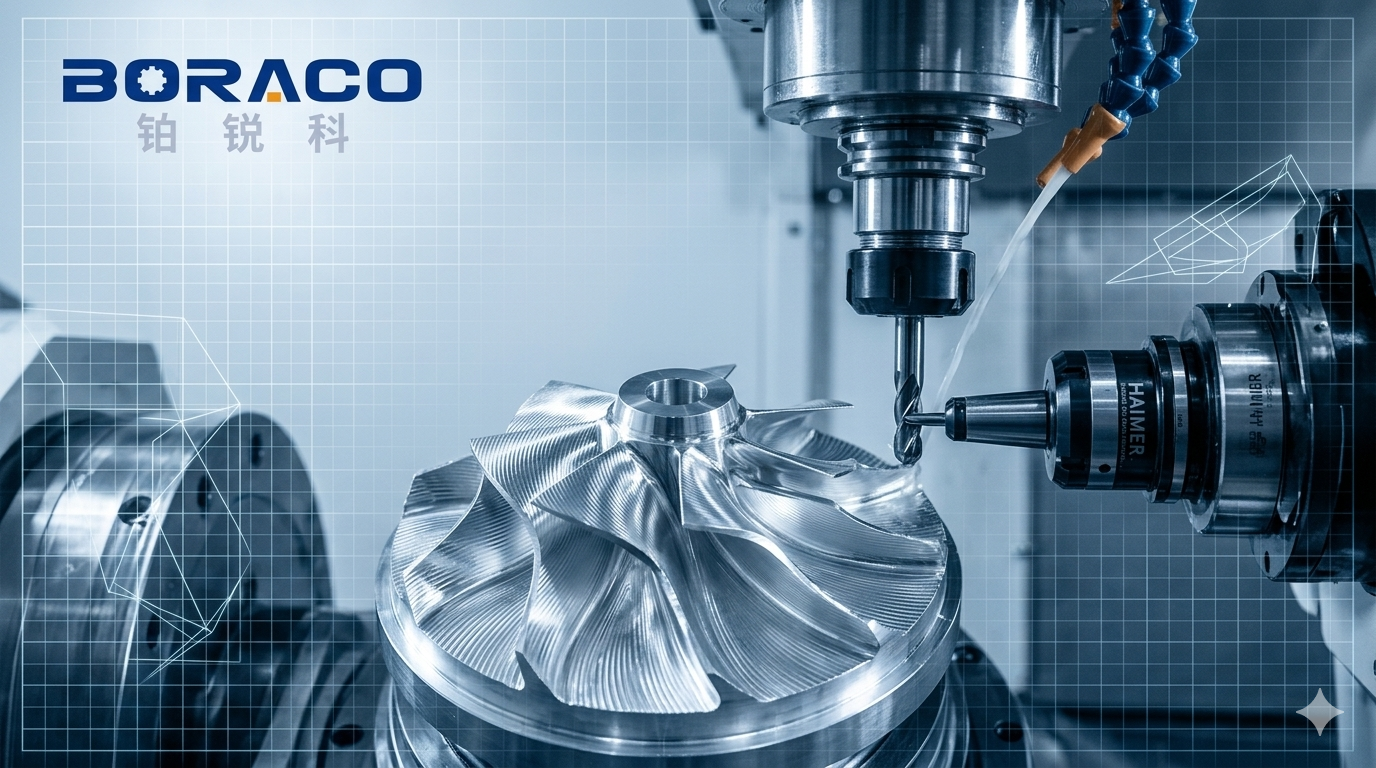
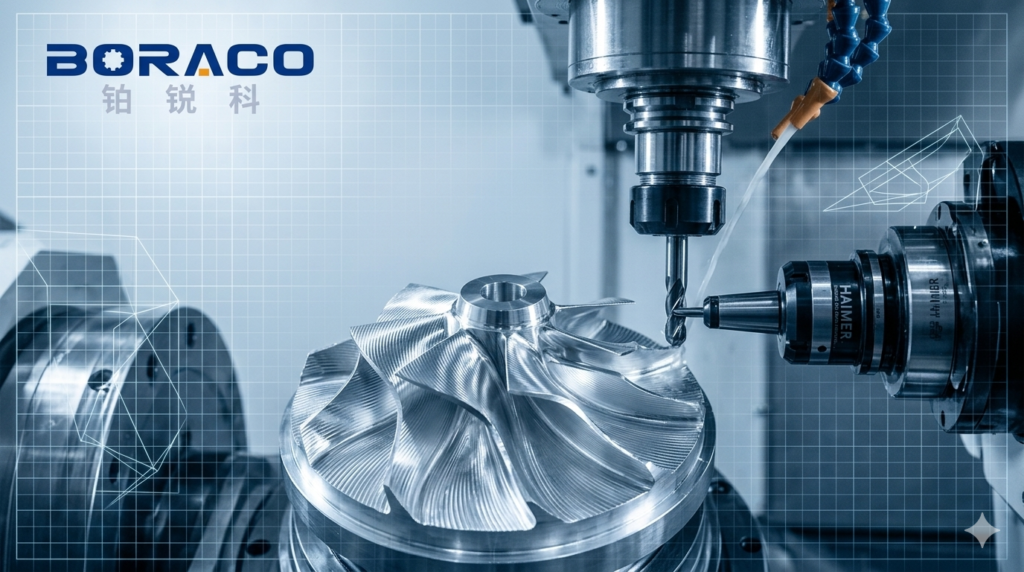
Contemporary aluminum machining service relies heavily on CNC milling, CNC turning, and multi-axis machining centers to achieve the complexity demanded by aerospace designs. 5-axis simultaneous machining, in particular, enables the production of undercuts, compound angles, and contoured surfaces in a single operation—capabilities essential for turbine blades, structural brackets, and satellite antenna mounts.
Precision CNC turning complements milling by delivering cylindrical components such as shafts, bushings, and fittings with concentricity tolerances often below 0.01 mm. When combined with live tooling, turning centers can incorporate milling features without transferring the workpiece, further enhancing accuracy and reducing cycle times.
High-speed machining (HSM) strategies are standard in aluminum machining service for aerospace. Spindle speeds exceeding 20,000 RPM paired with specialized carbide or diamond-coated tools minimize heat buildup, preserving the heat-treatable properties of alloys like 7075-T6. This approach also yields superior surface finishes, typically in the Ra 0.4–1.6 µm range required for aerodynamic surfaces.
Wire EDM and laser cutting often serve as complementary processes for creating precise blanks or intricate cutouts prior to full CNC machining. These hybrid workflows allow aluminum machining service providers to handle a wider variety of part sizes and complexities while maintaining the tight tolerances aerospace demands.
To explore the full spectrum of these capabilities, review comprehensive CNC machining services tailored for high-precision applications. Such integrated process chains ensure repeatability across production volumes, from one-off prototypes to low-volume series essential for unmanned aerial vehicles and space systems.
Process simulation software further refines these techniques by predicting tool deflection, chip evacuation, and vibration modes before metal is cut. This digital twin approach minimizes trial-and-error, accelerates time-to-market, and protects expensive aerospace-grade material from avoidable scrap.
Material Properties, Machinability, and Selection for Aerospace Aluminum Parts
Successful aluminum machining service begins with informed alloy selection. Each aerospace-grade aluminum alloy presents unique machinability characteristics that influence tool life, surface quality, and final part performance.
Here is a comparison of key properties for the most commonly machined aerospace aluminum alloys:
| Alloy | Density (g/cm³) | Ultimate Tensile Strength (MPa) | Yield Strength (MPa) | Typical Aerospace Use |
|---|---|---|---|---|
| 6061-T6 | 2.70 | 310 | 276 | Structural frames, fittings |
| 2024-T3 | 2.78 | 483 | 345 | Fuselage skins, wing structures |
| 7075-T6 | 2.81 | 572 | 503 | Landing gear, high-stress brackets |
Aluminum’s high machinability index—often rated 300–500% relative to mild steel—allows aggressive material removal rates while maintaining tool life. However, its thermal conductivity and tendency to produce long, stringy chips require specialized chip-breaking tool geometries and high-pressure coolant delivery systems.
What is GD&T in the context of aluminum machining service? Geometric Dimensioning and Tolerancing (GD&T) is an engineering language defined by ASME Y14.5 that communicates permissible variations in part geometry beyond simple linear dimensions. In aerospace aluminum parts, GD&T ensures functional requirements—such as flatness of mating surfaces, perpendicularity of bores, or profile of aerodynamic contours—are controlled precisely. For example, a position tolerance of Ø0.05 mm on a fastener pattern guarantees interchangeability across assembly lines, while a surface profile tolerance of 0.1 mm on a wing rib maintains aerodynamic efficiency. Precision aluminum machining service teams fluent in GD&T translate these callouts into optimized toolpaths and inspection protocols, preventing costly non-conformances.
Material certification and heat-treatment verification further guarantee that machined parts retain required mechanical properties after processing. This level of expertise distinguishes capable aluminum fabrication companies from general job shops.
Achieving Tight Tolerances and Quality Assurance in Aluminum Machining Service
Aerospace applications routinely demand tolerances in the range of ±0.01 mm to ±0.005 mm, with positional accuracy for critical features often tighter. Precision aluminum machining service achieves these results through temperature-controlled environments, rigid machine tools, and in-process metrology using coordinate measuring machines (CMM) and laser scanners.
Surface finish requirements typically specify Ra values between 0.8 µm and 1.6 µm for non-aerodynamic surfaces, with optical-quality finishes down to Ra 0.2 µm for select applications. Advanced probing systems and statistical process control (SPC) ensure every part remains within specification throughout production runs.
Quality assurance extends beyond dimensional checks. Non-destructive testing (NDT) methods such as dye penetrant inspection detect surface flaws, while conductivity testing verifies proper heat treatment. Full First Article Inspection (FAI) reports per AS9102 standards provide aerospace customers with complete traceability.
By maintaining these rigorous protocols, an aluminum machining service minimizes rejection rates and supports just-in-time delivery schedules critical to aerospace assembly lines. Purchasing managers benefit from reduced incoming inspection overhead and greater confidence in supplier performance.
Selecting the Right Aluminum Machining Service Provider for Aerospace Projects
Choosing a capable aluminum machining service provider requires evaluating technical competence, capacity, and supply chain resilience. Facilities equipped with modern 5-axis CNC centers, experienced programmers, and dedicated aerospace quality systems consistently outperform general machine shops.
Geographic considerations also matter. Leading China CNC machining suppliers offer competitive pricing combined with rapid response times and scalable production. Providers with expertise in aluminum, stainless steel, and plastics across electronics, automotive, and aerospace sectors bring cross-industry insights that enhance DFM recommendations.
For projects requiring custom CNC solutions or precision CNC turning, verify that the supplier maintains certifications relevant to your quality management system. The ability to support small-batch prototyping alongside mass production ensures flexibility as programs evolve from development to full-rate production.
Ultimately, the right partner integrates seamlessly into your engineering and procurement workflows, delivering consistent quality that protects program timelines and budgets.
Precision aluminum machining service represents a strategic enabler for aerospace innovation, delivering optimized parts that reduce weight, enhance performance, and maintain regulatory compliance. By partnering with an experienced provider, engineers and purchasing managers secure reliable, high-quality components that drive project success. To discuss your specific aerospace requirements and receive a detailed quotation tailored to your drawings, request a quote today. Our team is ready to support your next aluminum CNC project with precision and efficiency.
Explore additional manufacturing solutions or learn more about our capabilities at our company overview and full services portfolio.
Frequently Asked Questions
What is an aluminum machining service?
An aluminum machining service uses CNC milling, turning, and multi-axis equipment to shape aluminum alloys into precise aerospace components. It encompasses material selection, programming, machining, and finishing to meet tight tolerances and industry standards.
Why choose aluminum for aerospace parts?
Aluminum offers an outstanding strength-to-weight ratio, corrosion resistance, and excellent machinability. These properties reduce aircraft weight, improve fuel efficiency, and simplify assembly compared to heavier metals or more expensive composites.
What tolerances can precision aluminum machining service achieve?
Typical tolerances range from ±0.05 mm for standard work to ±0.005 mm or tighter for critical aerospace features, depending on part geometry, alloy, and machine capability. GD&T callouts further define functional requirements.
How does 5-axis CNC benefit aluminum aerospace components?
5-axis machining allows complex geometries to be produced in a single setup, reducing tolerance stack-up, improving surface finish, and enabling undercuts or compound angles that would otherwise require multiple operations or manual finishing.
What secondary processes complement aluminum machining service?
Common processes include anodizing, chemical conversion coating, passivation, painting, and assembly. These enhance corrosion resistance, appearance, and wear properties for flight-critical applications.