Metal Edge-Trimming Process: CNC Precision Best Practices
Understanding the Metal Edge-Trimming Process in Modern Manufacturing
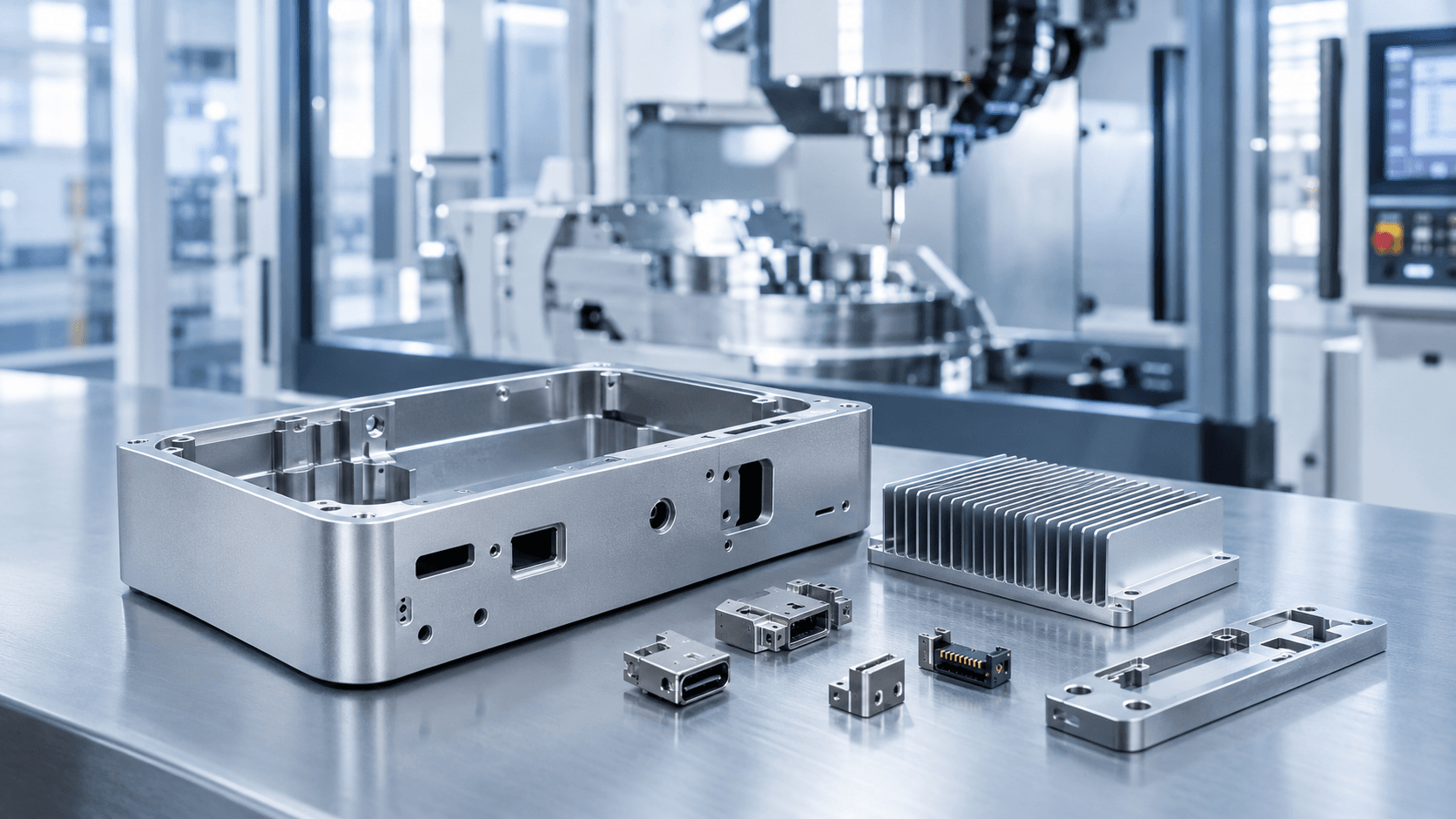
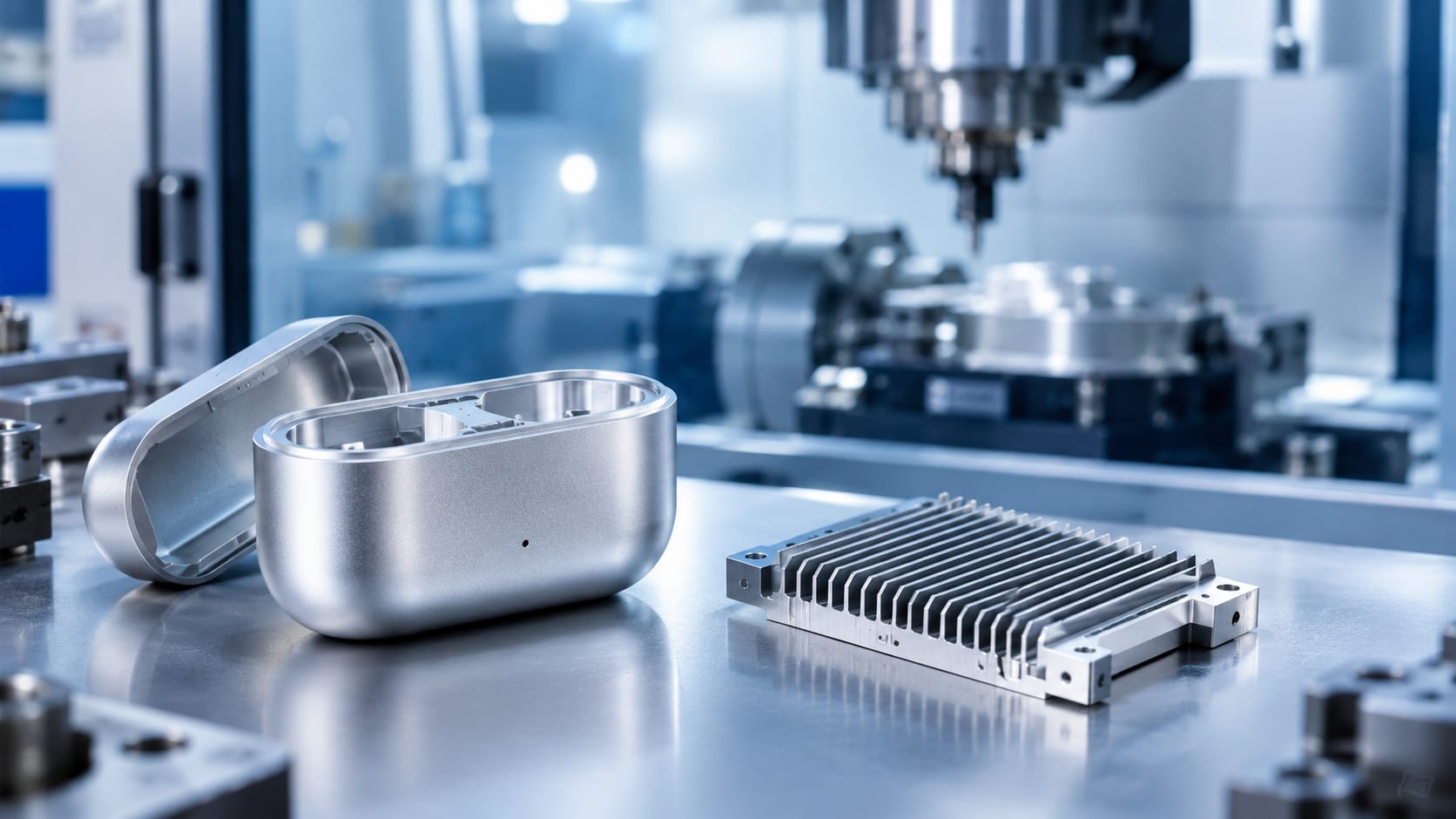
The Metal Edge-Trimming Process is a critical secondary or primary fabrication step that removes excess material, flash, or scallops from a component’s perimeter. In precision engineering, edge quality directly dictates the structural integrity, aerodynamic efficiency, and assembly performance of the final product. For procurement professionals evaluating china cnc machining suppliers, understanding the mechanics of this process is vital for verifying supplier capabilities and minimizing downstream rejection rates.
When high-precision parts are blanked, cast, or initial-machined, they frequently retain micro-burrs or non-uniform edge profiles. Utilizing a dedicated cnc cutter machine ensures that these boundaries are conditioned to strict geometric specifications. Whether the part requires a crisp 90-degree corner for sealing applications or a radiused edge to prevent stress concentrations, selecting the correct mechanical or thermal trimming method modifies tool life and production throughput.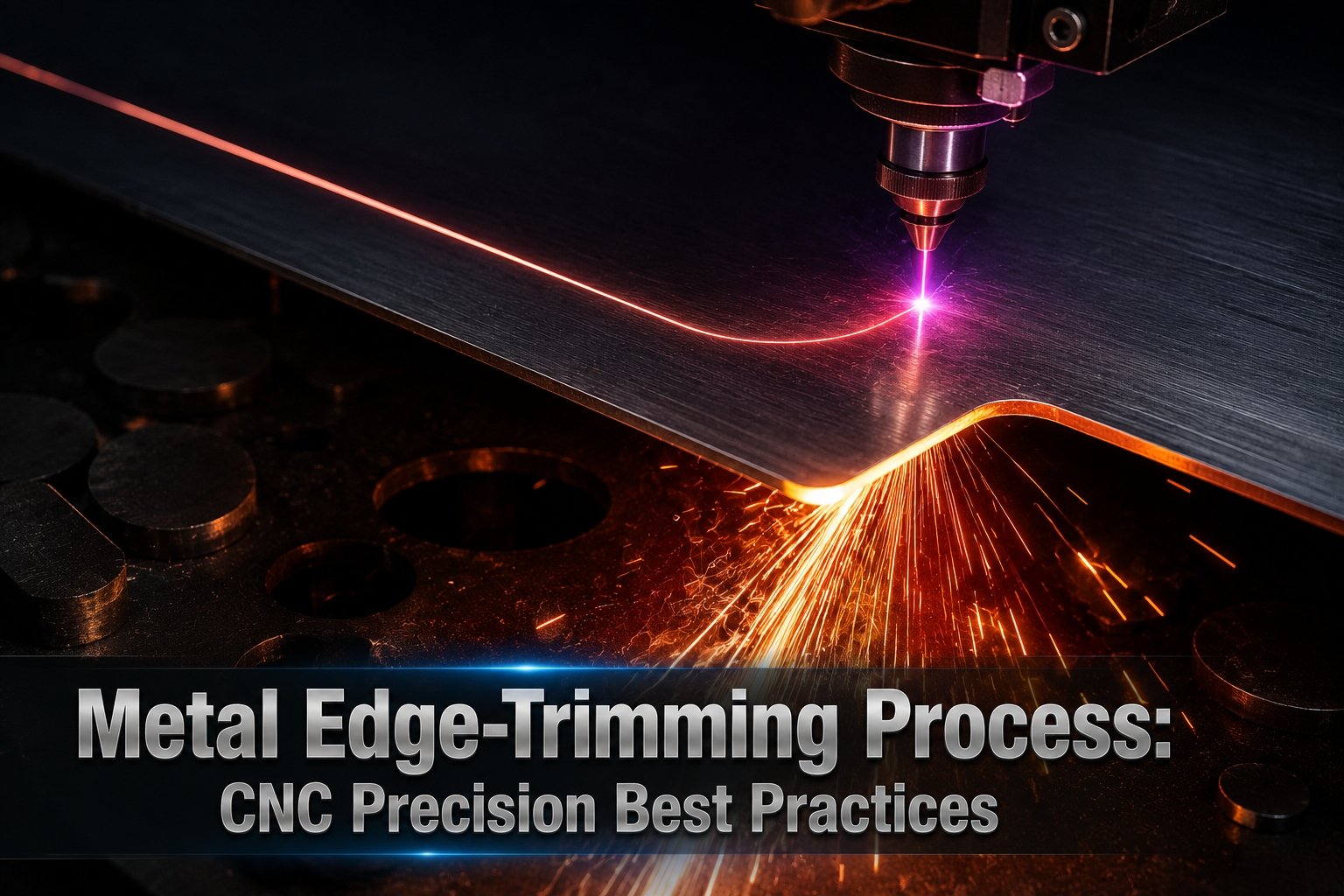
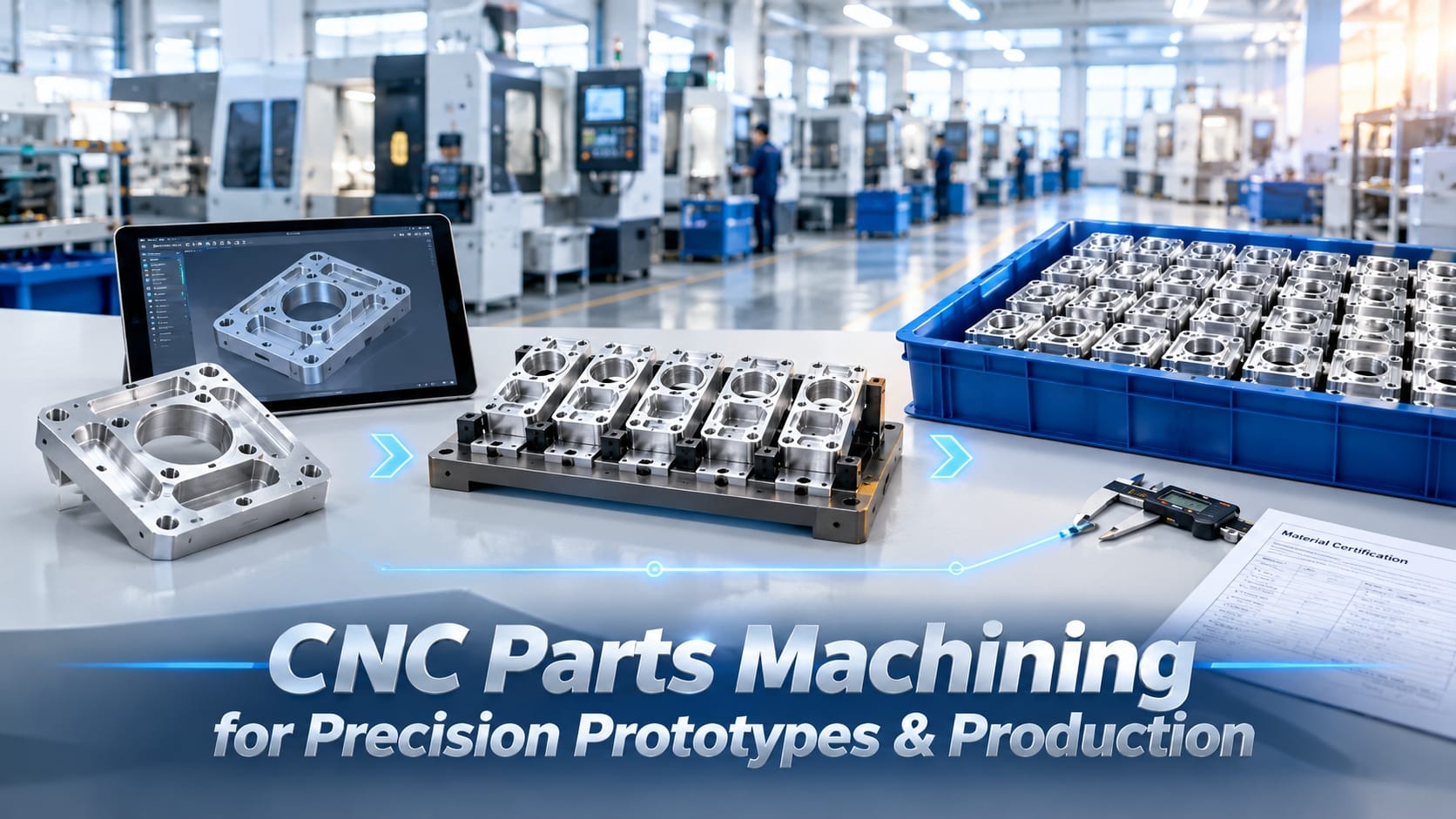
Advanced facilities integrate edge-trimming into multi-axis workflows. By leveraging automated tool changers and specific toolpaths, engineers transition from bulk material removal to fine edge conditioning seamlessly. This integration minimizes part handling, eliminates manual deburring variances, and secures a repeatable manufacturing cycle vital for high-volume B2B supply chains.
What is GD&T (Geometric Dimensioning and Tolerancing)?
Geometric Dimensioning and Tolerancing (GD&T) is a standardized system of symbols, rules, and definitions used on engineering drawings to explicitly communicate the allowable variation of geometric features. Unlike legacy coordinate dimensioning, GD&T defines the exact zone of tolerance for a feature’s form, orientation, profile, and location relative to specified datums.
In the Metal Edge-Trimming Process, GD&T controls like Profile of a Surface ($\cap$) and Position ($\bigoplus$) guarantee that trimmed boundaries align perfectly with mating parts, directly controlling edge break requirements and preventing premature fatigue failure under cyclic loads.
Advanced CNC Methodologies for Edge Processing
To execute a flawless Metal Edge-Trimming Process, manufacturers deploy diverse cutting technologies tailored to the material substrate and thickness. Traditional stamping dies often fail when executing complex, low-volume geometries or when processing high-strength alloys. Here, specialized CNC cutting methodologies provide the flexibility and mechanical precision required by OEMs.
1. Cutting Milling and High-Speed Routing
For structural plates and enclosures, combining cutting milling techniques with high-velocity spindles yields superior edge finishes. When routing aluminum or processing structural stainless steel, the selection of the cnc cutting tool morphology—such as variable-helix end mills—is imperative to mitigate chatter. Precision tool placement balances the radial and axial forces, ensuring that the finished edge exhibits minimal roughness ($R_a$).
2. Thermal and Laser Precision Cutting
When processing sheet profiles, industrial 3d laser cutting systems provide rapid cycle times. Using focused thermal energy, a metal laser cutter processes convoluted perimeters instantly. This is highly effective when prepping pre cut steel or managing cut sheet metal contracts. However, to eliminate the heat-affected zone (HAZ) that can embrittle margins, precise calibration of the assist gas pressure and laser modulation is required.
3. Wire EDM Machining
For ultra-tight tolerances where mechanical force cannot be tolerated, wire edm machining is the gold standard. Utilizing a continuously moving cut wire electrode, this process erodes material via spark discharge. It is the premier selection for thick, hardened tool steels or intricate internal profiles where a traditional cnc cutter cannot fit.
Looking for an ISO 9001:2015 certified partner to execute your high-tolerance projects? Contact our engineering team today to receive a comprehensive DFM analysis.
Request an Immediate Edge-Trimming and CNC Quote From Boraco Machining
Optimizing Mechanical Parameters and Speed Calibration
The efficiency of trimming metallic borders hinges on the synchronized configuration of feed rates, spindle velocities, and depth of cut. Improper calibration induces rapid tool wear, work-hardening of the workpiece edge, and unacceptable burr formation. Engineers must systematically calculate the cnc cutting speed using established material-machinability indexes.
For high-volume cnc metal cutting, table parameters must adapt to the mechanical rigidity of both the tool and the machine architecture. High-speed machining (HSM) paths use a small radial engagement and high chip loads to shift thermal energy into the discarded chip rather than the parent metal. This is critical when finalizing custom cut steel components to protect their metallurgical properties.
| Material Family | Recommended Process | Cutting Speed ($v_c$, m/min) | Target Edge Roughness ($R_a$, $\mu m$) | Achievable Tolerance (mm) |
|---|---|---|---|---|
| Aluminum Alloys (e.g., 6061-T6) | High-Speed Milling / Routing | 300 – 800 | 0.4 – 1.6 | ± 0.02 |
| Stainless Steel (e.g., 316L) | Solid Carbide Cutting Milling | 80 – 150 | 0.8 – 2.5 | ± 0.03 |
| Carbon / Pre-cut Steel | CO2 / Fiber Laser Cutting | 100 – 400 | 1.6 – 3.2 | ± 0.10 |
| Hardened Tool Steel (>50 HRC) | Wire EDM Machining | 15 – 25 (mm²/min) | 0.2 – 0.8 | ± 0.005 |
Data verified against international precision standards outlined by organizations like the International Organization for Standardization (ISO). Adhering to these calibrated baselines prevents the formation of secondary burrs, which are costly to remediate and pose safety risks during final assembly operations.
Cross-Material Analysis: Metals vs. Specialized Polymers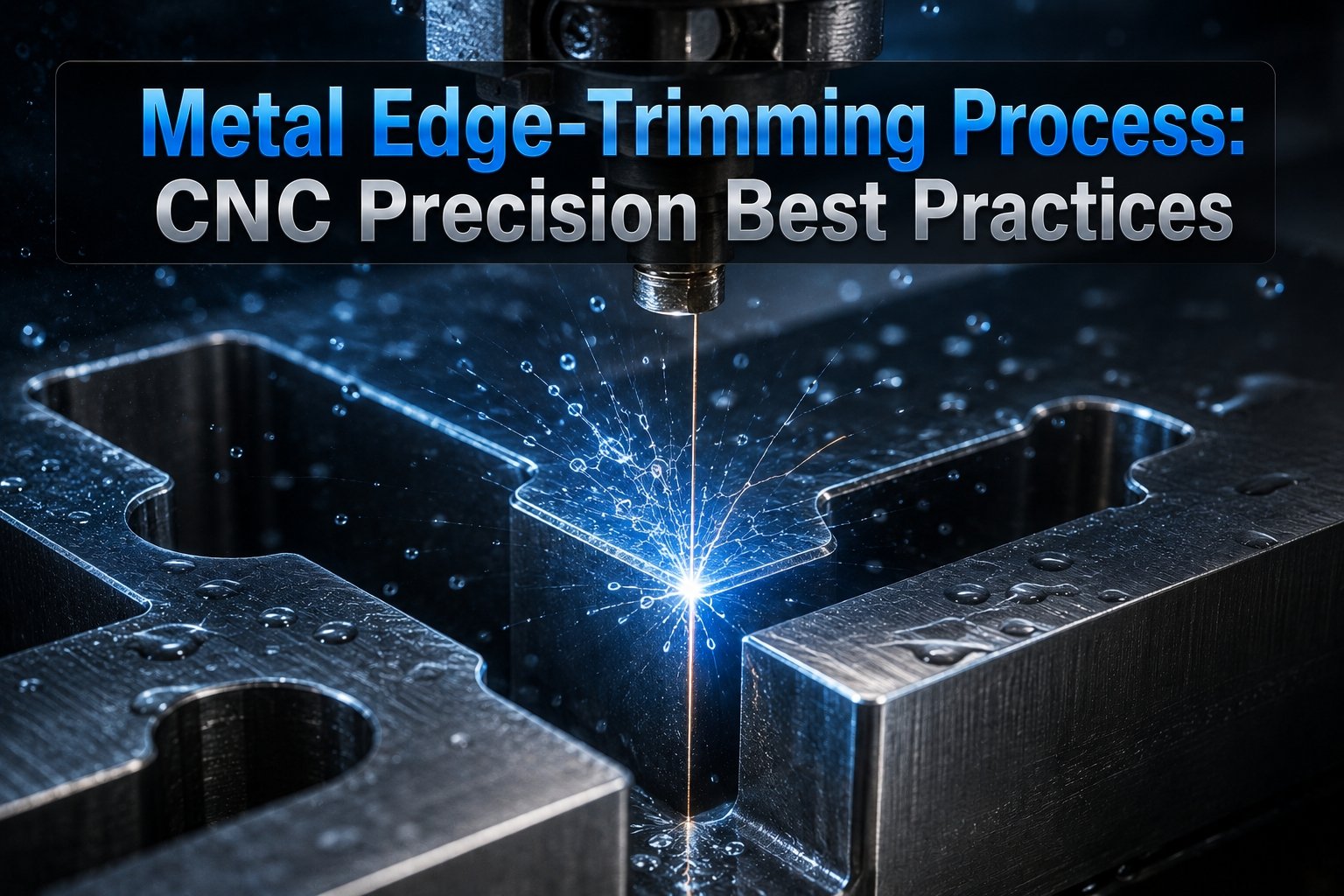
While the primary focus remains on a robust Metal Edge-Trimming Process, modern industrial assemblies frequently combine metallic frames with precision polymers or optical elements. Sourcing teams often consolidate vendors by choosing a supplier capable of handling both material domains. At Boraco Machining’s advanced facility, the same engineering discipline applied to custom cut metal is adapted for polymers.
Processing synthetics requires an entirely different thermal and mechanical paradigm compared to metals. For instance, when configuring a small cnc cutter for acrylics or polycarbonate, excessive friction triggers material melting or micro-cracking along the edge boundary. To circumvent this, laser-based trimming or specialized routing tools are leveraged.
- Laser Cut Acrylic & Perspex: Utilizing tuned CO2 lasers to create a vaporized boundary leaves a flame-polished, transparent edge on laser cut perspex and lasered acrylic without requiring secondary manual buffing.
- Laser Cut Lucite & Plastic: Precise speed control prevents scorching or discoloration on laser cut lucite, a necessity for medical and optical instrumentation housings.
- Mechanical Routing: For thick engineering laser cut plastic components that exhibit low thermal thresholds, a single-flute up-shear 3d wood cutter geometry is often modified to rapidly evacuate polymer chips, keeping the trimming zone cool.
Whether processing high-tolerance aerospace aluminum or supplying a custom cut acrylic housing for consumer electronics, managing tool geometry and heat extraction remains the universal metric for edge superiority.
Strategic Procurement: Sourcing Quality and Global Distribution
For global procurement managers, securing components with precise edges involves analyzing more than just technical processing sheets; it requires evaluating supply chain reliability, manufacturing capacity, and geographical logistical advantages. Sourcing cut to size metals or complex assemblies from offshore specialists presents substantial financial advantages, provided quality protocols are rigid.
When vetting potential partners, look for suppliers who explicitly outline their quality management frameworks. Certified facilities, such as those holding ISO 9001:2015 credentials, utilize advanced coordinate measuring machines (CMMs) and optical comparators to confirm that edge profiles strictly correspond with customer-supplied CAD models. This documentation mitigates the risks associated with global sourcing.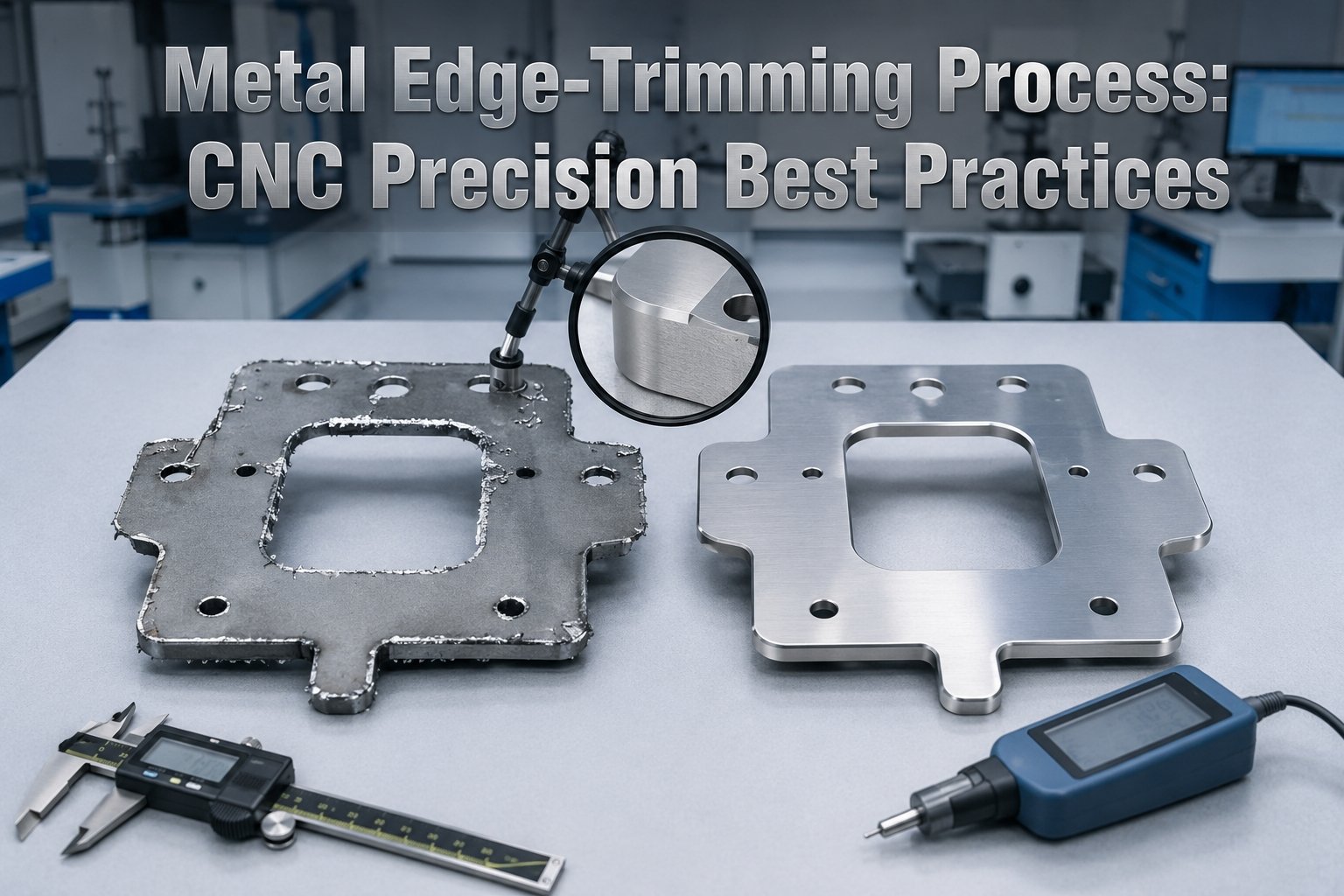
Furthermore, sourcing from integrated industrial clusters like Guangdong, China, grants access to an extensive raw material network and specialized surface finishing options. This ecosystem ensures rapid turnaround times for everything from initial prototyping runs to large-scale mass production contracts. Transitioning your metal sign cutter components or aerospace structural brackets to an expert manufacturer ensures repeatable part accuracy and streamlined logistics.
Ready to elevate your component quality? Eliminate assembly interference and unpolished edges by partnering with our expert engineering team. Upload your STEP files today for a clear, competitive quotation.
Contact Boraco Machining Now for Custom B2B Manufacturing Solutions
Summary and Conclusion
Mastering the Metal Edge-Trimming Process requires selecting the exact machining methodology—whether laser, mechanical milling, or wire EDM—calibrated perfectly to the underlying material properties. By enforcing rigorous GD&T standards and optimizing speed parameters, manufacturers eliminate burrs, preserve edge metallurgy, and ensure flawless component mating. To learn more about our end-to-end production capabilities, review our corporate overview or explore our comprehensive manufacturing services portfolio.
Ready to secure precision-engineered components for your next project? Submit your RFQ to Boraco Machining today to get started with an industrial manufacturing specialist.
Frequently Asked Questions
What is the primary cause of burr formation during the metal edge-trimming process?
Burrs occur primarily due to plastic deformation when a cutting tool or shear blade dulls, or when the cutting clearance/speed is improperly configured. This causes the metal to roll over the edge rather than fracturing cleanly along the planned trim line.
How does wire EDM edge trimming compare to laser cutting for thin metals?
Wire EDM provides ultra-precise, stress-free edges with zero heat-affected zone (HAZ) and tolerances down to ±0.005mm, making it ideal for high-precision components. Laser cutting is significantly faster and more cost-effective for mass production, but can introduce minor thermal stress along the trimmed margin.
Can a metal laser cutter be used to trim polymers like acrylic or polycarbonate?
Yes. CO2 lasers are highly effective for trimming materials like acrylic (Perspex), producing a flame-polished, clear edge. However, polycarbonate requires careful modulation, as it tends to discolor and char under standard laser cutting configurations.
Why is GD&T profile tolerancing critical for edge-trimmed parts?
Profile tolerancing ensures that the entire boundary of a 3D or 2D shape stays within a defined geometric zone relative to datum frameworks. This prevents assembly interference in complex, mating OEM systems, which standard linear dimensions cannot guarantee.