
Design for Assembly (DFA): Streamlining Product Development
Reducing manufacturing costs requires optimizing how components fit together. This guide delivers actionable Design for Assembly (DFA) principles to eliminate production bottlenecks, reduce part counts, and accelerate your time-to-market.
Understanding DFA in Modern Precision Manufacturing
Design for Assembly (DFA) is a systematic engineering methodology focused on designing products to optimize and simplify the assembly process. For B2B procurement professionals and OEM engineers, implementing DFA principles early in the product development lifecycle is the most effective lever for reducing labor costs, minimizing assembly errors, and shortening production cycles. By analyzing how precision components interact during manual or automated assembly, engineering teams can eliminate redundant hardware and design intuitive interfaces.
In high-precision sectors like aerospace, automotive, and electronics, DFA cannot be separated from the manufacturing processes that produce the individual components. Whether your product relies on precision cnc machining, sheet metal fabrication, or plastic injection molding, assembly complexity directly dictates your total cost of ownership (TCO). According to industry benchmarks published by the Society of Automotive Engineers (SAE), up to 80% of a product’s manufacturing cost is determined during the initial design phase, making early-stage DFA optimization critical.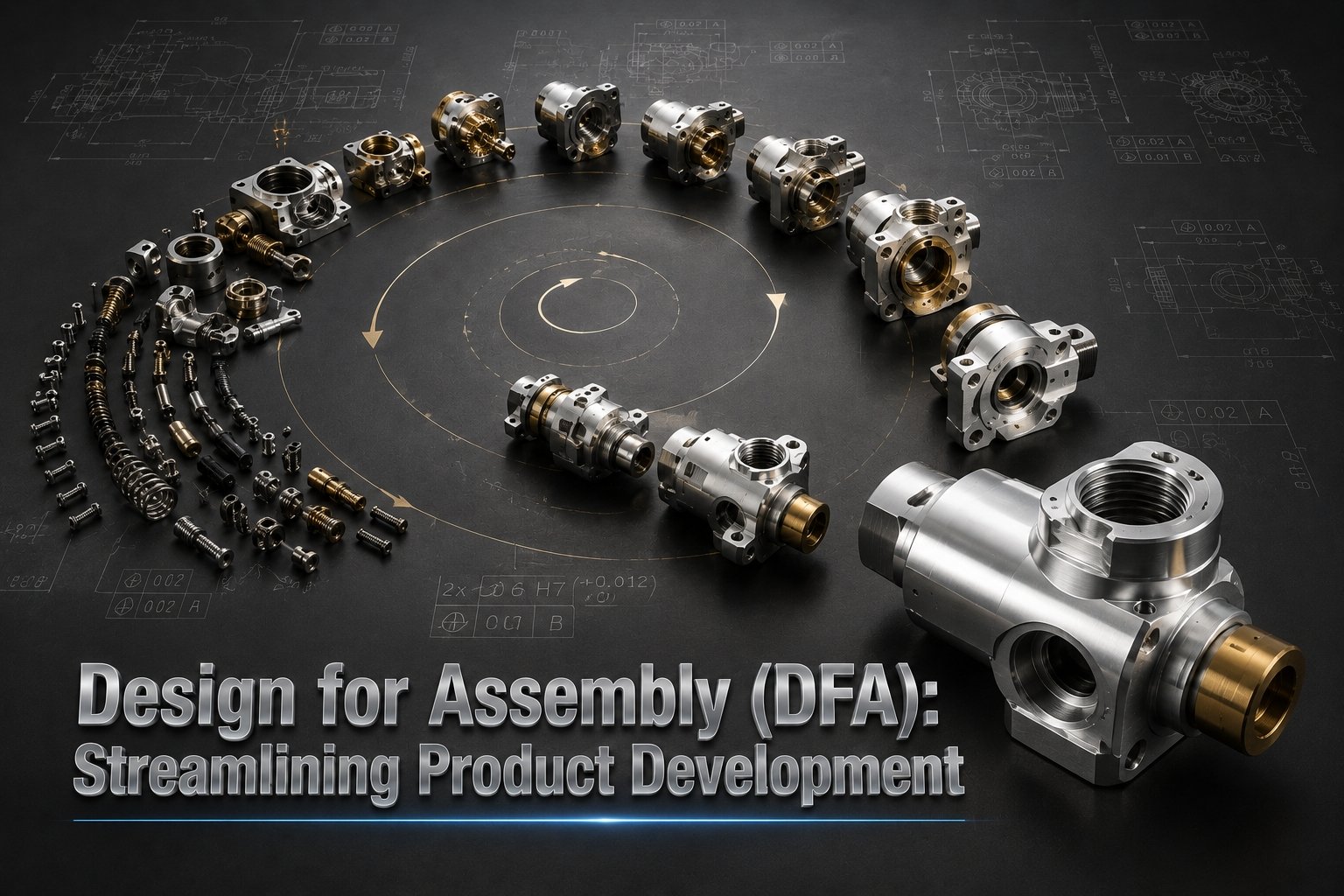
When sourcing custom precision parts, working with an integrated precision machine shop that understands assembly mechanics protects your margins. Modern production lines require components that align perfectly without manual filing, shimming, or force. Implementing DFA guarantees that every individual part—whether a multi-axis milled housing or a simple turned fastener—is optimized for its specific role within the larger mechanical system.
What is Geometric Dimensioning and Tolerancing (GD&T)?
Geometric Dimensioning and Tolerancing (GD&T) is a standardized system of symbols, rules, and definitions used on engineering drawings to explicitly communicate the allowable variation of geometric features. Unlike traditional coordinate dimensioning, GD&T defines the exact theoretical zone for features such as flatness, cylindricity, perpendicularity, and true position relative to specific datums.
In Design for Assembly (DFA), GD&T is indispensable. It establishes statistical tolerance stacks that ensure mating precision metal parts fit together perfectly during assembly, regardless of manufacturing lot variations, without requiring costly manual adjustments.
Core Principles of Design for Assembly
The primary objective of DFA is minimizing the number of individual parts within a product. Every separate part introduces overhead: it must be designed, sourced, inspected, inventoried, and handled during assembly. By consolidating multiple features into a single, complex component—easily achieved through modern 5-axis milling or advanced die casting—you drastically lower your logistical and assembly burdens.
Another foundational principle is ensuring parts are symmetrical or distinctly asymmetrical. If a part is symmetric, an assembly worker or robotic pick-and-place system cannot orient it incorrectly. Conversely, if a part requires a specific orientation, explicit asymmetrical features, such as locating pins or keyed slots, must prevent incorrect mating. This approach, known as Poka-Yoke (mistake-proofing), eliminates assembly line errors before they happen.
To help procurement and engineering teams quantify these design choices, the following table outlines standard mechanical tolerances and surface finish parameters required for successful DFA execution across various precision components:
| Manufacturing Process | Typical Material | Standard Tolerance (mm) | Precision Tolerance (mm) | Surface Roughness (Ra) |
|---|---|---|---|---|
| Precision CNC Turning | Stainless Steel / Copper | ±0.05 mm | ±0.005 mm | 0.4 to 0.8 µm |
| Precision CNC Milling | Aluminum 6061-T6 | ±0.08 mm | ±0.010 mm | 0.8 to 1.6 µm |
| Precision Laser Cut | Steel / Galvanneal | ±0.15 mm | ±0.050 mm | 3.2 to 6.3 µm |
| Die Casting | Aluminum / Zinc Alloys | ±0.20 mm | ±0.080 mm | 1.6 to 3.2 µm |
When designing your assembly hierarchy, aim for a top-down, Z-axis insertion approach. Allowing parts to be stacked vertically utilizes gravity to stabilize components during assembly, reducing the need for specialized fixtures. If your assembly requires turning, flipping, or multi-directional fastening, labor times and costs escalate rapidly.
Optimize Your Assembly Costs — Request a DFM/DFA Review Today
Material Selection and Machinability in DFA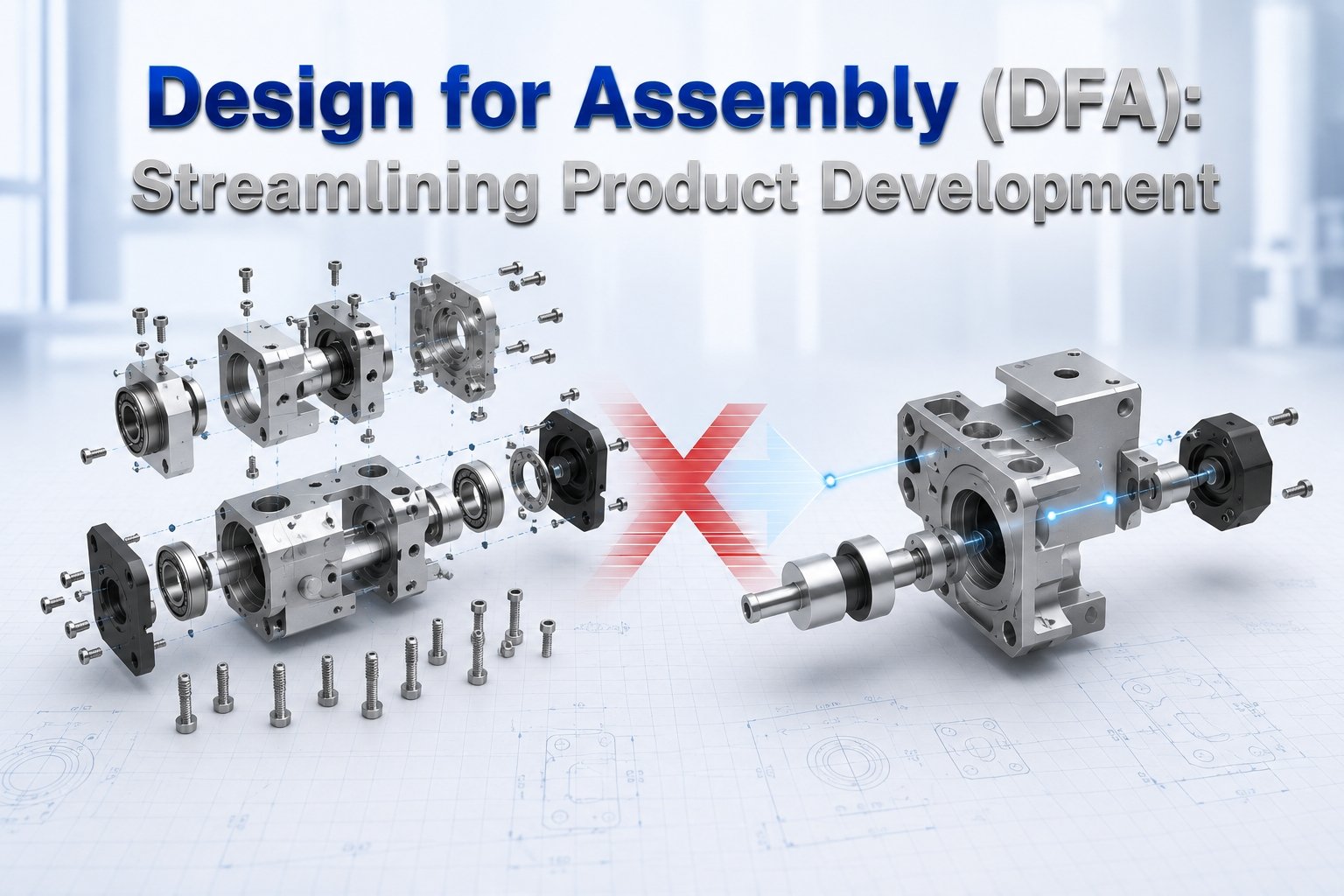
Material choice directly impacts both component cost and assembly integrity. A common pitfall in product development is specifying overly exotic materials when standard, highly machinable alloys would suffice. The machinability of a material dictates how fast it can be processed via precision turning or milling, directly affecting the unit price of your custom precision parts. For instance, substituting Stainless Steel 316 with Aluminum 6061-T6 where mechanical stresses allow can slash machining cycle times by more than 50%.
Furthermore, material compatibility is vital for long-term assembly reliability. Mating dissimilar metals, such as aluminum and carbon steel, introduces the risk of galvanic corrosion in humid environments. In such cases, specifying proper surface finishing services—like anodizing, passivation, or zinc plating—is a critical DFA requirement to ensure the longevity of the combined metal precision parts.
For electronics and industrial applications, balancing metal precision parts with precision plastic parts can optimize weight and insulation properties. Engineering plastics like POM (Acetal), PEEK, and Nylon offer excellent dimensional stability and can be machined into complex, snap-fit components that completely eliminate the need for threaded fasteners, driving assembly efficiency even higher.
Leveraging Advanced Machining Capabilities for DFA
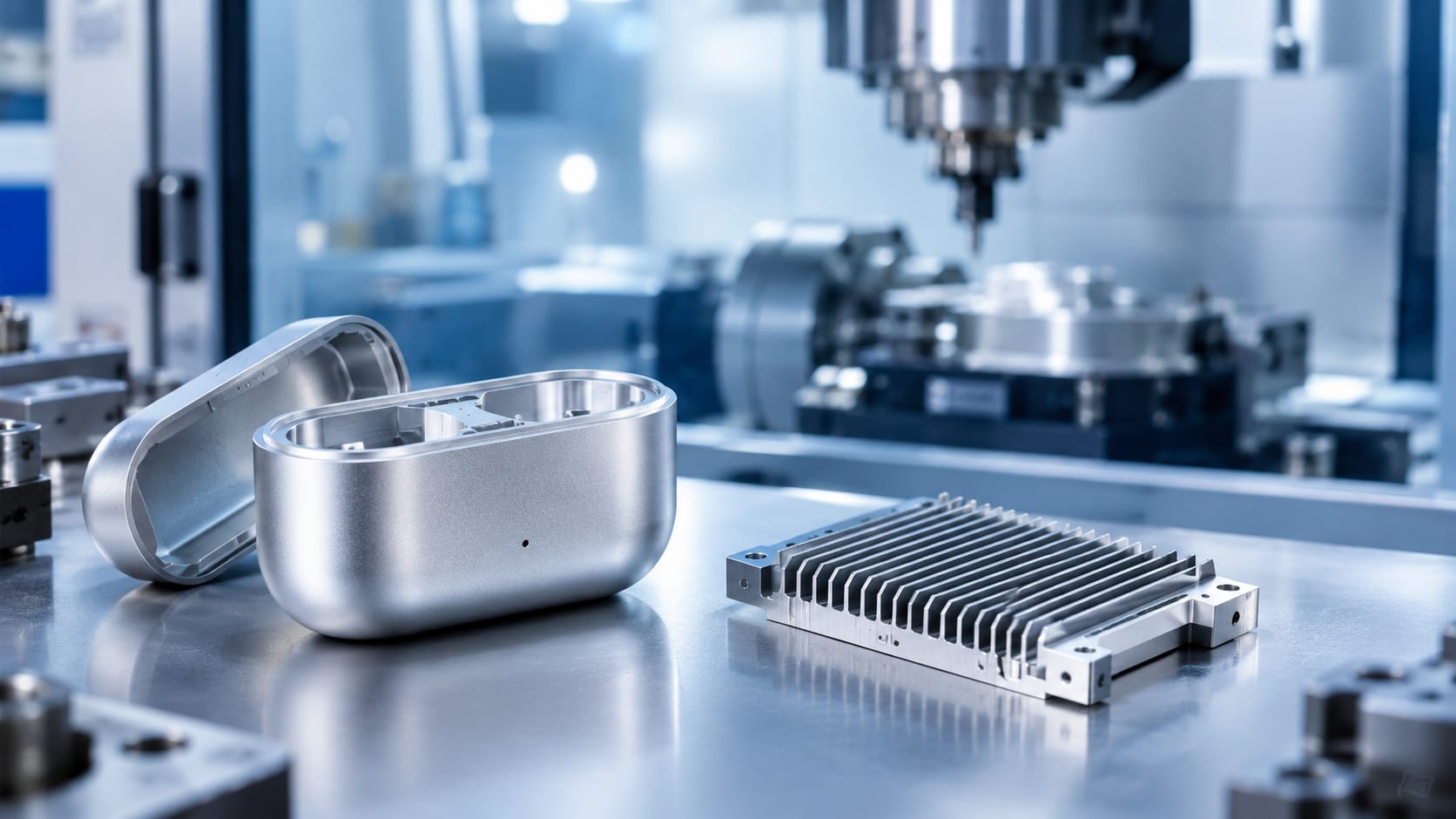
Partnering with tech-driven china cnc machining suppliers unlocks production capabilities that make aggressive DFA goals achievable. For example, traditional 3-axis milling often requires complex multi-part fabrications because geometries are constrained. However, utilizing 4-axis and 5-axis CNC machining allows engineers to consolidate multi-component assemblies into single, monolithic cnc precision parts. This eliminates downstream welding, riveting, and inspection processes entirely.
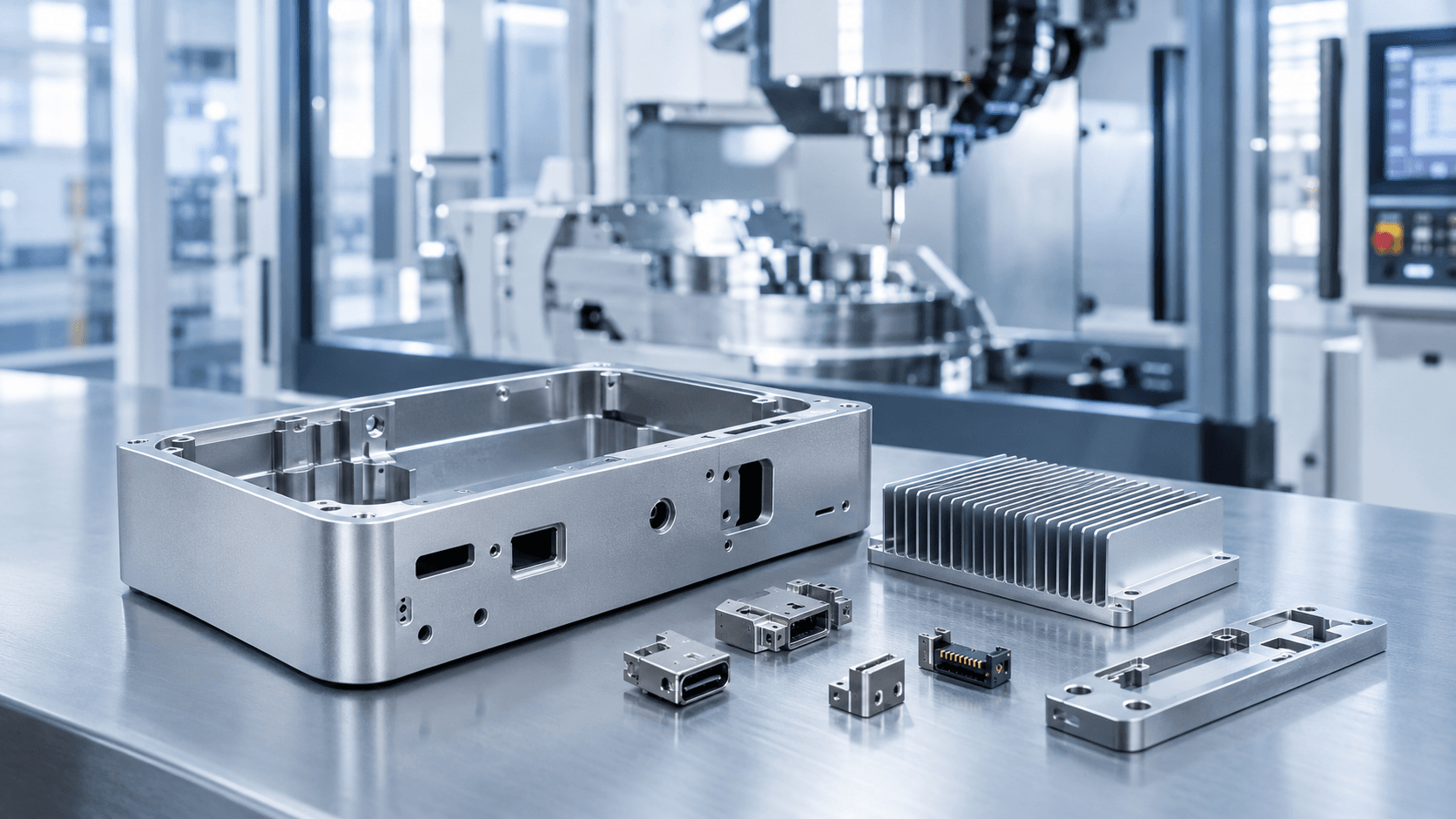
Consider a complex electronic enclosure or an aerospace bracket. Rather than fabricating five individual sheet metal components and joining them with ten fasteners, a 2,000 sqm state-of-the-art manufacturing plant equipped with multi-axis machinery can mill the entire structure out of a single aluminum block. This eliminates the tolerance stack-up issues associated with sheet metal bending and fastening, while guaranteeing precise alignment for internal electronics or mechanical linkages.
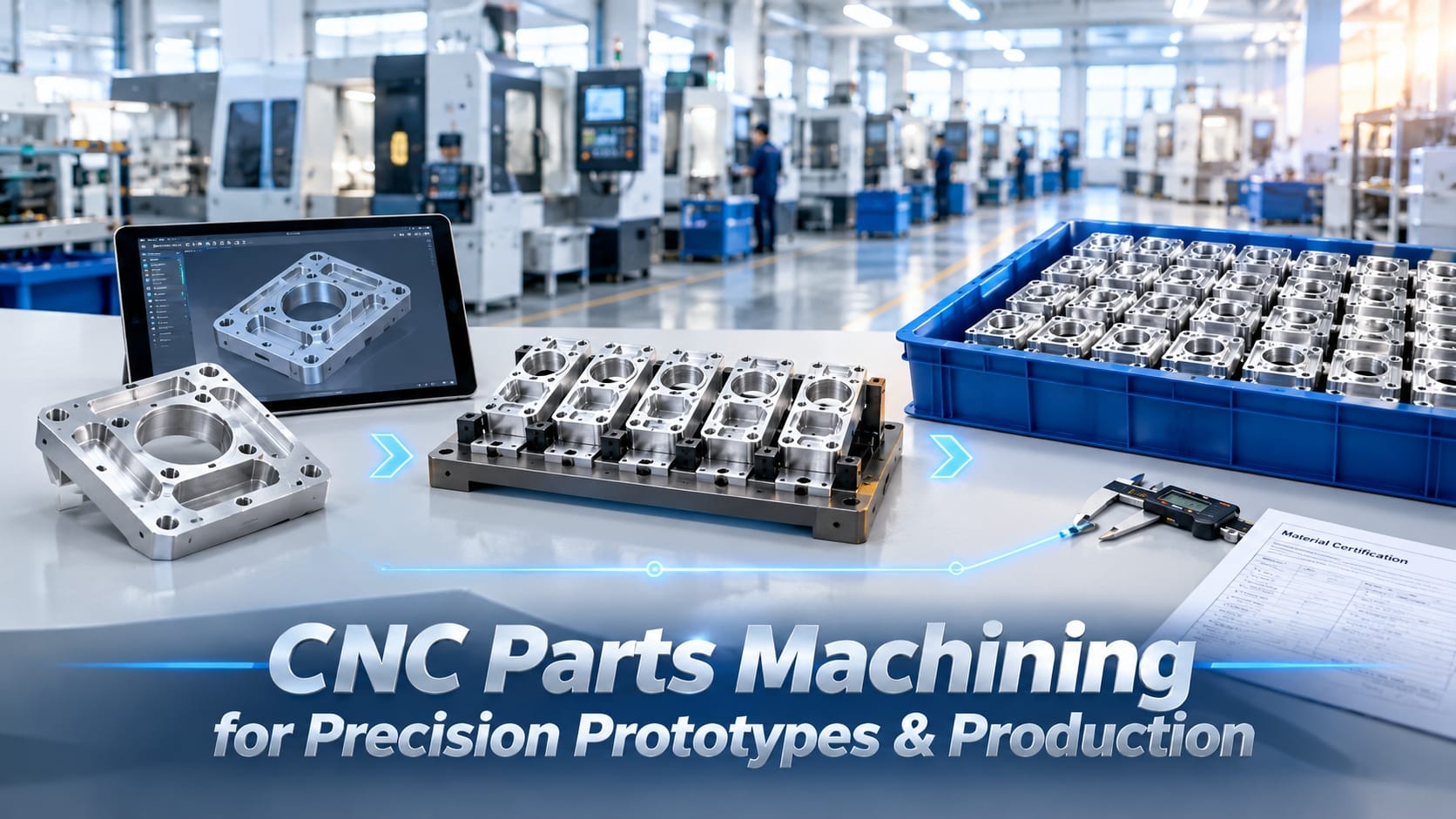
To transition smoothly from product development to market launch, procurement managers should choose a precision parts factory capable of managing the entire product lifecycle. This spans from rapid prototyping and low-volume production to mass production. This continuity ensures that the DFA optimizations established during the prototyping phase carry over seamlessly into scale production, preventing unexpected assembly issues on the factory floor.
Contact Boraco Machining for High-Precision Component Sourcing
Evaluating Your Precision Manufacturing Partner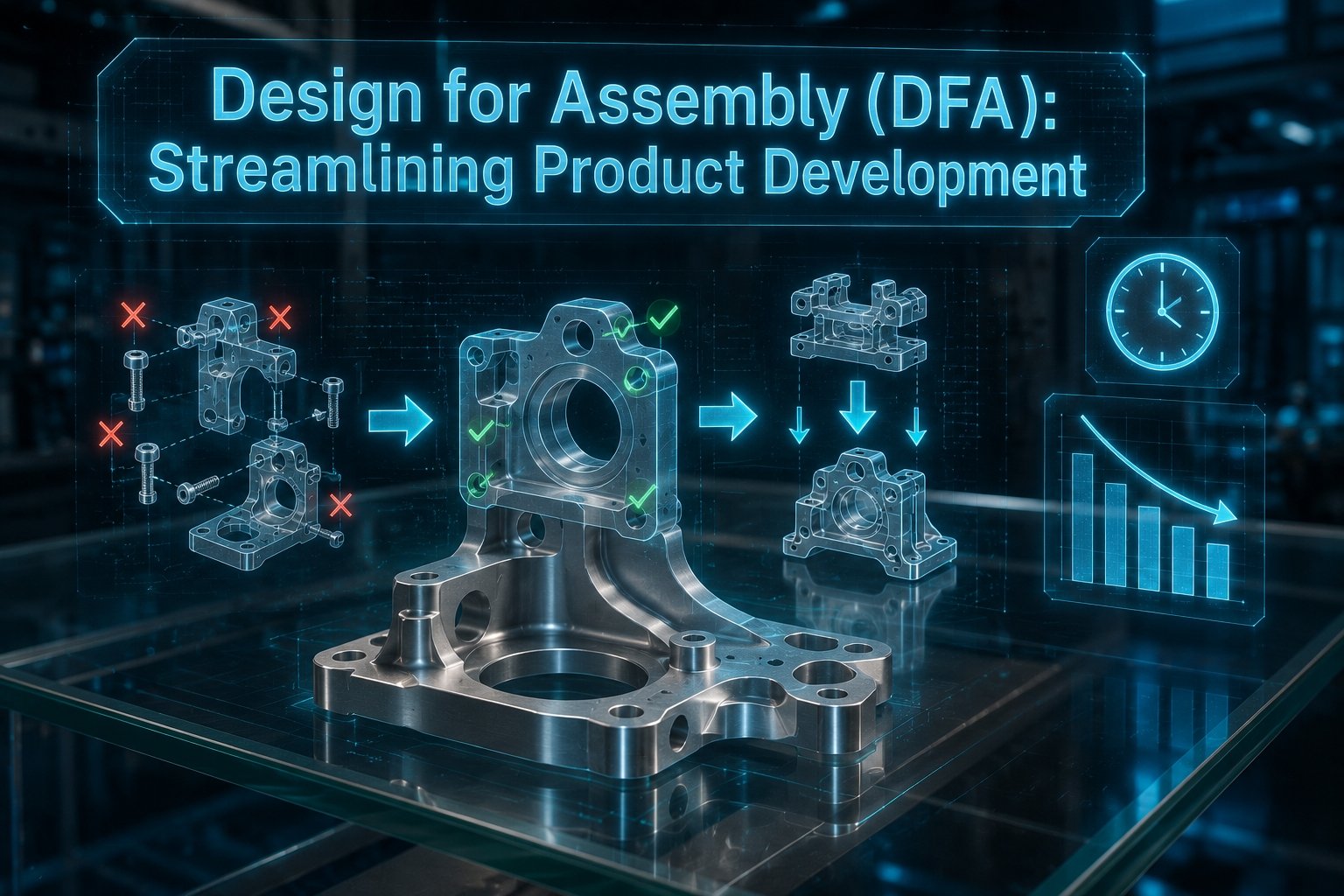
Successful DFA execution relies heavily on the technical competence of your manufacturing partner. When evaluating potential suppliers, technical certifications provide an objective baseline for quality and consistency. A qualified supplier must hold an ISO 9001:2015 certification, ensuring a standardized quality management system that governs everything from raw material traceability to final dimensional inspection. For global compliance, particularly in electronics and medical fields, verify that components meet CE and RoHS standards.
Beyond certifications, assess the supplier’s engineering feedback mechanisms. A reliable partner doesn’t just execute your print blindly; they provide comprehensive Design for Manufacturability (DFM) and DFA feedback. They analyze your drawings for tight tolerance areas that drive up costs unnecessarily, identify potential tool interference issues in precision turned parts or precision milling parts, and recommend subtle geometry modifications that simplify both machining and eventual assembly.
At Boraco Machining, founded in 2013 in Dongguan, Guangdong Province, China, we operate under the strict core principle: “Precision Manufacturing, Quality First.” Our engineering team collaborates directly with your procurement and design departments. We review your assemblies to optimize tool paths, minimize setups, and deliver precision cnc services that align perfectly with your DFA objectives, keeping your production lines moving efficiently.