What Is a Custom Plate in CNC Machining?
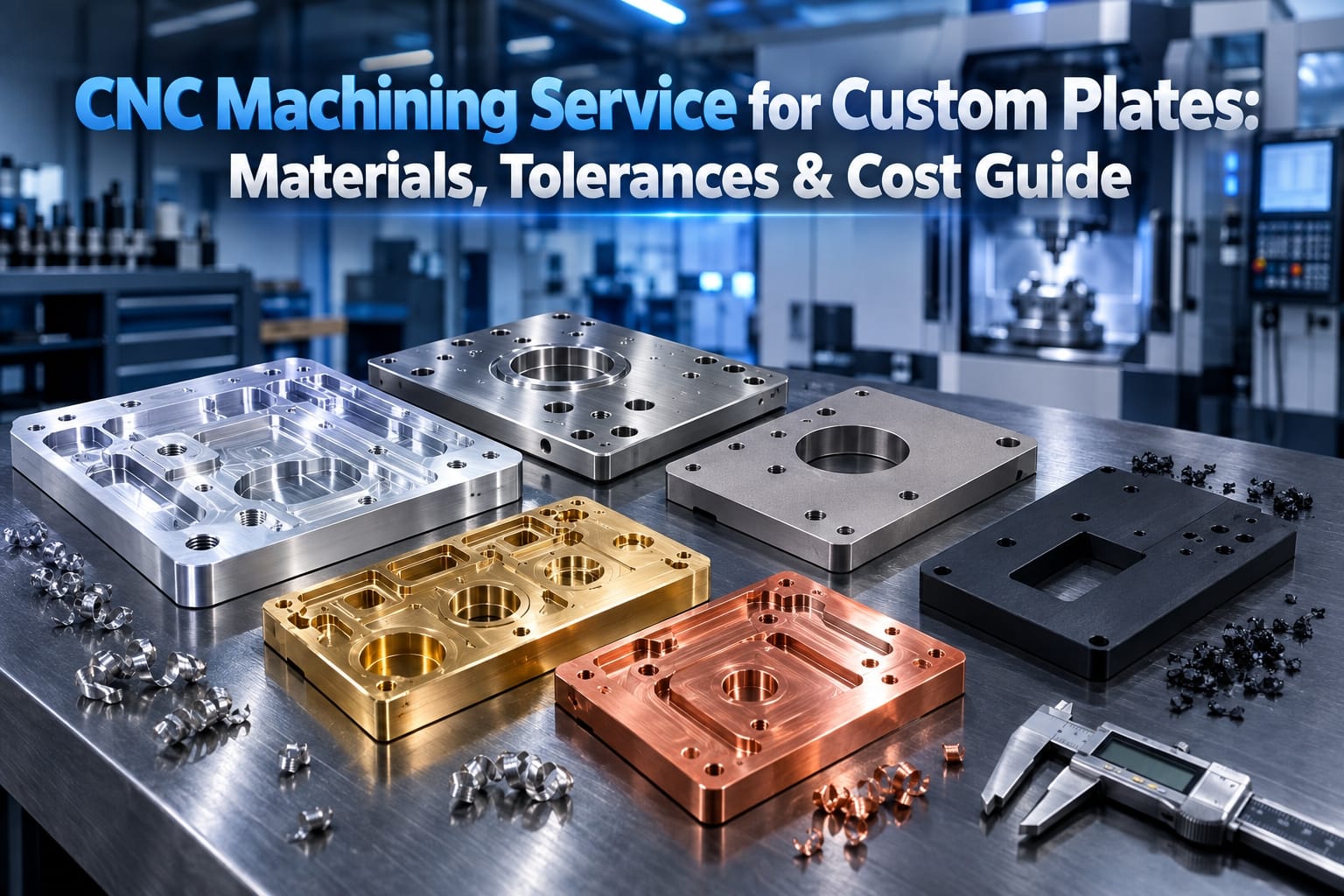
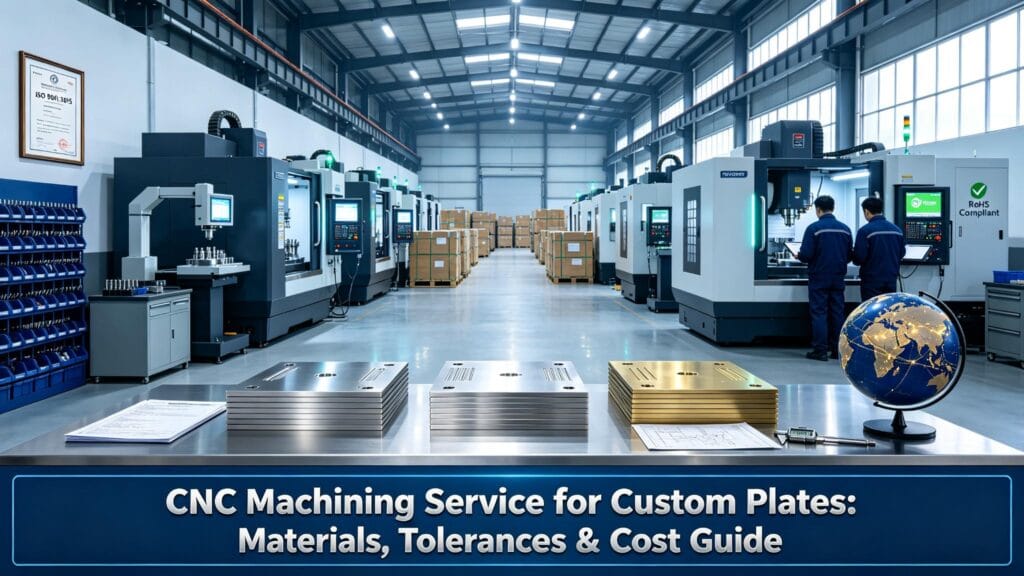
A custom plate is a flat or near-flat component machined from solid plate stock — typically aluminum, steel, stainless steel, titanium, brass, or engineering plastic. It starts as a rectangular blank and is machined into its final form: the profile is cut, holes are drilled, pockets and slots are milled via multi-axis CNC milling services, edges are deburred, and threads are tapped where the design calls for them.
Plates are defined less by their overall shape than by a few critical characteristics: thickness, flatness, hole position and size, edge quality, and surface finish. A plate that is “close enough” on paper can fail in assembly — a mounting hole 0.1 mm off across a long diagonal, or a plate that bows the moment it is bolted down.
Common Types of Custom Plates and Their Applications
Custom plates show up in nearly every B2B industry, usually as the structural backbone of an assembly. Here are the most common types:
| Plate Type | Typical Application | Common Materials |
|---|---|---|
| Base & mounting plates | Machine bases, equipment mounting, structural support | Aluminum, Steel |
| Adapter & interface plates | Converting mounting patterns between components | Aluminum, Stainless steel |
| Fixture & tooling plates | Workholding, jigs, inspection fixtures | Aluminum, Tool Steel |
| Cover & enclosure plates | Protecting electronics machining assemblies, sealing housings | Aluminum, Stainless steel, Plastic |
| Heat sink & thermal plates | Dissipating heat from high-power electronic components | Aluminum, Copper |
| Valve & manifold plates | Fluid distribution and pneumatic control | Stainless steel, Brass, Aluminum |
Many buyers need several of these in a single program — a base plate, a cover plate, and an adapter, for example. That is one reason an integrated manufacturing plant that combines precision machining with sheet metal processing and custom casting can simplify your vendor management significantly.
Choosing the Right Material for Custom Plates
A plate’s material decides its mechanical strength, weight, thermal behavior, corrosion resistance, and total production cost. There is no universal best material — only the right fit for your application.
- Aluminum — The default choice for structural custom plates: lightweight, highly machinable, corrosion-resistant, and ideal for protective coatings. Specialized aluminum machining is where most plate programs start.
- Steel & Stainless Steel — Stiffer and stronger than aluminum; suits high-load structural bases. Stainless steel (304/316L) is critical for medical machining and food processing where corrosion resistance matters. Learn more on our steel machining page.
- Titanium — Delivers unmatched aerospace-grade strength-to-weight ratios for strict weight budgets. Precision titanium machining requires strict feed/speed controls and specialized tooling.
- Brass & Copper — Offers superior electrical conductivity and thermal dissipation for thermal management hardware, busbars, and heat exchangers. Explore our brass and copper machining services.
- Engineering Plastics — PEEK, PTFE, POM (Delrin), acrylic, and ABS where electrical insulation, chemical resistance, or weight reduction is required. Dedicated plastic machining handles these polymers cleanly without thermal warping.
Because Boraco processes over 20+ CNC machining materials across structural alloys and polymers, our engineering team provides unbiased material recommendations tailored to your load requirements, environment, and budget.
Tolerances, Flatness, and Surface Finish: What’s Realistic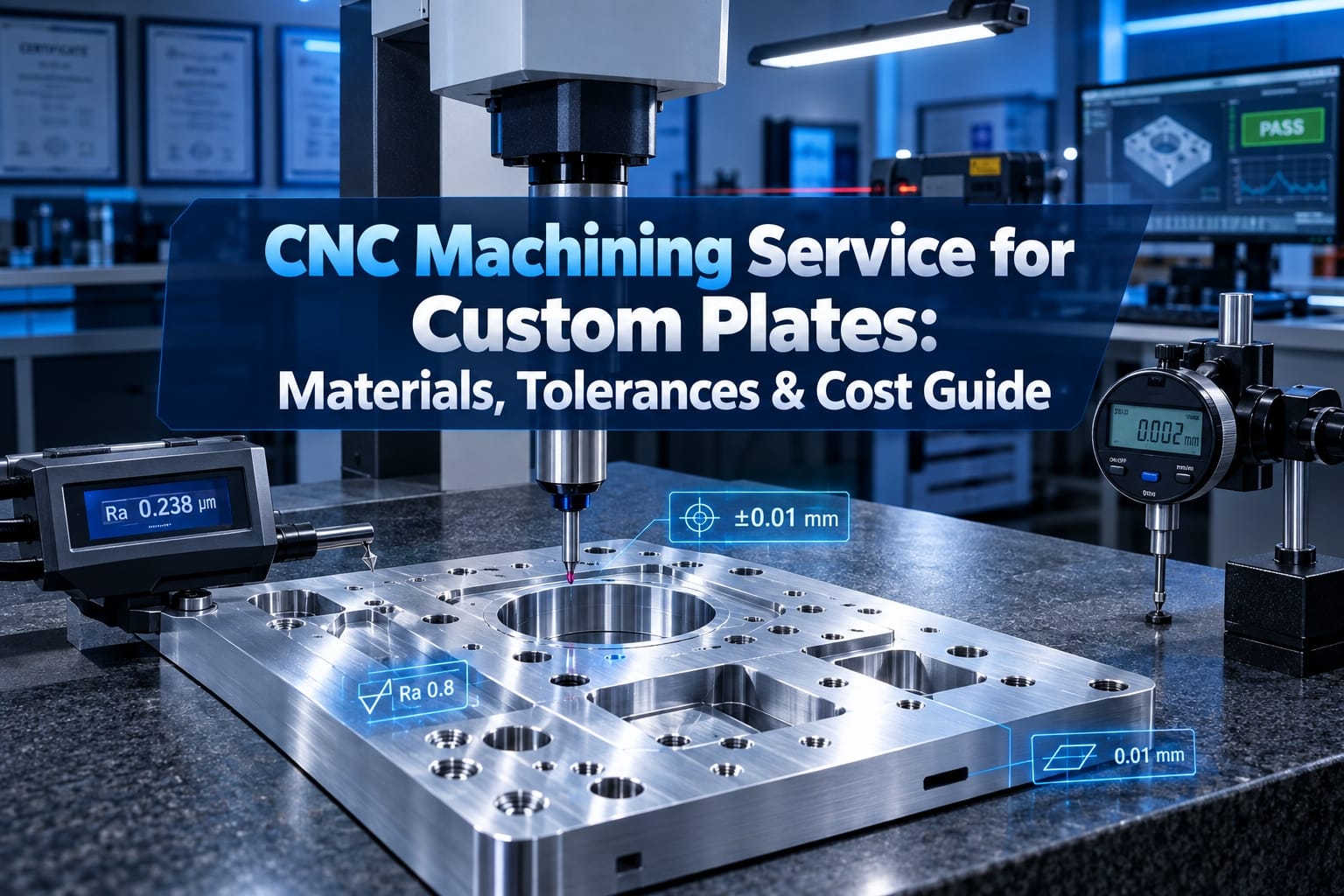
Custom plates are specified more by dimensional tolerance and flatness than by complex surface 3D geometries. Standard commercial tolerances for milled features typically hover around ±0.1 mm, while critical interface dimensions are routinely held to tight tolerances of ±0.01 mm using high-precision CNC milling and CNC turning services.
Flatness deserves special engineering attention. Large, thin plates are prone to stress-relief warping and thermal distortion during high-speed cutting. Managing raw material selection and stress-relief heat treatments is essential. A serious machining partner flags these risk factors during the initial Design for Manufacturability (DFM) evaluation before cutting metal.
Surface roughness is measured in Ra. A standard machined surface finish of Ra 1.6 µm is typical for functional structural faces; mirror-like or sealing faces (Ra 0.8 µm or finer) increase machining time and cost. For corrosion resistance or visual branding, secondary surface treatments — including anodizing, powder coating, plating, and passivation — are available directly through our internal finishing services.
What Drives the Cost of a Custom Plate?
Plate components look deceptively simple, which is why supplier quotes vary significantly. The primary cost drivers include:
- Raw Material Stock — Alloy grade, plate thickness, and market material prices.
- Blank Footprint Size — Larger plate dimensions require larger machining envelopes and specialized workholding fixtures.
- Tolerance & Flatness Specifications — Ultra-tight tolerances require slower cutting passes, multi-stage stress relief, and frequent CMM metrology checks.
- Feature Density — High hole counts, deep pocketing, micro-tapped threads, and complex 3D contours increase total machine cycle time.
- Post-Processing & Finishing — Anodizing, electroplating, or painting adds processing steps and quality verification stages.
- Production Quantity — Per-unit costs decrease dramatically from rapid prototyping to volume runs as setup costs are amortized.
Most unnecessary costs come from over-specifying tolerances where standard commercial callouts would suffice. Our engineering review identifies where tolerances can be optimized to reduce cost without compromising mechanical performance.
Prototype to Production: Scaling Custom Plates Without Vendor Handoffs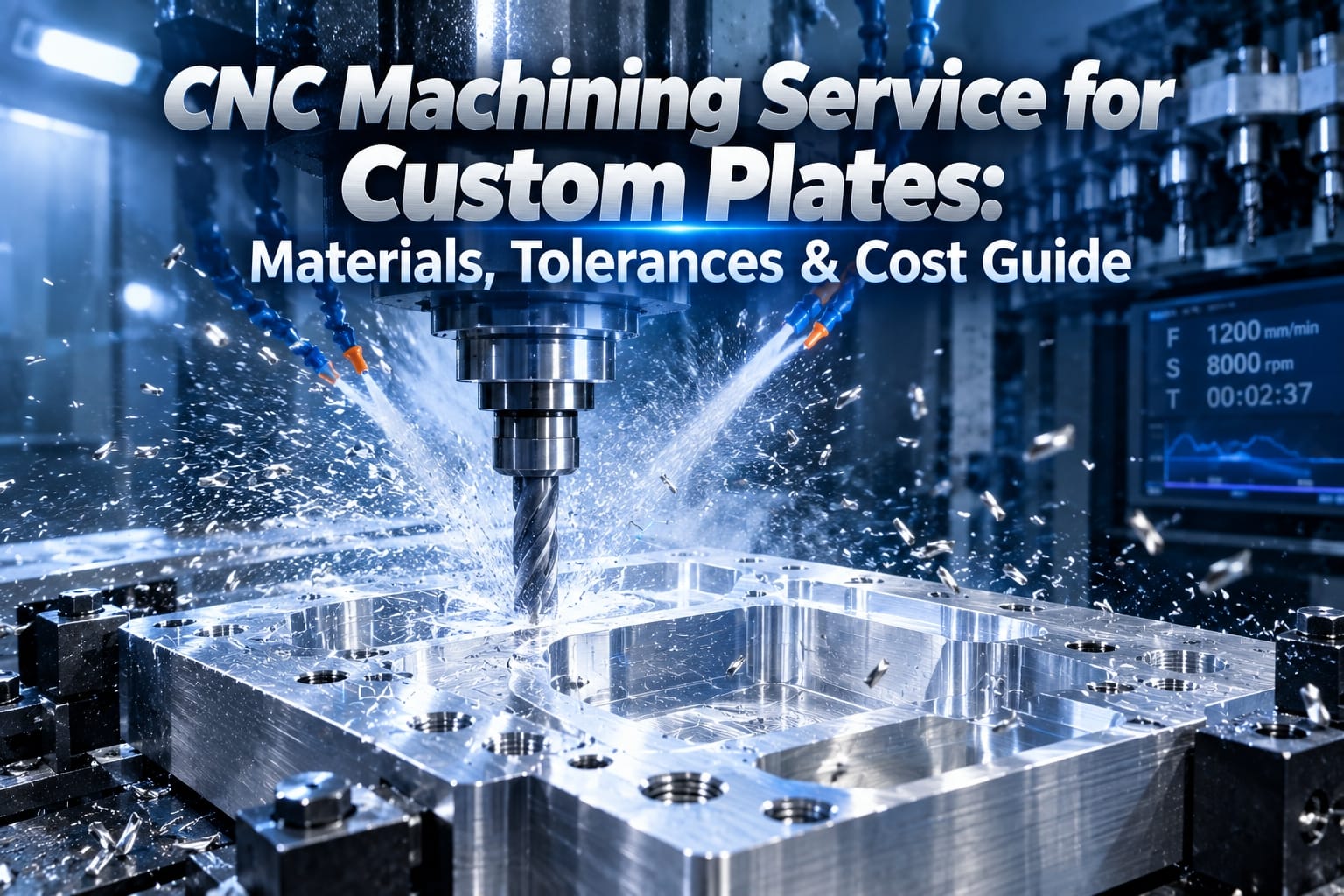
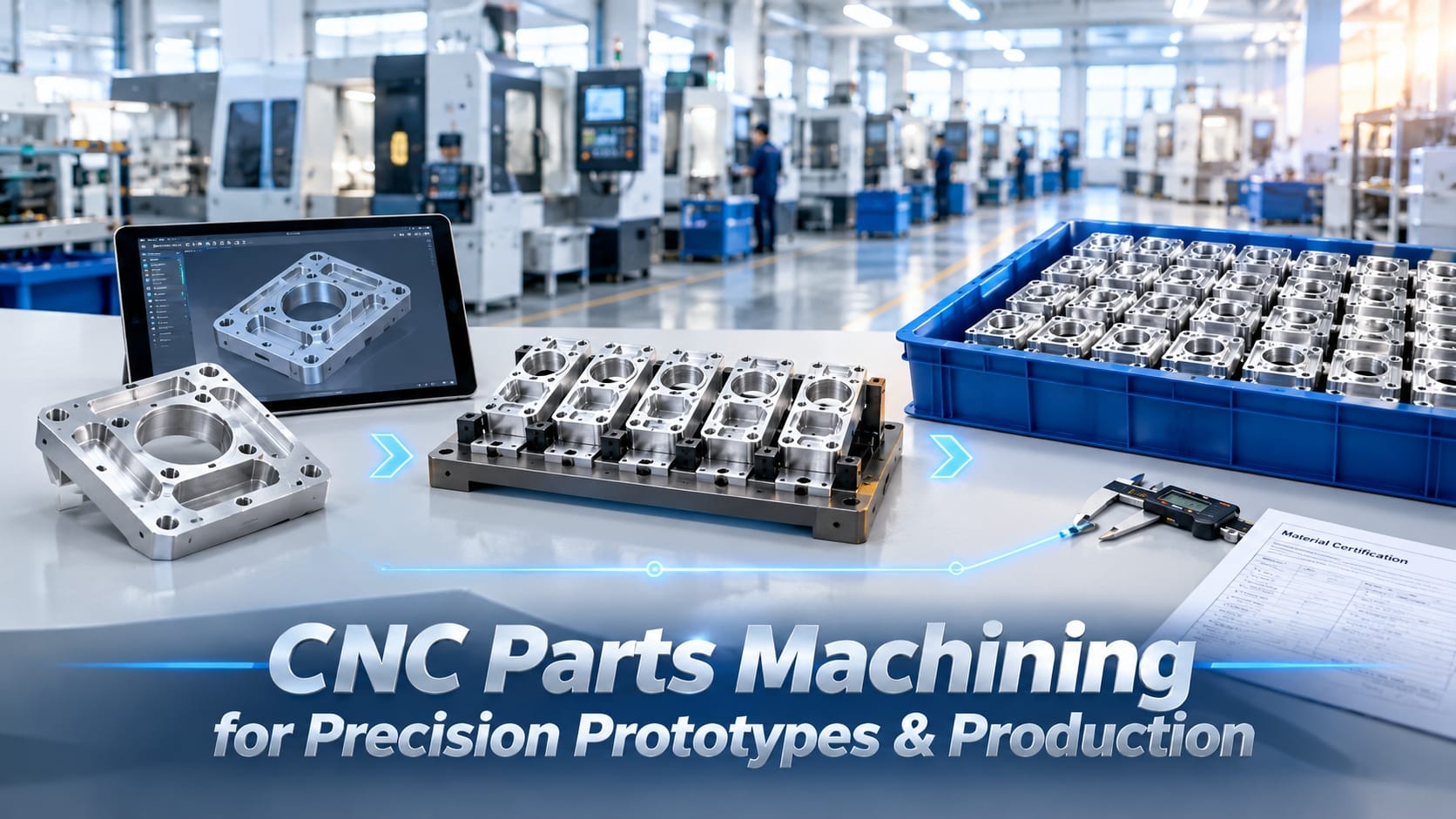
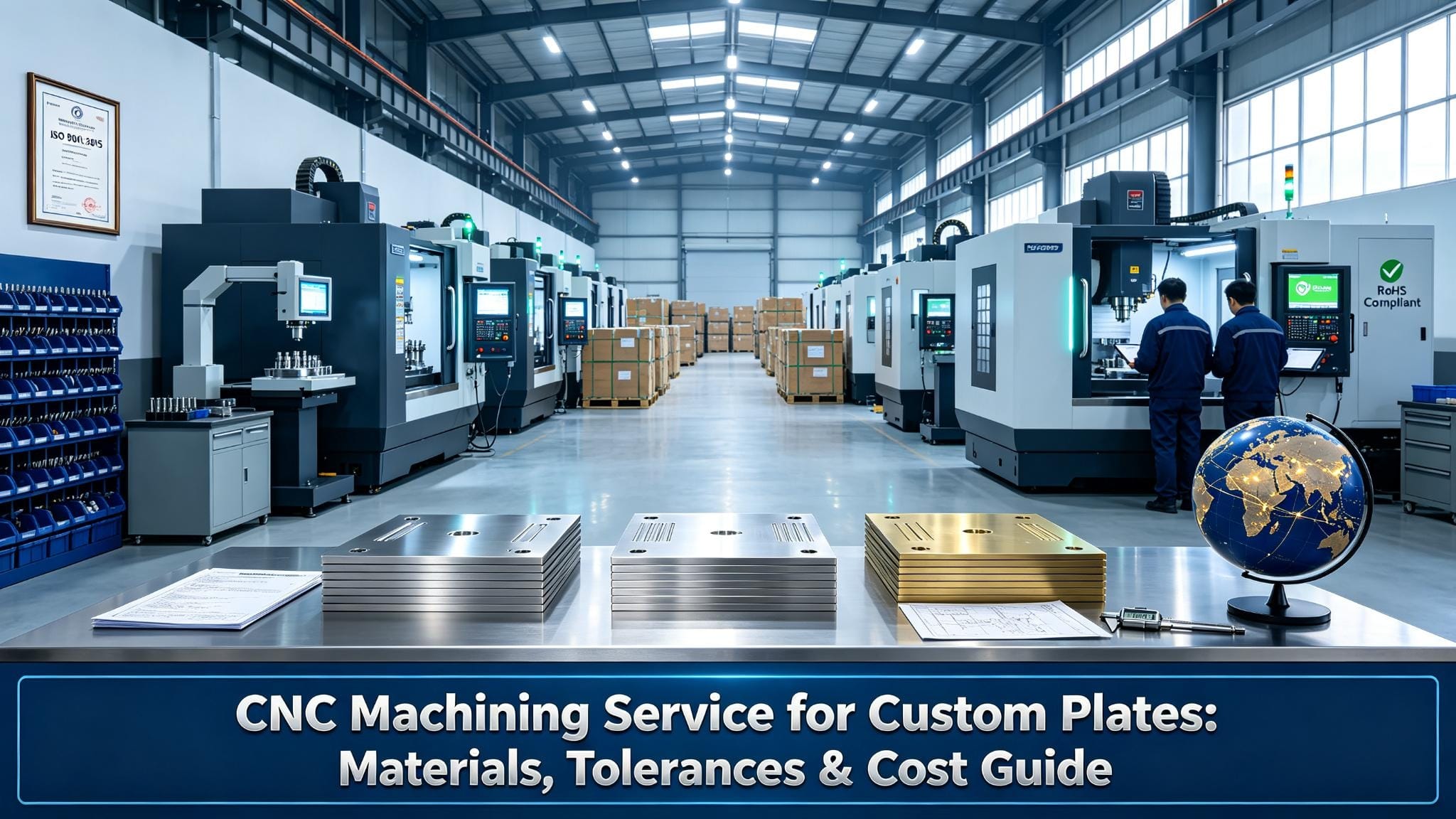
A custom plate that functions perfectly as a prototype can encounter quality drift during mass production if manufactured on different machinery. At Boraco Machining, prototype development, low-volume pilot batches, and full mass production occur inside the same 2,000 sqm manufacturing plant, ensuring consistent tooling, fixturing, and quality inspection protocols across your product lifecycle.
For complex mechanical assemblies, integrating plate machining with specialized mold making services, sheet metal enclosures, or die-cast housings under one roof eliminates multi-vendor coordination risks.
How to Request a Quote for Custom Plate Machining
Submitting an actionable Request for Quote (RFQ) is simple. Include the following details:
- 2D technical drawings (PDF/DWG with critical tolerances) and 3D CAD models (STEP/IGES)
- Target order quantity (prototype, low-volume, or scheduled production)
- Material specifications (or request an engineering recommendation)
- Surface finish requirements and industry compliance standards (e.g., RoHS, CE, or aerospace CNC machining specifications)
Our engineering team evaluates your files and returns a complete quotation alongside comprehensive DFM feedback within 12 hours. Start your project by reaching out on our contact page.
Why B2B Buyers Partner with Boraco Machining
- Integrated 2,000 sqm Facility — In-house multi-axis machining, sheet metal processing, and die casting in Dongguan, Guangdong.
- ISO 9001:2015 Certified Quality Management — Documented quality standards, full material traceability, and CMM dimensional inspection reports supplied with every shipment.
- 10+ Years of Global Export Experience — Supplying mission-critical hardware to aerospace, medical, automotive, and electronics clients worldwide.
- Rapid Technical Support — Direct access to project engineers providing 12-hour DFM feedback and quote turnaround. Learn more on our About Us page.
Frequently Asked Questions
What is a custom plate in CNC machining?
A custom plate is a flat or shaped structural component milled or turned from solid plate stock (aluminum, steel, stainless steel, titanium, brass, or plastic) to custom technical specifications.
What materials are suitable for custom machined plates?
Common materials include aluminum alloys (6061-T6, 7075-T6), stainless steel (304, 316L), tool steel, titanium, brass, copper, and engineering polymers like PEEK and POM. Browse our materials library for details.
What tolerances can be held on machined plates?
Standard milling tolerances are ±0.1 mm, while critical mounting or bearing locations can achieve tight tolerances of ±0.01 mm using high-precision CNC milling centers.
Can prototype plate designs scale directly to mass production?
Yes. Because Boraco manages both prototyping and mass production within a single ISO-certified facility, parts transition seamlessly to volume production without process or tooling discrepancies.
Conclusion: Start Your Custom Plate Project
Custom plates serve as the foundational backbone for high-precision mechanical systems. Choosing a supplier that offers early engineering DFM feedback, flexible material selection, and rigorous quality control minimizes production risks and ensures flawless assembly performance.
Ready to optimize your custom plate manufacturing? Upload your 2D and 3D drawing files to request a quote with DFM feedback within 12 hours.