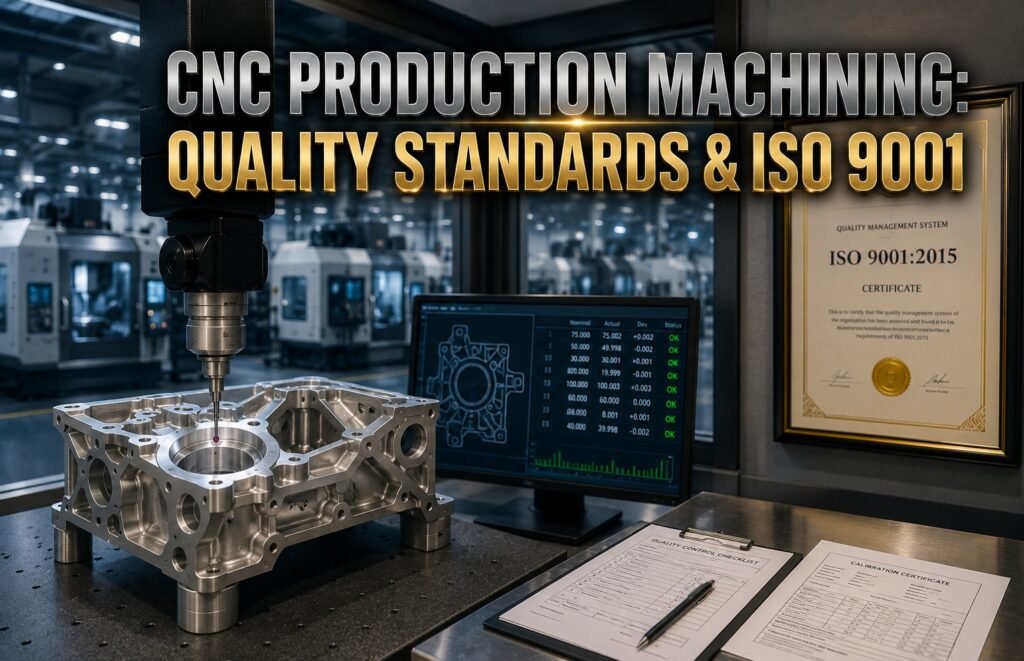
Sourcing high-precision components requires navigating complex quality standards. This guide details how robust ISO 9001:2015 frameworks eliminate manufacturing defects, optimize CNC production machining workflows, and ensure your precision parts meet strict engineering tolerances every single time.
The Role of ISO 9001 in High-Volume CNC Production Machining
For B2B procurement professionals and OEM engineers, scaling from a prototype to high-volume manufacturing introduces significant risks. The primary challenge is maintaining dimensional consistency across thousands of complex parts. CNC production machining demands rigorous process control, where even a minor deviation in tool wear or material consistency can lead to catastrophic batch failures. This is where a certified quality management system (QMS) becomes indispensable.
Implementing an ISO 9001:2015 framework inside a modern china machining facility ensures that every phase of manufacturing is documented, monitored, and optimized. From raw material inspection to final coordinate measuring machine (CMM) verification, standardized workflows mitigate human error and machine drift. When outsourcing to international suppliers, verifying these quality systems is the most effective way to guarantee part reliability and streamline your supply chain.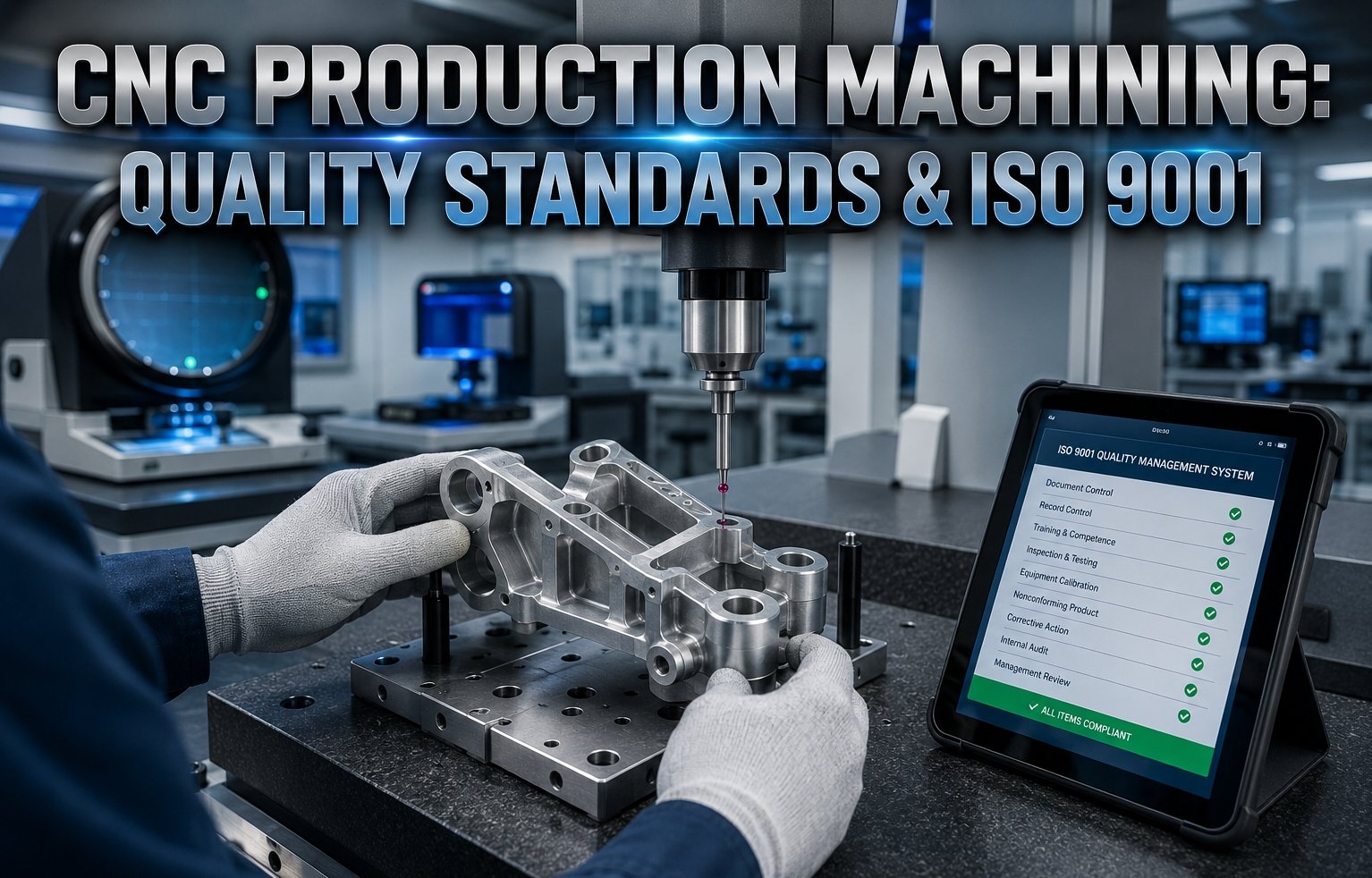
A certified cnc machining service relies on continuous improvement loops to refine its manufacturing parameters. Statistical Process Control (SPC) software tracks critical-to-quality (CTQ) dimensions in real time. By analyzing data from the production floor, engineers can predict tool failure before it occurs, ensuring that every CNC machine operates within its optimal parameters and reducing Scrap Rates to near-zero levels.
What is GD&T (Geometric Dimensioning and Tolerancing)?
Geometric Dimensioning and Tolerancing (GD&T) is a standardized system of symbols, rules, and definitions used on engineering drawings to explicitly communicate the allowable variation of geometric features. Unlike coordinate dimensioning, which only measures linear distances, GD&T defines the precise relationship between part features, such as flatness, parallelism, perpendicularity, and true position relative to specific datums. In high-volume manufacturing, proper application of GD&T prevents over-tolerancing, lowers production costs, and ensures perfect interchangeability of mating components.
Technical Parameters and Tolerances in Precision Manufacturing
Achieving tight tolerances across multi-axis platforms requires an intimate understanding of machine kinematics and material behavior under thermal stress. Whether utilizing a 4-axis or 5-axis cnc machining center, mechanical engineers must match their design requirements with the actual capabilities of the equipment. Factors such as spindle runout, axis backlash, and workpiece clamping deformation directly influence the final geometric accuracy.
To assist sourcing managers in evaluating supplier capabilities, the table below outlines standard and precision technical parameters achieved during stable CNC production machining runs across common industrial materials:
| Material Class | Standard Cutting Tolerance (mm) | Precision Production Tolerance (mm) | Surface Roughness (Ra, μm) | Typical Industrial Applications |
|---|---|---|---|---|
| Aluminum (e.g., 6061-T6, 7075) | ±0.050 | ±0.010 | 0.8 to 1.6 | Electronics enclosures, automotive brackets |
| Stainless Steel (e.g., 304, 316L) | ±0.080 | ±0.015 | 1.6 to 3.2 | Industrial valves, aerospace fasteners |
| Alloy Steel (e.g., 4140, 8620) | ±0.050 | ±0.012 | 0.8 to 2.5 | Heavy machinery gears, structural shafts |
| Engineering Plastics (POM, PEEK) | ±0.100 | ±0.025 | 1.6 to 3.2 | Electrical insulators, medical prototypes |
To maintain these tolerances over an extended production run, precision manufacturers invest heavily in advanced calibration equipment. Renishaw probing systems are integrated directly into the cnc machining services workflow to execute in-process part measurement and automated tool offset corrections. This level of automation eliminates manual measurement errors and guarantees that high-volume production lots remain identical from the first part to the last.
If your project demands highly strict adherence to complex geometric tolerances, you can submit your technical drawings directly to our engineering team for a comprehensive manufacturability review. Request an Expert CNC Production Quote Here.
Material Machinability and Its Impact on Production Costs
Material selection is one of the most critical variables affecting the total cost of ownership (TCO) in cnc production machining. The physical properties of a metal—such as its hardness, tensile strength, and thermal conductivity—determine its machinability index. A lower machinability index means the material is harder to cut, requiring slower spindle speeds, reduced feed rates, and resulting in accelerated tool wear, which ultimately increases processing times and overall costs.
For example, machining specialized aerospace-grade titanium alloys requires significantly more rigid machine setups and custom carbide tooling compared to processing free-machining aluminum grades. According to established engineering benchmarks from the American Society of Mechanical Engineers (ASME), optimizing cutting fluids and tool paths can improve chip evacuation and increase tool life by up to 40%, directly translating to lower per-part costs for the end customer during mass production runs.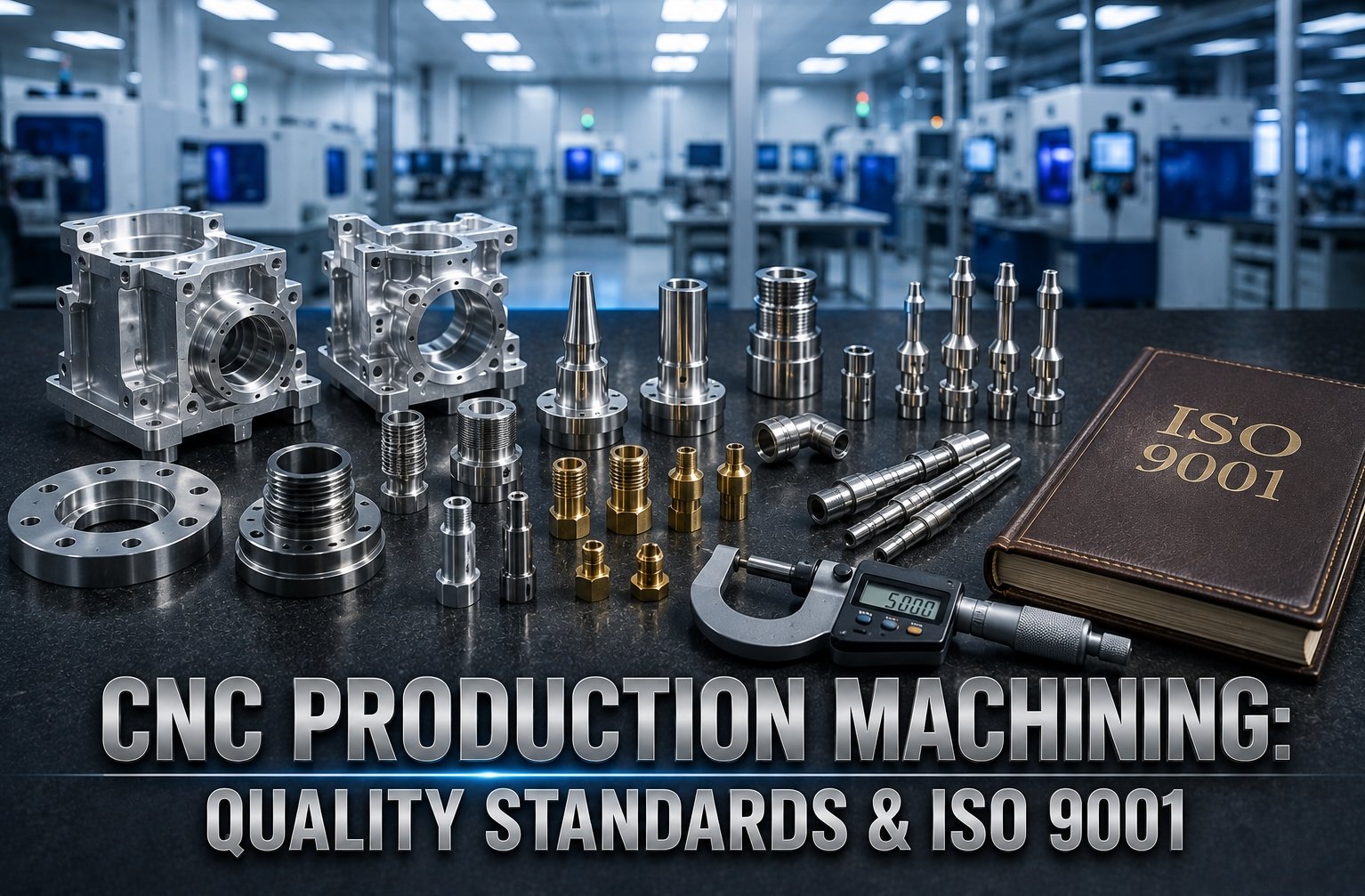
Experienced china cnc machining suppliers mitigate these material challenges through extensive engineering pre-planning. During the Design for Manufacturing (DFM) phase, engineers analyze the raw material specs to optimize cutting geometries. Choosing the correct raw material format (such as extruded bars vs. cold-drawn plates) can also significantly minimize internal stress relief deformation during heavy milling operations, ensuring long-term dimensional stability of the component.
Evaluating Custom CNC Machining Suppliers: Sourcing Checklist
When searching for a “cnc machining near me” or exploring qualified overseas manufacturers, procurement managers must look beyond basic pricing tables. A low initial quote can quickly morph into a costly bottleneck if the supplier lacks the engineering depth or quality control infrastructure needed to manage complex industrial orders. A comprehensive audit of a supplier’s facility and operational history should cover several key technical areas:
- Equipment Age and Redundancy: Ensure the vendor operates multi-axis CNC machines from reputable builders (e.g., Haas, Mazak, Fanuc) and possesses sufficient machine redundancy to prevent production stoppages during scheduled maintenance.
- Metrology and Inspection Assets: A qualified laboratory must feature climate-controlled coordinate measuring machines (CMM), optical comparators, surface roughness testers, and calibrated thread gauges traceable to international standards.
- Supply Chain Traceability: The supplier must provide material test reports (MTR) and raw material mill certificates showing heat number traceability for every production batch.
- Engineering Support: Top-tier suppliers offer proactive DFM feedback, assisting you in optimizing tolerances and geometry to lower manufacturing costs without compromising part functionality.
By partnering with an established manufacturing plant like Boraco Machining—which operates a 2,000 square meter state-of-the-art facility certified to ISO 9001:2015, CE, and RoHS standards—you gain access to a full suite of services ranging from rapid prototyping to low-volume and large-scale mass production. This comprehensive operational footprint ensures a smooth transition as your product scales in volume.
Ready to de-risk your precision parts supply chain? Contact our engineering and sourcing desk today for an accelerated technical assessment and comprehensive pricing proposal. Get a Fast Precision Machining Quote.
Advanced Metrology: Guaranteeing Part Accuracy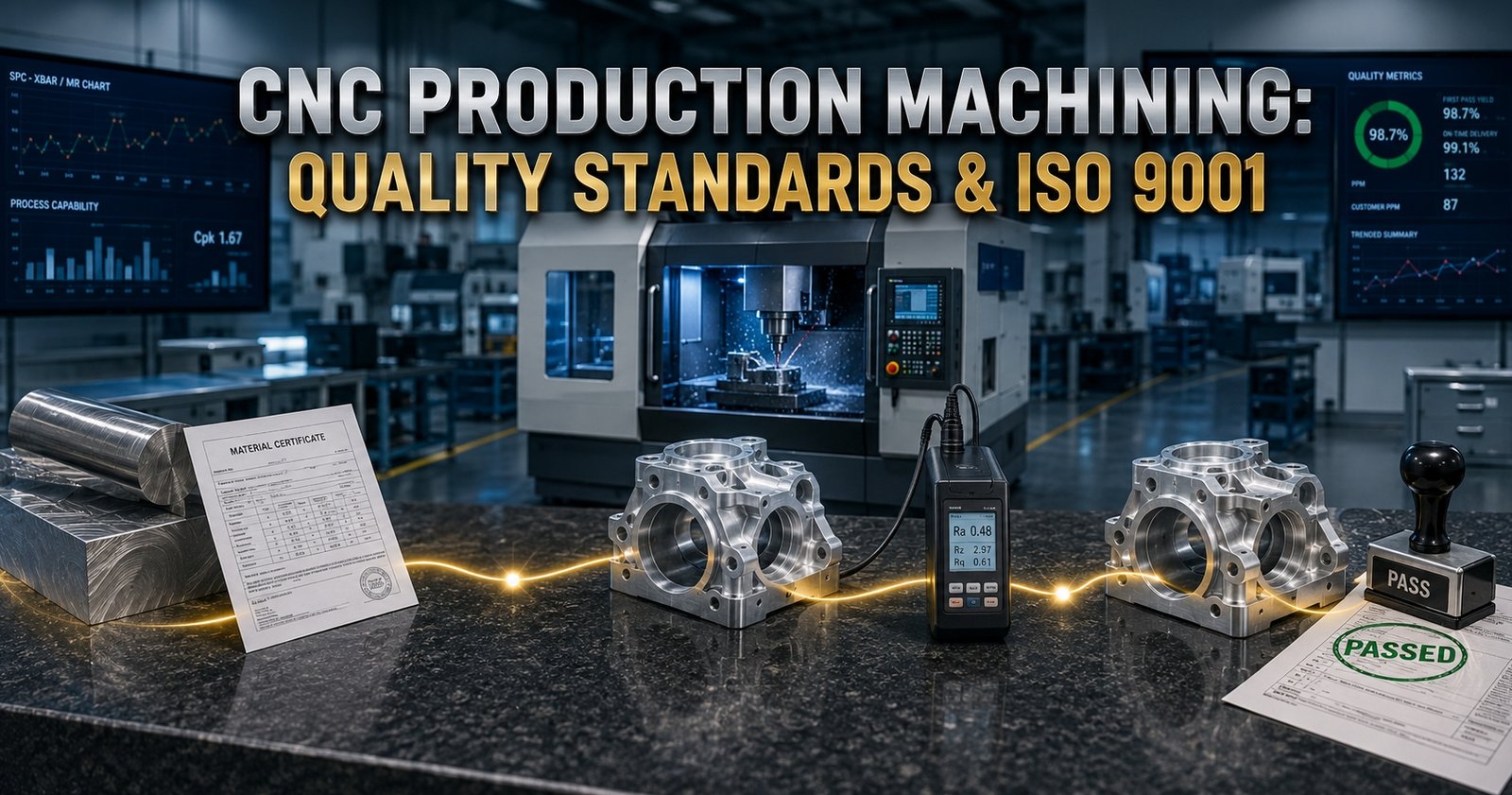
In the field of custom cnc machining, visual inspections are fundamentally insufficient. Precision components destined for electronics, automotive, or industrial machinery require quantifiable verification. Advanced metrology integration ensures that every custom component matches the submitted 3D CAD model within specified microscopic boundaries. This is achieved by utilizing both contact and non-contact inspection technologies on the factory floor.
Data-driven quality reports, such as the First Article Inspection (FAI) report and Production Part Approval Process (PPAP) documentation, provide transparent proof of manufacturing capability. These standards, heavily utilized across high-stakes industries, prove that a supplier’s production processes are fully capable of consistently producing conforming parts under stable operating conditions. This documentation acts as your quality guarantee before any batch leaves the factory floor.
Furthermore, maintaining constant calibration cycles according to international ISO/IEC standards is a core requirement for any certified facility. All micrometers, calibers, and hard gauges must undergo periodic validation to prevent measurement drift. This thorough approach ensures that when components arrive at your assembly line, they fit seamlessly, reducing assembly cycle times and eliminating unexpected downtime.
Frequently Asked Questions (FAQ)
What is CNC machining and how does the process work?
What is CNC machining: Computer Numerical Control (CNC) machining is a subtractive manufacturing process where pre-programmed computer software dictates the movement of factory tools and machinery. The process can be used to control a wide range of complex machinery, from grates and mills to shapers and routers, precisely removing layers of material from a raw block to create a finished custom component.
How does ISO 9001 certification benefit B2B buyers?
ISO 9001 certification guarantees that the manufacturer operates under a standardized Quality Management System. For B2B buyers, this translates to consistent part quality, full material traceability, standardized inspection reports (such as FAI and PPAP), and a structured corrective action protocol that minimizes production defects and delivery delays.
What typical tolerances can be achieved in a standard production run?
In standard CNC production machining, typical milling and turning tolerances range between ±0.050 mm and ±0.100 mm. However, in precision manufacturing environments using advanced multi-axis machining centers and controlled environments, tolerances as tight as ±0.010 mm can be consistently maintained across metals like aluminum and stainless steel.
Why is DFM feedback important before starting mass production?
Design for Manufacturing (DFM) feedback allows production engineers to review your part geometry and suggest minor modifications that simplify machining. This process identifies potential issues like deep pockets, sharp internal corners, or unnecessarily tight tolerances, helping to significantly reduce cycle times, tool wear, and overall manufacturing costs before production begins.