How Many Types of Threads Do You Know?
Understanding Industrial Thread Profiles and Engineering Standards
In precision manufacturing, screw threads are foundational for mechanical fastening, position adjustment, and power transmission. When engineering a part cnc layout, selecting the correct thread standard prevents catastrophic assembly failures, cross-threading, and joint relaxation under dynamic loads. Thread systems are broadly split into metric and imperial standards, each governed by global organizations like the International Organization for Standardization (ISO) and the American Society of Mechanical Engineers (ASME).
The geometric profile of a thread determines its mechanical advantage, shear strength, and load distribution. For example, metric (M) and Unified National (UN) threads feature a 60° flank angle, creating a reliable balance of tensile strength and ease of machining. In contrast, specialized profiles like Acme or Buttress threads handle heavy unidirectional or bidirectional axial loads. When collaborating with china cnc machining suppliers, specifying the exact standard—including tolerance classes—is critical to avoiding dimensional discrepancies between mating machined parts.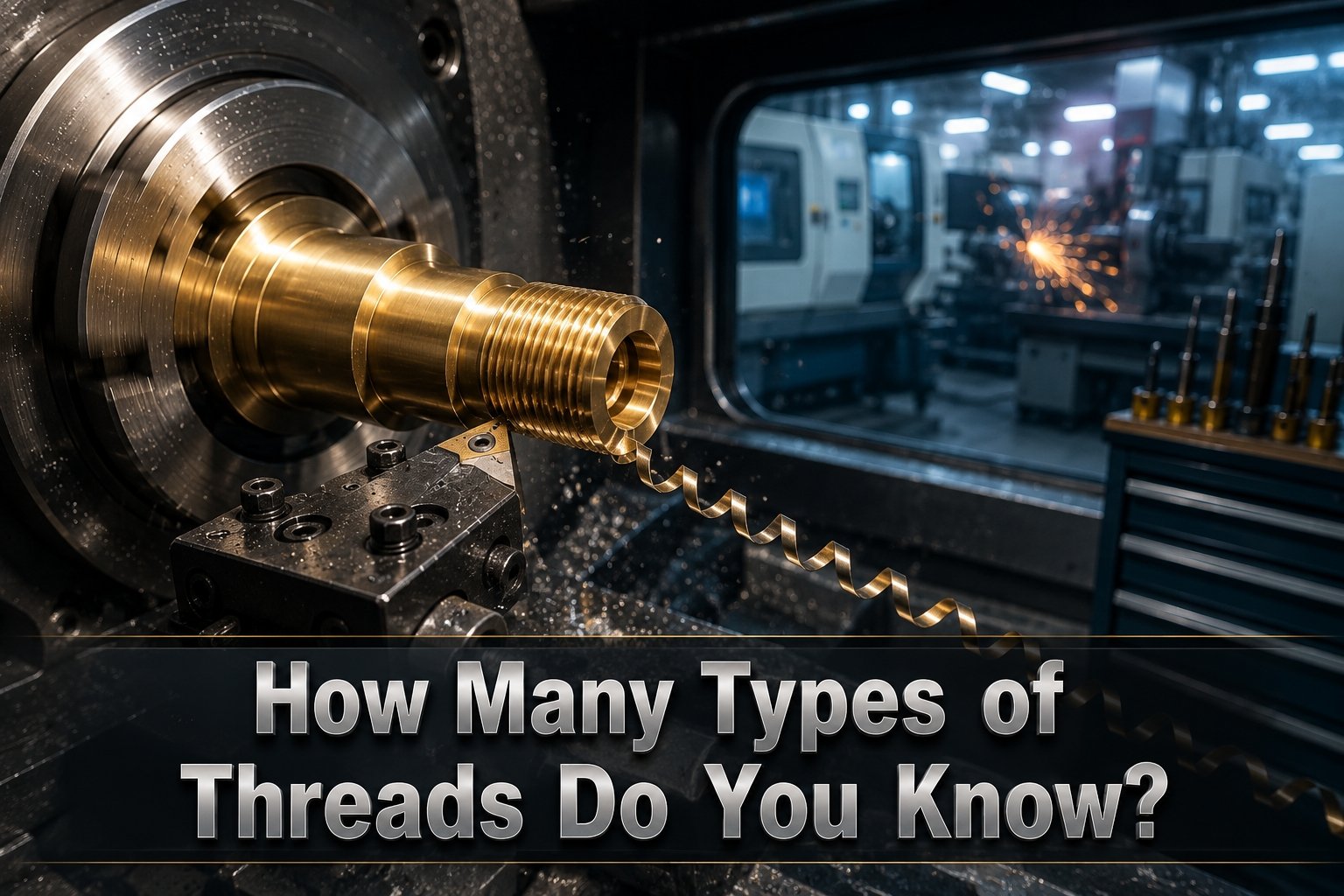
What is GD&T in Threaded Components?
Geometric Dimensioning and Tolerancing (GD&T) is a symbolic language used on engineering drawings to specify the exact allowable variation of geometric features. For threaded features, GD&T controls characteristics like Concentricity, Perpendicularity, and True Position relative to datum features. Because a thread is a complex helical geometry, controlling its pitch diameter axis relative to a mating flange face ensures that fasteners align perfectly during final assembly without binding or inducing unwanted bending stresses.
Developing high-quality turned parts with precise threading demands strict adherence to international metrology standards. According to the ASME B1.1 Unified Inch Screw Threads framework, variations in pitch diameter, lead error, and flank angle directly impact the structural integrity of a bolted joint. Advanced facilities mitigate these risks by using calibrated thread ring and plug gauges to verify every cnc part before shipment.
The Most Common Thread Types in CNC Manufacturing
Industrial applications utilize several core thread forms. Choosing the right one depends on whether the component requires fluid sealing, high tensile holding power, or rapid translation motion. Below are the primary thread types encountered when producing china parts for technical industries:
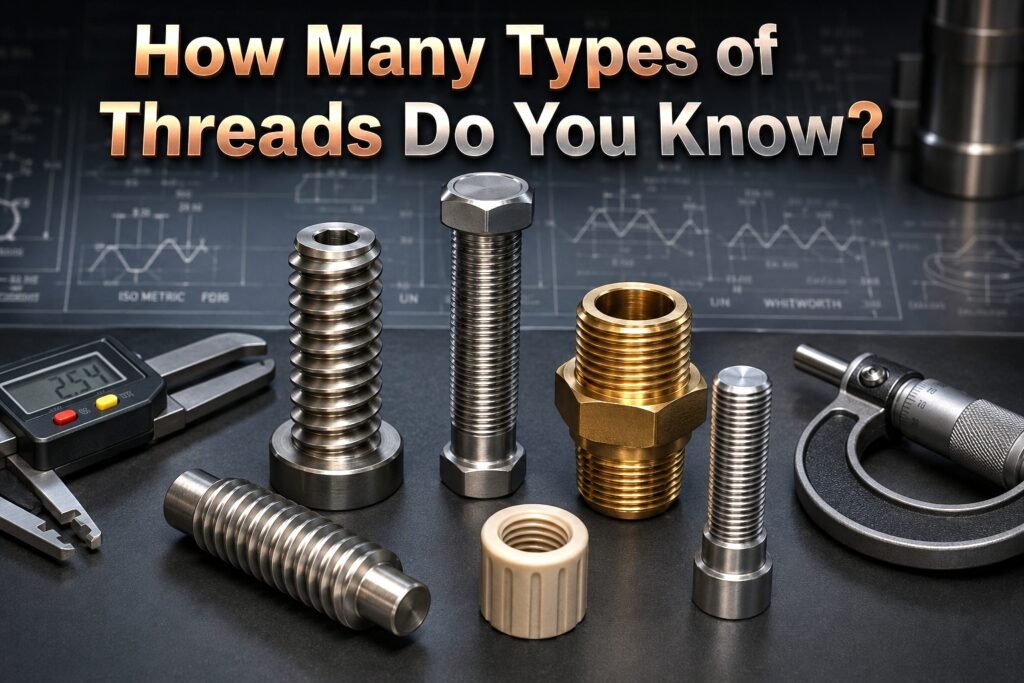
- Metric Threads (M): The global standard for most commercial and industrial applications. Defined by ISO 68-1, they use a 60° V-profile and are designated by nominal diameter and pitch (e.g., M8 x 1.25).
- Unified National Threads (UNC/UNF): Predominant in North America, featuring a 60° angle but measured in Threads Per Inch (TPI). Unified National Coarse (UNC) is ideal for rapid assembly in softer materials, while Unified National Fine (UNF) provides higher tensile strength in cnc metal parts.
- Pipe Threads (NPT/BSPT): National Pipe Taper (NPT) and British Standard Pipe Taper (BSPT) feature a 1°47′ taper angle. The interference fit between mating tapers creates a continuous metal-to-metal seal, vital for hydraulic and pneumatic metal parts.
- Acme Threads: Recognizable by their 29° thread angle and trapezoidal profile, Acme threads are engineered for power transmission in lead screws and CNC router drive systems, offering high load capacity and low wear.
To assist procurement managers and engineers in evaluating thread types for their next custom cnc project, the table below outlines the mechanical characteristics and typical tolerances of standard thread systems:
| Thread Standard | Flank Angle | Common Tolerance Classes | Primary Application | Typical Surface Finish ($R_a$) |
|---|---|---|---|---|
| ISO Metric (M) | 60° | 6g (External), 6H (Internal) | General mechanical fasteners, electronics | 1.6 to 3.2 $\mu m$ |
| Unified Inch (UNC/UNF) | 60° | Class 2A/2B, Class 3A/3B | Aerospace structural joints, automotive | 0.8 to 1.6 $\mu m$ |
| National Pipe Taper (NPT) | 60° (Tapered) | Standard L1/L3 Gauging | Fluid transport, pressure sensors | 1.6 $\mu m$ |
| Trapezoidal / Acme | 30° / 29° | 4C, 2G (General Purpose) | Actuators, lead screws, heavy lifting | 0.8 $\mu m$ |
For custom engineering projects requiring exact fits, getting an expert technical review prevents manufacturing delays. You can submit your 3D models and 2D drawings directly via our Contact Page to receive a comprehensive Design for Manufacturing (DFM) analysis.
Machining Methods for Producing High-Precision China CNC Threads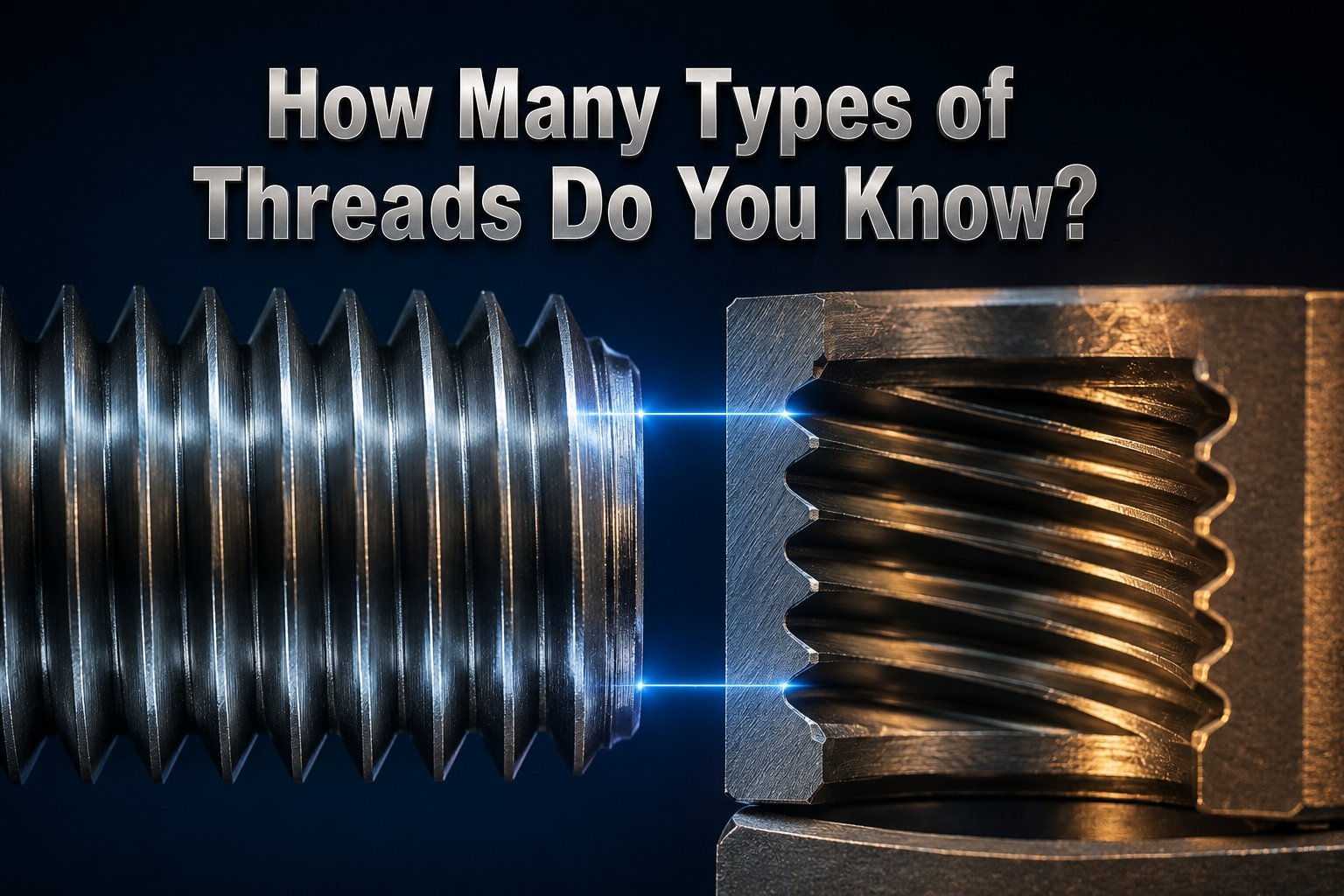
Generating high-quality threads requires selecting the optimal machining technique based on the component’s geometry, production volume, and material hardness. CNC platforms utilize several techniques to cut, form, or mill accurate profiles into both milled parts and lathe-turned items.
CNC Thread Turning
Thread turning uses a single-point carbide insert that moves axially along the workpiece surface in synchronization with the spindle rotation. This method is highly effective for external threads on cylindrical turned parts. Single-point turning provides superior concentricity relative to the part axis, making it the preferred method for large-diameter aluminum parts or specialized stainless steel shafts.
CNC Thread Milling
Thread milling uses a helical tool on a multi-axis CNC mill to machine internal or external threads through helical interpolation. Unlike taps, a single thread mill can cut various hole diameters as long as the pitch matches. This process places less stress on the machine spindle and tool, making it ideal for deep blind holes in complex machining parts or fragile exotic alloys where a broken tap would ruin a costly workpiece.
Tapping and Thread Forming
For high-volume production of small internal threads, automated CNC tapping remains highly efficient. Cutting taps cut material to form threads, while roll-forming taps plastically deform the material without creating chips. Thread forming increases thread shear strength due to grain structure alignment and is commonly used when manufacturing ductile plastic parts, copper, or low-carbon steel components.
Material Selection and Machinability in Thread Production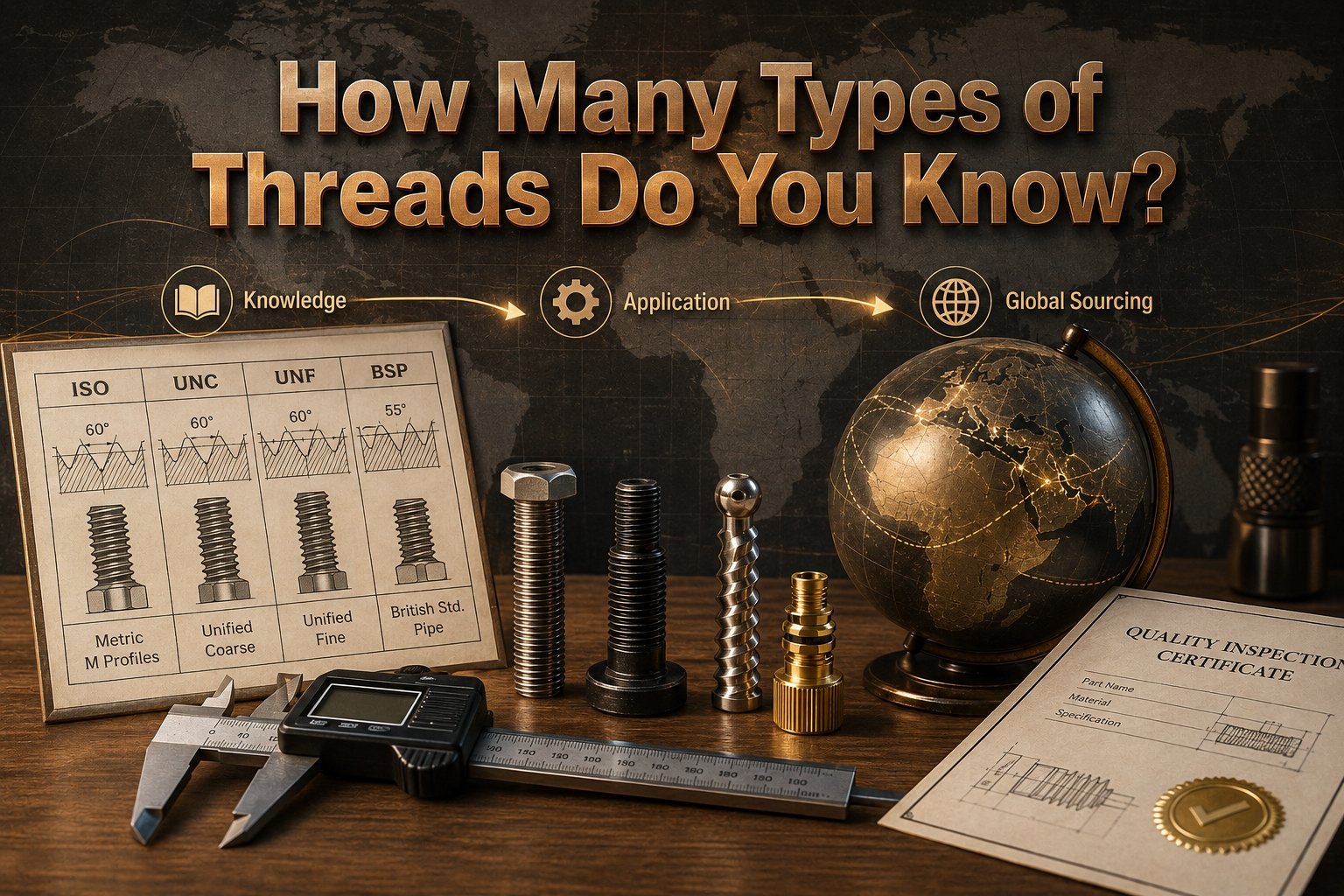
The mechanical properties of a material dictate how well it supports clean thread profiles. Material hardness, ductility, and thermal conductivity influence chip formation, surface roughness ($R_a$), and tool deflection. Selecting an unsuitable material can lead to torn roots, rough flanks, or broken tooling during part machining.
When sourcing cnc parts online, engineers must balance material cost against functional requirements:
- Aluminum (6061-T6, 7075-T6): Highly machinable, excellent for lightweight structural aluminium parts. Threads roll cleanly but may require anodizing to prevent galling during repeated assembly.
- Stainless Steel (304, 316): Prone to work-hardening. Threading requires rigid workholding, low speeds, and rich cutting fluids to prevent tool breakage in cnc metal parts.
- Engineering Plastics (Delrin/POM, Nylon): Great for chemical-resistant delrin parts or plastic parts. They machine quickly but require sharp tooling to avoid burrs and material deformation.
- Prototype Polymers (PLA, ABS): Primarily used for additive printing parts, sls parts, or pla parts. Internal threads are typically chased with a tap or supplemented with brass heat-set inserts for durability.
Whether you require rapid prototype parts or high-volume production runs, working with an experienced manufacturer ensures your thread profiles maintain strict tolerances across all batches. Explore our capabilities on the Boraco Machining Product Page to see examples of our past work.
Overcoming Procurement Challenges with China CNC Thread Suppliers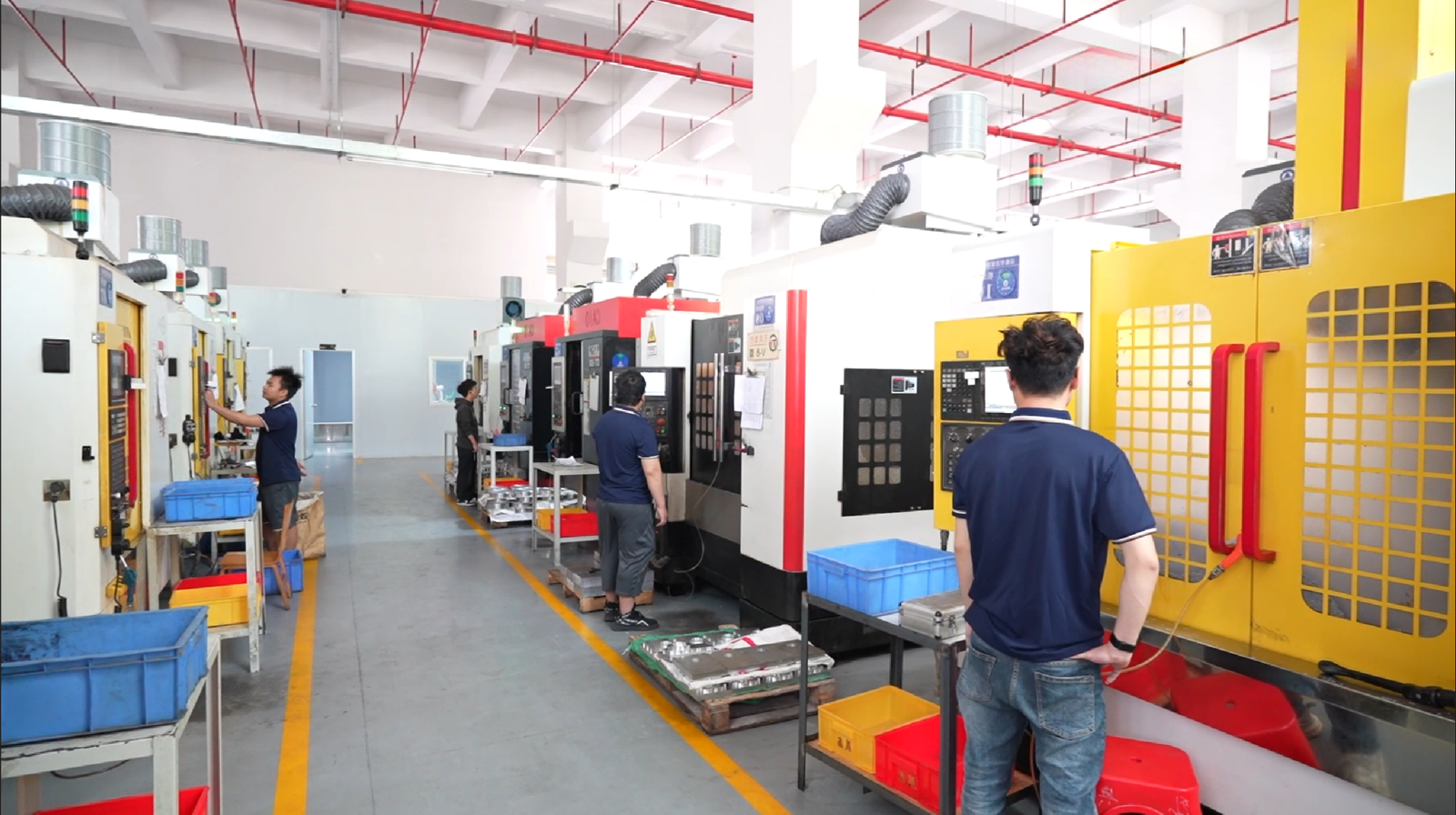
Sourcing cnc parts supply from international partners can sometimes present challenges regarding technical communication and quality control. A common issue is the mismatch between localized standards—such as a buyer specifying imperial Unified National threads while a workshop default-checks against metric standards. Clear documentation on engineering drawings prevents these communication errors.
To ensure high-quality results from china machining suppliers, your RFQ documentation should include:
- Complete 2D drawings with explicit thread designations (e.g., “1/4-20 UNC-2B”).
- Defined inspection protocols (e.g., mandatory thread plug gauge testing).
- Specified post-processing requirements, as plating or anodizing changes the pitch diameter.
Boraco Machining addresses these challenges directly from our 2,000-square-meter facility in Dongguan, China. ISO 9001:2015 certified, our plant utilizes advanced 4-axis and 5-axis CNC machining, high-precision turning centers, and dedicated quality labs to verify all china cnc thread tolerances. By bridging technical communication gaps with detailed DFM reviews, we support procurement managers in delivering reliable components on schedule.
Conclusion
Specifying the proper thread type, standard, and material properties is key to producing reliable, cost-effective CNC machined parts. Partnering with an ISO-certified manufacturer guarantees your components meet rigorous international tolerance requirements. Contact Boraco Machining today to get an expert DFM analysis and competitive quote for your custom manufacturing project.
Frequently Asked Questions (FAQ)
What is the difference between a coarse thread and a fine thread?
Coarse threads (like UNC) have a larger pitch and fewer threads per inch, making them faster to assemble and less likely to cross-thread in softer materials. Fine threads (like UNF) have a smaller pitch and more threads per inch, providing higher tensile strength and finer adjustment capabilities, which is beneficial for hard metals and vibratory environments.
How do surface coatings affect CNC machined threads?
Surface treatments like anodizing, black oxide, or electroplating add thickness to the thread flanks, increasing the pitch diameter of external threads and decreasing it for internal threads. To ensure proper fitment post-coating, threads must be machined slightly undersized or oversized based on the expected coating thickness.
Why are tapered pipe threads like NPT self-sealing?
NPT threads are engineered with a 1°47′ taper. As the external and internal threads mate, the flanks compress against each other along the taper, forming a continuous metal-to-metal interference fit that prevents fluid leakage when reinforced with thread sealant or PTFE tape.