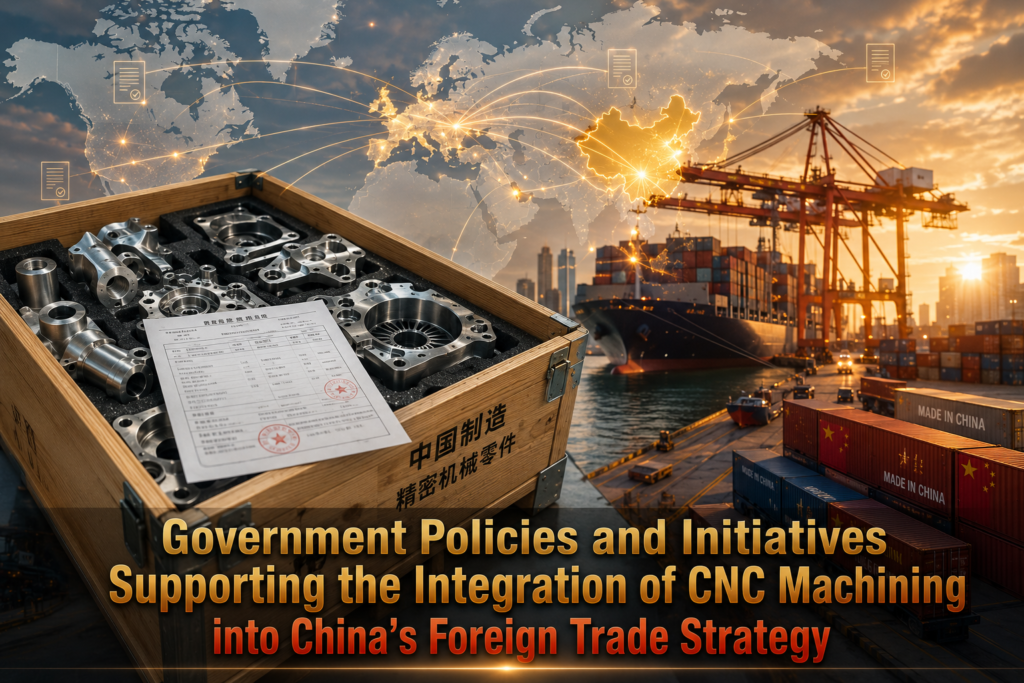
Global procurement strategies rely heavily on manufacturing stability and technological advancement. Over the past decade, Chinese industrial policies have actively accelerated the transition from high-volume assembly to high-precision manufacturing. Consequently, this systemic shift has positioned advanced multi-axis machining at the very center of the nation’s long-term export strategy.
The Shifting Landscape of China’s Advanced Manufacturing Policy
From Mass Production to Precision Engineering
Historically, global buyers viewed the Chinese manufacturing sector as a hub for low-cost, mass-produced consumer goods. However, national economic strategies have fundamentally transformed this paradigm over the last fifteen years. The central government recognized that sustainable growth required a decisive pivot toward high-value-added industrial components.
Therefore, targeted state directives began prioritizing capital-intensive industries over labor-intensive assembly. Specifically, modern computer numerical control (CNC) technology received massive structural support. As a result, domestic machine shops rapidly evolved from operating basic manual equipment to deploying high-precision automated systems.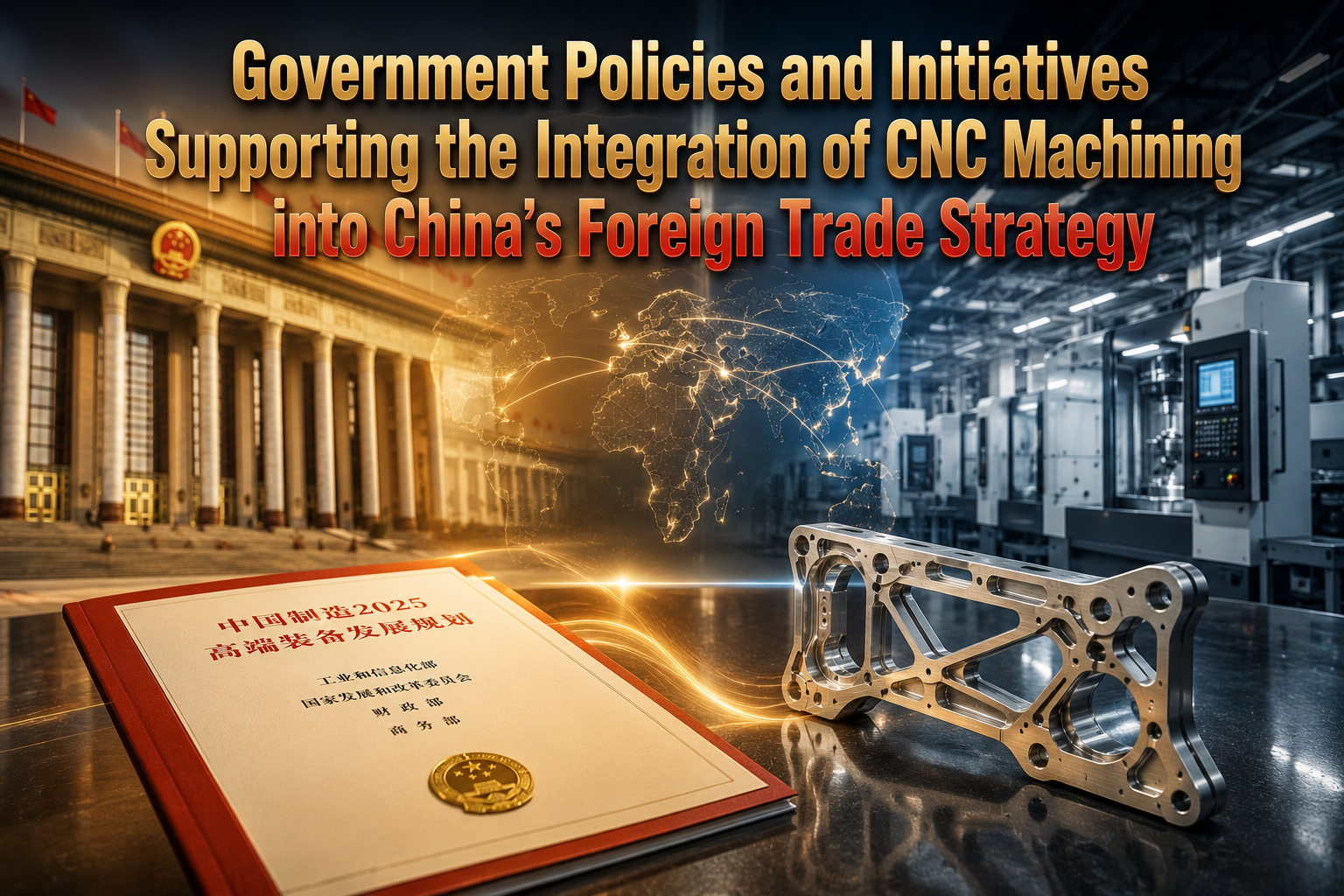
The Strategic Core of Foreign Trade Expansion
Furthermore, precision machining has become a foundational pillar of China’s modern foreign trade framework. Industrial planners realize that global high-tech supply chains demand flawless execution and absolute repeatability. For instance, sectors like aerospace, automotive, and medical device manufacturing cannot tolerate dimensional deviations.
Consequently, the Ministry of Commerce has aligned foreign trade incentives directly with technological capability. This means that factories investing in high-end multi-axis infrastructure receive preferential export processing status. Ultimately, this integration ensures that precision engineering services remain globally competitive, highly accessible, and structurally resilient.
Key National Initiatives Driving CNC Machining Infrastructure
Made in China 2025 and Industrial Modernization
The milestone initiative known as Made in China 2025 set a clear roadmap for upgrading the country’s manufacturing sector. Specifically, the program designated high-grade CNC machine tools as one of the ten priority industrial sectors. The State Council pushed for deep technological breakthroughs in multi-axis milling, control software, and tooling longevity.
To view official policy frameworks regarding these strategic upgrades, you can consult the latest publications on the State Council Policy Portal. Because of this high-level support, domestic research institutions collaborated closely with private enterprises. Consequently, this cooperation stimulated rapid innovation in internal machine components, linear guides, and synchronous spindle control systems.
The 14th Five-Year Plan for Intelligent Manufacturing
Building upon previous frameworks, the 14th Five-Year Plan for Intelligent Manufacturing shifted the national focus toward digital integration. This directive mandates the widespread implementation of Industrial Internet of Things (IIoT) protocols across export-focused machine shops. Therefore, modern factories are encouraged to utilize real-time cloud data, automated tool wear compensation, and predictive maintenance algorithms.
Moreover, this policy subsidizes the acquisition of advanced smart sensors and closed-loop inspection equipment. As a result, CNC production lines achieve much higher levels of operational consistency. For global procurement teams, this digital push means reduced batch-to-batch variation and shorter production lead times.
Policy Matrix and Export Relevance
To better understand how these national strategies interact with the production floor, consider the operational impacts outlined below. These specific directives directly alter how precision components are processed, certified, and shipped abroad.
| Policy Initiative | Issuing Body | Core Objective | Direct Impact on CNC Exports |
|---|---|---|---|
| Made in China 2025 | State Council | Import substitution and high-end tooling self-sufficiency. | Accelerated adoption of 5-axis machining centers and precision spindles. |
| 14th Five-Year Plan | Ministry of Industry & IT | Deep digitalization and smart factory deployment. | Widespread use of IIoT monitoring, automated probing, and lower scrap rates. |
| Export Rebate Optimization | Ministry of Finance / MOFCOM | Financial relief for high-tech industrial exporters. | Stabilized pricing structure for precision components despite material cost shifts. |
| BRI Trade Facilitation | National Development & Reform Commission | Streamlined customs and integrated multimodal logistics. | Drastically reduced transit times across international shipping corridors. |
Regional Drivers: How Guangdong Province Empowers Local Exporters
Local Manufacturing Transformation Funds
While national policies lay the structural groundwork, regional governments execute the practical financial deployment. Guangdong Province, a global manufacturing powerhouse, has been exceptionally proactive in this domain. The local Department of Industry and Information Technology manages massive manufacturing transformation funds.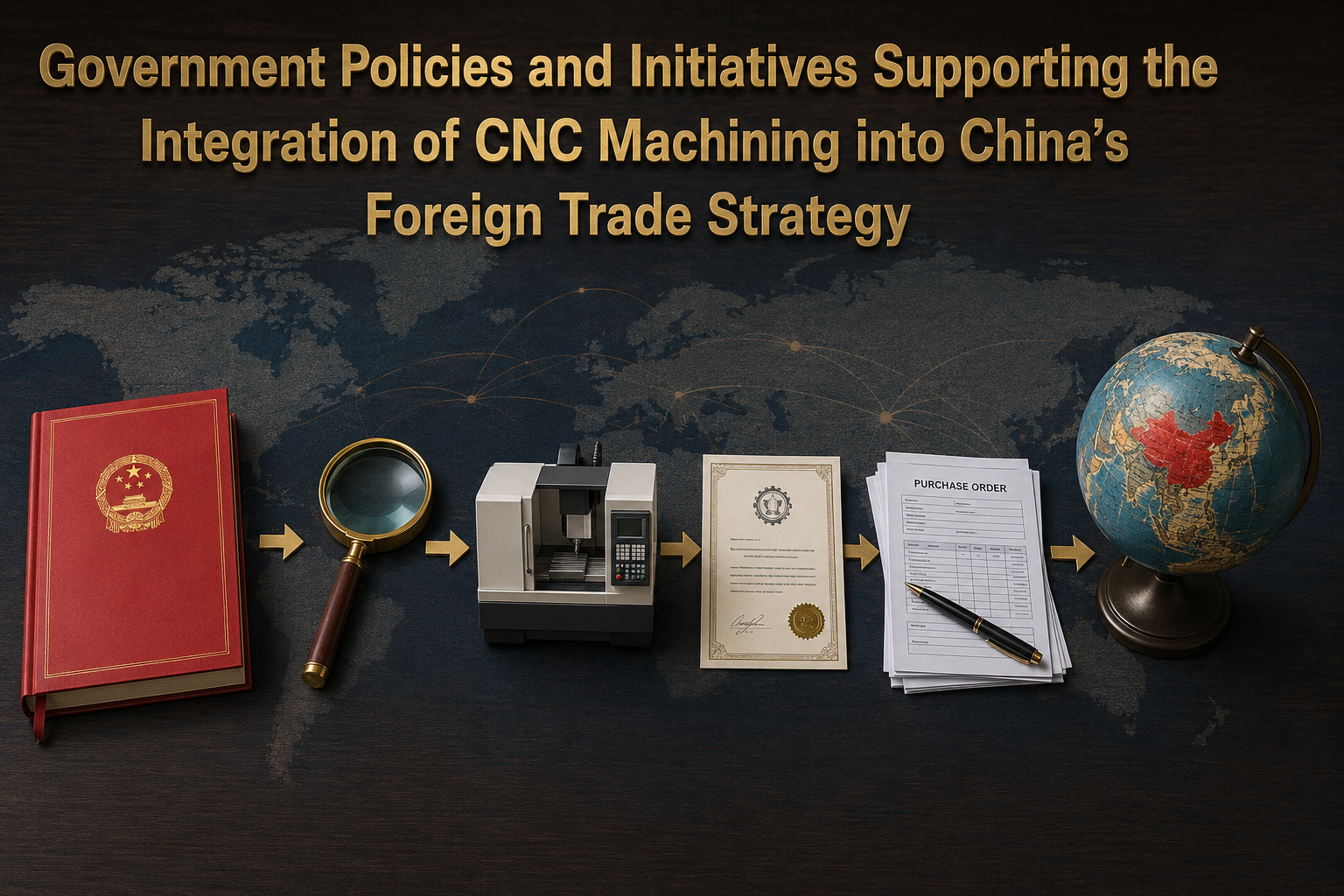
Specifically, these funds offer direct financial rebates to local workshops that upgrade their equipment. For example, a factory replacing traditional 3-axis mills with automated multi-axis infrastructure can claim substantial capital subsidies. For detailed provincial announcements on industrial upgrades, buyers can review reports on the official Guangdong Provincial Government Portal.
Industrial Clustering in the Greater Bay Area
In addition to direct funding, provincial planning has fostered dense industrial clusters within the Pearl River Delta. Cities like Dongguan have evolved into highly specialized ecosystems for precision engineering. Within these clusters, raw material foundries, heat-treatment plants, and surface-finishing specialists operate in close physical proximity.
Consequently, this geographic density dramatically minimizes local supply chain friction. A CNC supplier can source raw bars, execute precise milling, and send components for anodizing within a tight radius. Therefore, this optimized local network directly reduces overall lead times and transport costs for international buyers.
Impact on Quality Standards and Global Certification Frameworks
Subsidizing Advanced Quality Management
A core element of China’s foreign trade strategy involves aligning domestic production with global quality standards. To achieve this, regional commerce bureaus provide financial incentives for factories pursuing international certifications. For instance, the government partially offsets the costs of obtaining and renewing ISO 9001:2015 frameworks.
Furthermore, specialized sectors like aerospace and medical devices receive additional regulatory guidance. This state-backed push guarantees that export-oriented machine shops maintain calibrated metrology labs. As a result, advanced inspection equipment like Coordinate Measuring Machines (CMM) and laser interferometers have become standard across the industry.
Standardization and International Compatibility
Moreover, the Standardization Administration of China has worked to harmonize domestic industrial standards with international equivalents. This means that technical drawings using ISO or ASME metrics are interpreted with absolute accuracy on the shop floor. For global procurement teams, this eliminates translation errors regarding tolerances, geometric parameters, and material specifications.
Consequently, buyers receive parts that slide perfectly into their final assemblies without secondary adjustments. To explore how these precise manufacturing standards are executed across diverse components, procurement professionals can review the complete portfolio of a certified cnc machining service. This alignment provides a predictable manufacturing experience that mirrors domestic sourcing options.
Practical Implications and Protections for International Buyers
Intellectual Property Protection Mechanisms
Historically, intellectual property (IP) protection was a lingering concern for international OEMs sourcing abroad. However, modern trade policies have introduced strict legal reforms to address these concerns directly. The National Intellectual Property Administration has established specialized IP courts in major manufacturing hubs to expedite legal reviews.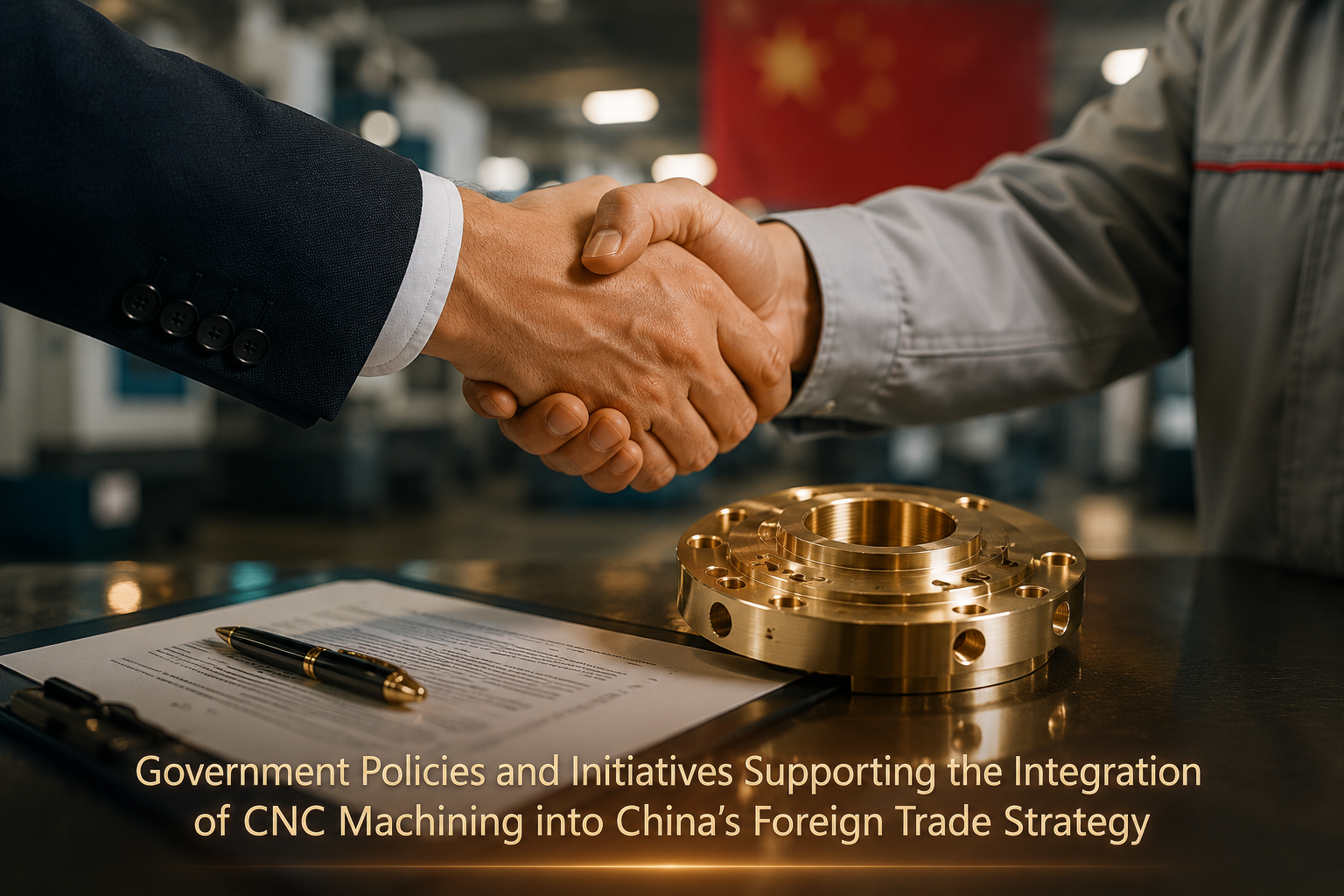
To verify the evolving legal frameworks protecting foreign commercial assets, trade teams can review official guidelines via the Ministry of Commerce (MOFCOM) Portal. Today, strict non-disclosure agreements (NDAs) are fully enforceable within Chinese legal jurisdictions. Consequently, precision machine shops implement strict digital data segmentation to ensure that client CAD files remain secure and confidential.
Export Tax Rebates and Cost Stability
The Ministry of Finance regularly updates export tax rebate rates to shield critical tech sectors from global economic volatility. High-end precision machined parts frequently qualify for the maximum value-added tax (VAT) rebate upon export. This financial mechanism allows domestic manufacturers to maintain highly stable pricing structures.
Therefore, even when global raw material prices fluctuate, the net impact on final component quotes is mitigated. This policy-driven cost cushion allows international procurement managers to negotiate predictable, multi-year supply contracts. Ultimately, it reduces budgetary risks for complex engineering projects.
Logistics Incentives and Trade Facilitation
Finally, the Belt and Road Initiative (BRI) has triggered massive investments in multimodal logistics infrastructure. Customs clearance procedures have been streamlined through advanced single-window electronic data interchange (EDI) systems. Because of these upgrades, export documentation is processed in hours rather than days.
In addition, optimized deep-water ports and expanded air cargo routes ensure rapid transit times to North America and Europe. For instance, parts processed in southern China reach international logistics hubs with minimal border friction. This efficient shipping infrastructure allows global buyers to maintain lean inventory strategies without risking stockouts.
Technical Alignment: Navigating Policy Benefits via Qualified Partners
Translating Policy into Production Floor Precisio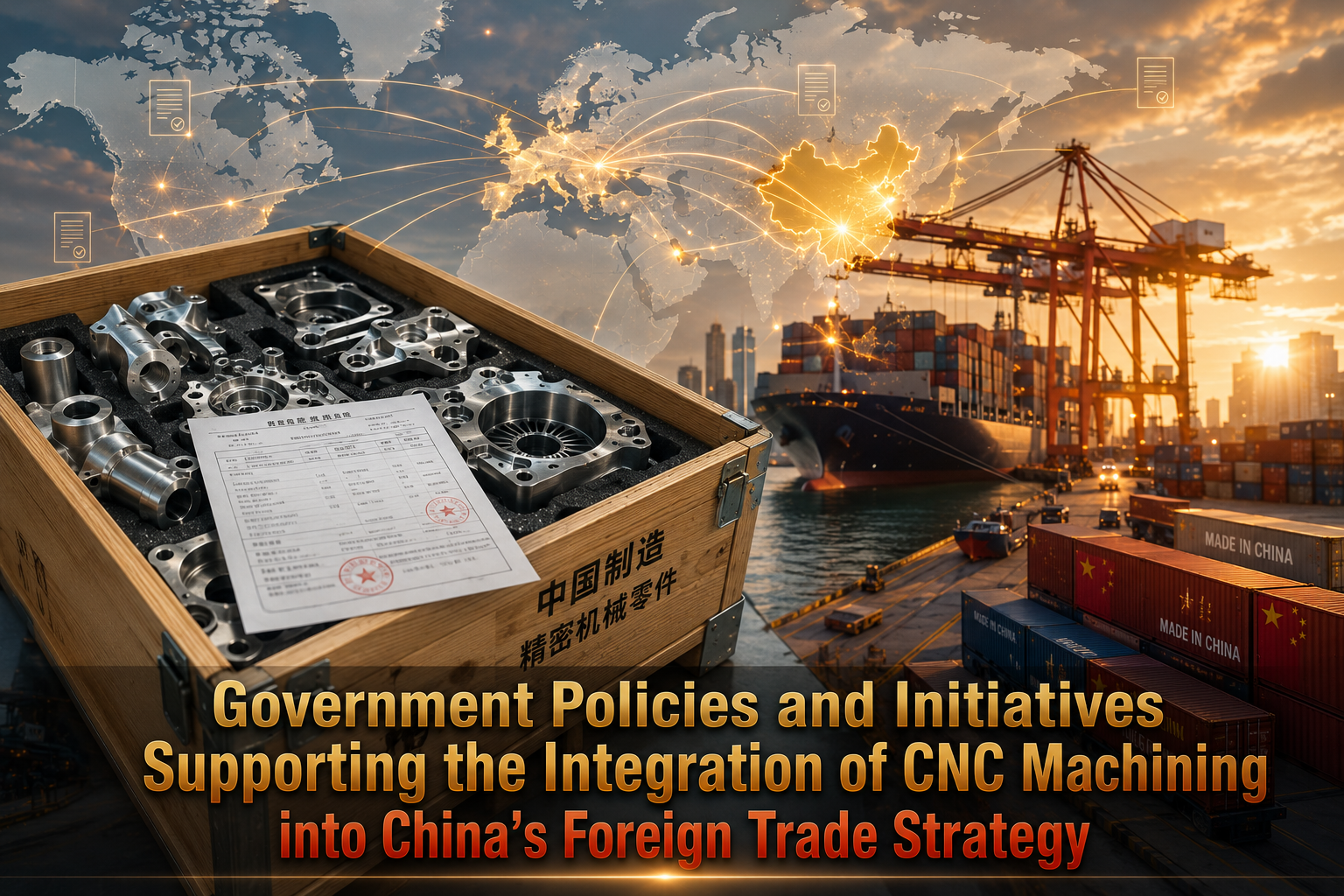
For international buyers, the tangible value of trade policy is felt on the factory floor. A machine shop that aligns closely with government initiatives typically invests heavily in its core infrastructure. For example, selecting a partner with a diverse range of multi-axis setups ensures that complex part geometries are handled efficiently.
When evaluating capacity, sourcing managers should verify that the factory integrates advanced machining methods seamlessly. Utilizing multi-axis centers allows complex components to be finished in a single setup, eliminating human error and fixturing variations. To evaluate a practical application of these technical principles, buyers can inspect advanced setups like custom cnc milling services that utilize modern, high-speed machines.
Strategic Infrastructure Capabilities
Furthermore, an optimized facility must complement its milling centers with robust turning and fabrication capabilities. A balanced equipment line allows for complete assembly production within one building. This unity minimizes external supply chain risks and preserves material control across the entire contract lifecycle.
For instance, complex assemblies often require a mix of turned cores and stamped brackets. Sourcing from a facility that integrates precision turning and sheet metal processing under a unified quality system simplifies inspection workflows. To understand how these diverse capabilities operate together, you can review details on our comprehensive precision manufacturing plant, where we actively combine policy incentives with industrial execution.
Future Outlook for Policy-Backed Precision Machining Exports
Green Manufacturing and Low-Carbon Mandates
Looking forward, China’s dual-carbon goals are reshaping the industrial landscape. The Ministry of Industry and Information Technology is actively enforcing strict energy-efficiency mandates across the machining sector. Consequently, factories are upgrading to energy-saving servo motors, efficient coolant recycling systems, and scrap metal recovery loops.
While this transition requires immediate capital investment, it ensures long-term operational sustainability. International OEMs with strict corporate ESG requirements can confidently source components from these modern facilities. Therefore, policy-aligned suppliers help global brands satisfy environmental compliance rules across their entire tier-2 supply network.
Digitalization and Next-Gen Connectivity
In addition, the ongoing deployment of 5G industrial networks will continue to optimize production tracking. Future manufacturing protocols will allow buyers to monitor production batches in real time via encrypted online portals. From initial raw stock verification to final automated CMM inspection, data logs will be instantly accessible.
This level of transparency will eliminate the need for routine in-person factory audits. Ultimately, the integration of advanced technology and supportive trade policies guarantees that China’s precision machining sector will remain a dependable pillar of global engineering supply chains for decades to come.
Conclusion
In summary, China’s comprehensive industrial policies have successfully elevated its CNC machining sector into a high-tech, quality-driven global export engine. By understanding and leveraging these policy frameworks, international procurement managers can significantly de-risk their supply chains, lock in competitive pricing, and secure world-class component precision. To discuss how policy-backed quality can benefit your sourcing, contact Boraco Machining.
Frequently Asked Questions
The government actively subsidizes the acquisition of advanced metrology equipment and international quality certifications like ISO 9001:2015. Additionally, national initiatives like the 14th Five-Year Plan encourage factories to deploy smart sensors and closed-loop inspection systems, directly reducing dimensional variation across export batches.
The initiative has funded extensive port upgrades, rail networks, and streamlined single-window electronic customs systems. Consequently, these infrastructure improvements minimize border friction, accelerate documentation approval times, and ensure reliable, rapid transit to international manufacturing hubs.
Guangdong province provides direct financial rebates for upgrading to advanced multi-axis machining equipment and fosters dense industrial clusters. This regional ecosystem minimizes local transit times for specialized processes like heat treatment and surface anodizing, allowing local manufacturers to deliver high precision at optimal cost structures.
Partner with a policy-aligned, ISO 9001 certified CNC machining specialist. Request a quote or discuss your project →