
Securing Flawless CNC Custom Aerospace Components
Aerospace procurement demands absolute precision. However, finding reliable, tight-tolerance suppliers remains a challenge. Therefore, this technical guide outlines advanced multi-axis production methodologies and quality frameworks. As a result, it helps you source high-performance cnc custom aerospace components that comply with strict aviation standards.
The Challenge of Tight-Tolerance Custom Aerospace Component Sourcing
The Critical Need for Sub-Micron Precision
Sourcing reliable aerospace machined parts presents exceptional challenges. Specifically, these issues affect procurement managers and design engineers. For example, flight hardware must withstand extreme cyclic loading. In addition, it faces intense vibration and dramatic atmospheric pressures. Therefore, normal manufacturing margins fail completely.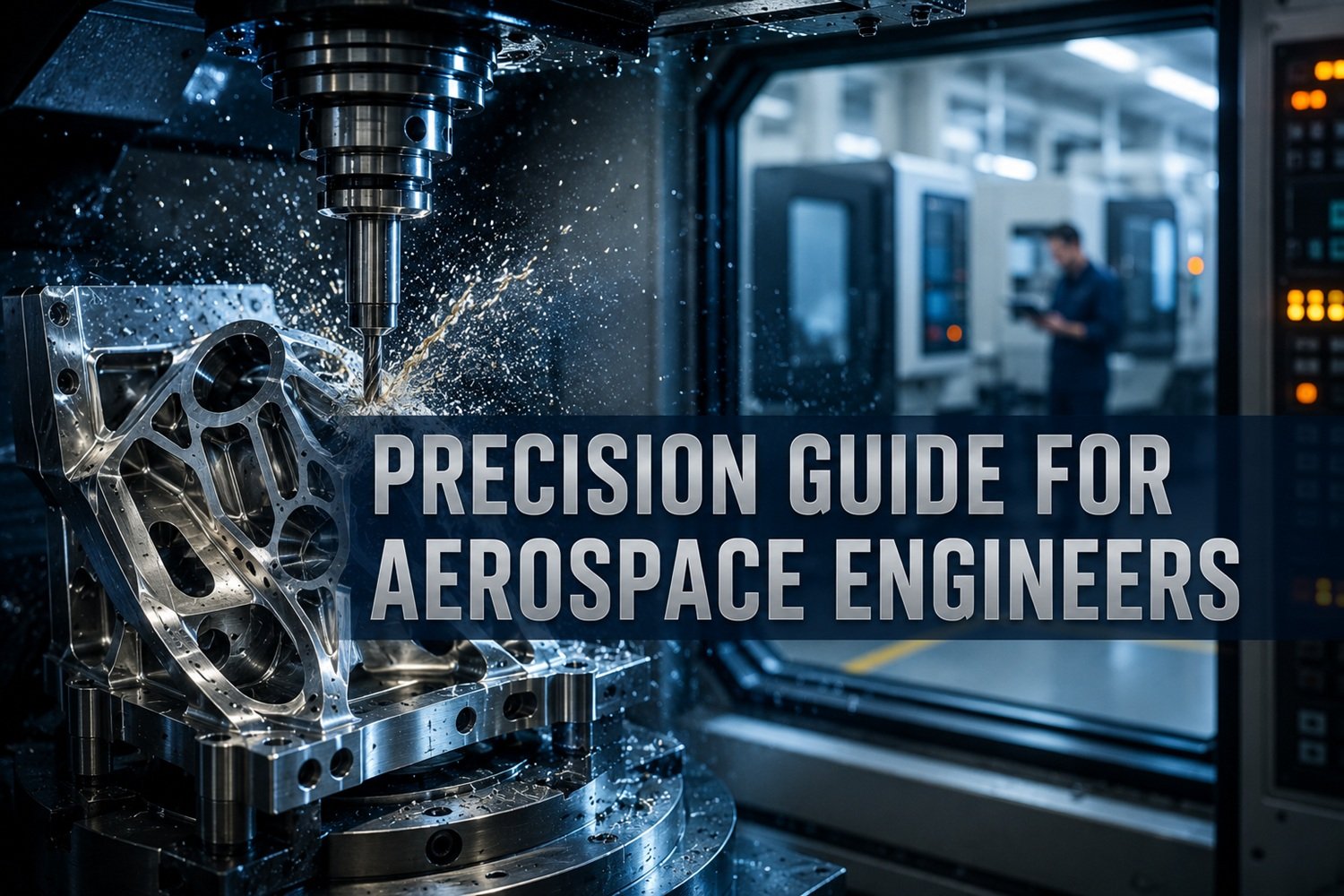
Consequently, the primary pain point lies in geometric consistency. Sourcing teams must secure an industrial partner that maintains sub-micron tolerances uniformly. Moreover, this accuracy must remain stable across complex, multi-batch production runs. For instance, progressive tool wear introduces minor component errors. Subsequently, this variation leads to high scrap rates and assembly delays.
Mastering GD&T and Environmental Variables
Furthermore, true manufacturing competence requires a deep operational mastery of Geometric Dimensioning and Tolerancing (GD&T). For instance, engineers must follow strict ASME Y14.5-2018 standards. Because of this, minor manufacturing variations create massive risks. Specifically, errors in a true position or concentricity profile cause component binding. As a result, these defects lead to unexpected failures in high-stress flight applications.
Therefore, executing high-reliability precision machining for the aerospace industry demands advanced facilities. Ambient temperature fluctuations inside a standard machine shop alter raw metal dimensions. In fact, a small temperature shift changes part features by several micrometers. However, advanced production facilities eliminate this risk entirely. For that reason, they deploy automated HVAC systems to stabilize ambient temperatures within ±1°C across all machining and inspection zones.
Overcoming Supply Chain Communication Barriers
In addition, managing a successful cnc custom aerospace contract requires clear communication. Procurement professionals frequently face long lead times and high material waste. Commonly, this happens because suppliers lack experience with high-temperature superalloys. For high-precision projects, you must check a supplier’s history with complex shapes. Therefore, to solve tight-tolerance issues, factories must use a dedicated cnc custom aerospace manufacturing protocol.
As a rule, this protocol blends rigid custom workholding with real-time tool-path verification. Consequently, global tier-1 aviation buyers choose to align with certified china cnc machining suppliers. These partners combine multi-axis machining technology with transparent, data-driven quality frameworks. Ultimately, this strategic sourcing model ensures that every production batch satisfies design definitions without costly compliance bottlenecks.
Multi-Axis Advantage: Aerospace CNC Milling and 5-Axis Machining
Why 3-Axis Systems Fall Short
Modern aerodynamic surfaces feature highly intricate shapes. For example, thin-walled structural bulkheads and curved impeller blades require complex paths. Traditional three-axis or simple four-axis machining configurations cannot produce these shapes efficiently. Instead, advanced aerospace cnc milling relies heavily on continuous 5-axis CNC machining centers.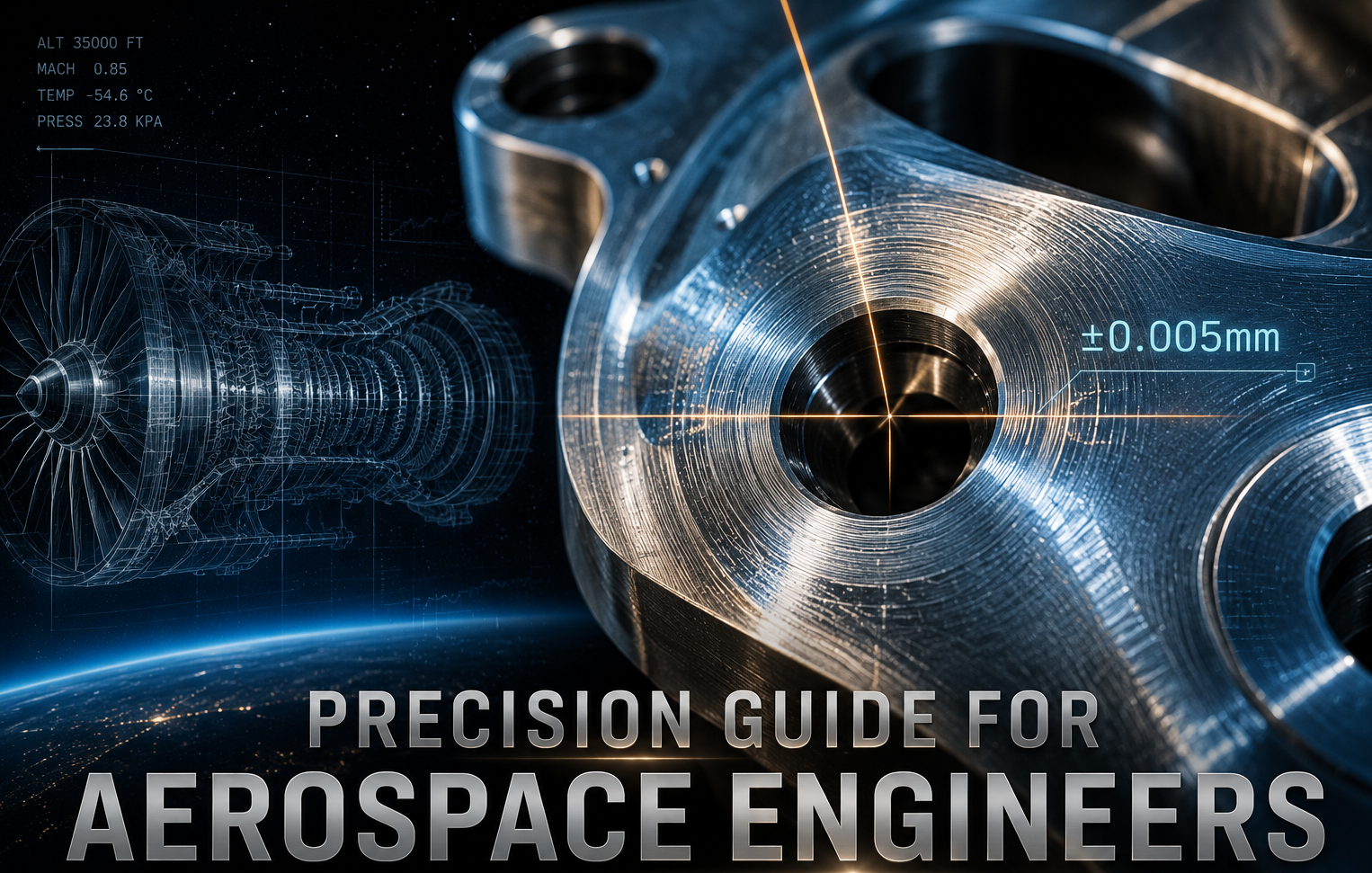
Specifically, these machines rotate the cutting tool and the workpiece simultaneously along two additional rotational axes. Usually, these are the A and B axes. Consequently, 5-axis systems execute deep cuts and complex spatial curves in a single operation. Therefore, this capability eliminates the need for expensive manual fixturing. Thus, it saves substantial production time during custom aerospace manufacturing cycles.
Eliminating Cumulative Stacking Errors
Templates and production setups must be minimized. Furthermore, minimizing production setups is critically important for preserving spatial accuracy. Every time a machinist unclamps, rotates, and refixtures a part, human error occurs. In addition, chip contamination and clamping force variations introduce minor shifts. As a result, these errors create cumulative stacking defects across the part layout.
In contrast, continuous aerospace milling creates complex aerospace machined components from solid metal blocks in one setup. This method applies directly to critical components like turbine blades, blisks, and landing gear housings. Consequently, single-setup machining reduces geometric variance. Therefore, this operational consistency maximizes manufacturing throughput. Furthermore, it improves the predictability of your procurement timeline.
Optimizing Tool Engagement and Surface Finish
Useful tool paths are critical for quality. Moreover, executing advanced shapes within a repeatable cnc custom aerospace workflow requires expert CAM programming. It also demands dynamic collision avoidance software. To illustrate, the definitive benefit of 5-axis cnc custom aerospace mills is tool orientation. The machine constantly positions the cutting tool at an optimal angle relative to the material surface.
Consequently, this dynamic adjustment allows engineers to use shorter, thicker cutting tools. Shorter tools increase overall system rigidity. As a result, they reduce tool deflection and eliminate harmonic chatter. This stability creates an exceptionally smooth surface finish. Therefore, it removes the need for manual polishing or extra mechanical smoothing. In addition, for high-volume cnc custom aerospace programs, short cutters permit higher material removal rates, which drives down piece-part costs.
Material Selection and Machinability in CNC Custom Aerospace Production
High-Strength Alloys vs. Machining Dynamics
Selecting the optimal material grade is fundamental to component performance. For example, aerospace structural design prioritizes high strength-to-weight ratios and excellent fracture toughness. It also requires superior galvanic corrosion resistance. However, these demands drive material choice toward specialized grades of aluminum, stainless steel, and titanium. Consequently, these metals introduce severe manufacturing challenges during the cnc machining aerospace parts process.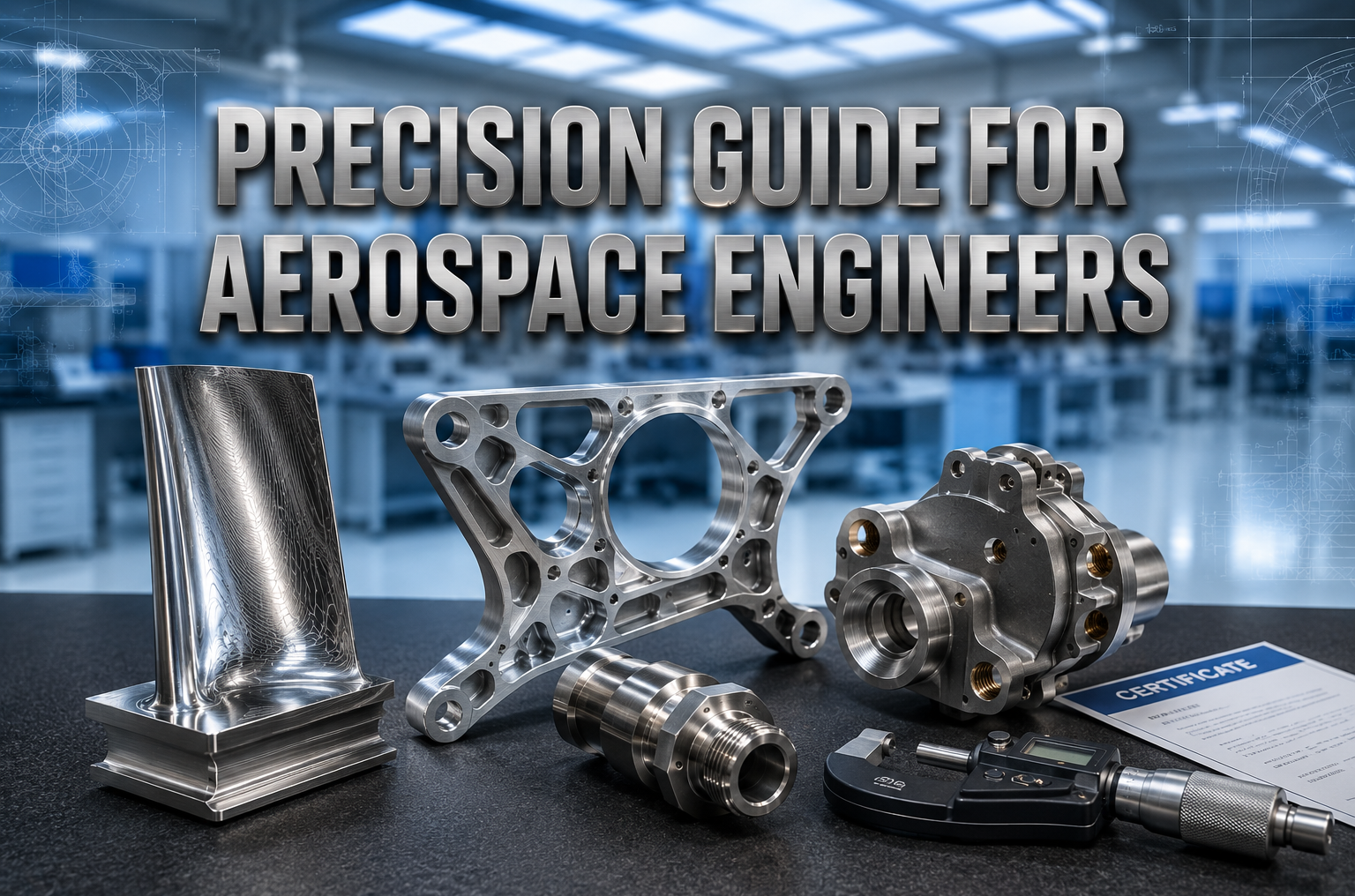
For instance, Aluminum 7075-T6 offers outstanding tensile strength. Its performance easily rivals many steel alloys while keeping density very low. However, it retains high residual internal stresses. As a result, it can warp or twist during high-speed machining. To prevent distortion, engineers must manage thermal energy carefully. Specifically, they use precise tool pathways and constant cooling methods.
What is Machinability in Aerospace Manufacturing?
Machinability is an engineering metric. Specifically, it measures the relative ease with which a material can be cut, drilled, or finished using standard machine tools. In a high-precision cnc custom aerospace context, technicians calculate this value based on cutting speed, tool wear acceleration, and chip formation. For instance, highly resilient materials like Inconel or Titanium Grade 5 have low machinability ratings. Therefore, they require specialized variable-helix carbide end mills and advanced tool coatings to prevent thermal damage to the workpiece.
Thermal Management and Work-Hardening Risks
In addition, specialized martensitic stainless steels like 17-4 PH provide great mechanical strength. They also resist oxidation at elevated temperatures. However, they exhibit severe work-hardening tendencies. This means the material hardens rapidly in front of the cutting tool. Consequently, it causes rapid tool wear and sudden tool breakage. For example, this happens if feed rates drop below critical safety thresholds during aerospace cnc machining runs.
Therefore, sourcing cnc custom aerospace parts requires a deep understanding of these metal behaviors. This knowledge helps maximize tool lifecycle efficiency. Moreover, it guarantees long-term dimensional stability. Machinists manage thermal expansion variables during cnc custom aerospace processes by adjusting cutting speeds. Additionally, they utilize high-pressure, through-spindle coolant delivery systems to flush heat away immediately.
To master these challenging metals, a professional aerospace precision machining provider must calibrate every cutting parameter carefully. These variables include surface speeds and radial depths of cut ($a_e$). Specifically, machinists base these inputs on empirical data from global standards bodies. For example, they follow guidelines from the National Institute of Standards and Technology (NIST). The comprehensive table below highlights materials common to aerospace parts cnc machining manufacturing:
| Material Grade | Tensile Strength (MPa) | Yield Strength (MPa) | Machinability Rating (%) | Typical Aerospace Applications | Common Finishing Services |
|---|---|---|---|---|---|
| Aluminum 7075-T6 | 572 | 503 | 70% | Structural frames, wing spars, avionics enclosures | Type III Hardcoat Anodizing, Chromate Conversion |
| Stainless Steel 17-4 PH | 1,100 | 1,000 | 45% | Hydraulic actuators, critical fasteners, engine mounts | Passivation, Electropolishing, Vacuum Heat Treating |
| Titanium Grade 5 (Ti-6Al-4V) | 950 | 880 | 22% | Compressor blades, landing gear, structural rings | Chemical Milling, Abrasive Blasting, Laser Etching |
| Stainless Steel 316L | 485 | 170 | 60% | Fuel delivery lines, exhaust collectors, sensors | Passivation, Electro-cleaning, Mechanical Mirror Polish |
Quality Standards and Inspection for Aerospace Machined Components
Automated Metrology and CMM Validation
Physical validation is just as critical as the actual machining process. This is especially true when manufacturing high-reliability precision aerospace cnc machined parts. Therefore, every component must feature comprehensive material traceability data. Additionally, production logs must include certified heat-treatment history and dimensional compliance profiles. For this reason, a professional precision facility operates under strict quality systems like ISO 9001:2015 to ensure total repeatability.
Furthermore, inspection protocols rely heavily on automated Coordinate Measuring Machines (CMM). Technicians calibrate these systems to microns. In addition, they house them inside enclosed metrology laboratories with strict humidity controls. These systems verify intricate geometric characteristics, including perpendicularity, cylindricity, and flatness profiles. Usually, they check tolerances down to ±0.005 mm or better. Consequently, this precise checking guarantees assembly accuracy.
Non-Destructive Testing and Traceability
Moreover, strict material traceability throughout the cnc custom aerospace production lifecycle mitigates operational risk. As a result, quality assurance inspectors can trace each completed assembly back to its original raw material heat lot. They also check the initial mill source certificate. Therefore, this deep visibility prevents counterfeit materials from entering the aerospace supply chain.
Additionally, factories implement non-destructive testing (NDT) workflows. For instance, they use liquid penetrant inspection and magnetic particle testing. These methods detect surface and subsurface micro-fractures. Such flaws could trigger fatigue cracking under intense operational pressures. However, finding them early saves components from unexpected failure during flight operations.
Standard Sourcing Documentation Packages
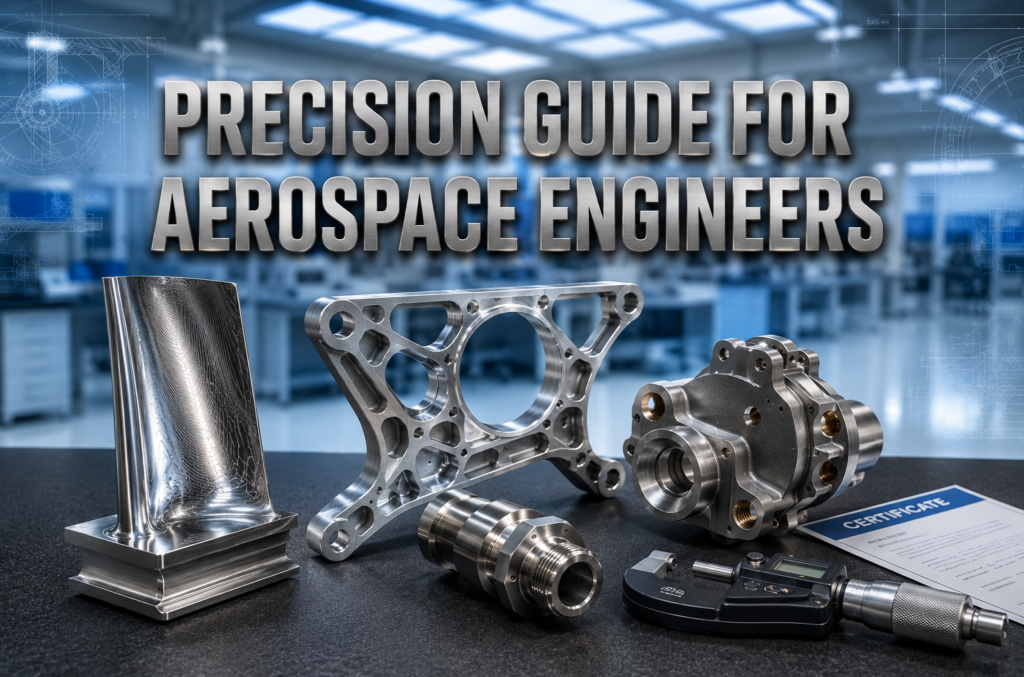
But technical documentation must remain comprehensive. Consequently, when procuring high-grade cnc custom aerospace components, sourcing managers must require extensive documentation packages. These deliverables include detailed Material Test Reports (MTRs). They also include First Article Inspection (FAI) reports that comply fully with AS9102 standards. Finally, the package must contain finishing certificates for chemical passivation or anodizing.
In accordance with strict aviation protocols outlined by regulatory bodies like SAE International, a thorough verification framework is mandatory. Therefore, sourcing from an established manufacturing plant solves this issue. A professional partner builds these verification steps directly into its standard manufacturing workflows. As a result, this integration eliminates component failures and prevents costly supply chain disruptions.
Connect with Our Engineering Experts for Technical Support
Navigating Global Sourcing: Evaluating China CNC Machining Suppliers
Technical Auditing and DFM Competency
Global procurement strategies frequently utilize the extensive manufacturing infrastructure found in china machining ecosystems. This approach helps optimize engineering budgets without compromising component precision. However, selecting a suitable vendor out of thousands of china cnc machining suppliers requires a systematic evaluation. Therefore, sourcing teams must audit technical competencies, communication clarity, and quality infrastructure carefully.
Specifically, a leading cnc custom aerospace vendor must offer more than basic cutting services. For example, they must provide expert Design for Manufacturability (DFM) analyses. They also need cross-functional engineering support to scale production seamlessly. This support covers everything from low-volume prototypes to mass production runs. Consequently, evaluating a cnc custom aerospace supplier involves checking their production capacity, machine rigidity, and multi-axis spindle counts.
Aligning with International Compliance Standards
In addition, optimizing the global supply chain for cnc custom aerospace parts requires collaboration with experienced manufacturers. These partners must understand international aerospace, defense, and environmental standards thoroughly. For example, companies like Boraco Machining, founded in 2013 in Dongguan, integrate advanced production hardware with certified quality workflows. This setup successfully bridges the gap between tight tolerances and competitive pricing.
By leveraging a comprehensive, vertically integrated cnc machining service, procurement professionals gain access to complete manufacturing solutions. These options include 4-axis and 5-axis milling, high-precision turning, and secondary finishing options within a single facility. When auditing potential partners, focus heavily on their experience with advanced aerospace metals. Furthermore, verify their compliance with environmental regulations like RoHS and CE directives.
Optimizing Design for Cost-Effective Aerospace CNC Machining
Implementing DFM for Internal Geometries
Controlling manufacturing costs in custom aerospace manufacturing programs requires early collaboration. Specifically, design engineers and production machinists must work together during the initial product design phase. High-precision cnc machining aerospace parts often incurs unnecessary expenses. Usually, this happens due to overly complex configurations that add no value to mechanical performance.
For example, deep internal cavities with sharp, right-angle corners force the use of small-diameter end mills. These tools require low material removal rates and extend cycle times significantly. However, design engineers can avoid this issue by implementing practical DFM guidelines. Consequently, they can optimize their cnc custom aerospace CAD files for faster, more economical production.
To illustrate, a typical cnc custom aerospace blueprint can be improved by designing internal corners with generous radii. These shapes should match standard milling tool profiles. As a result, this choice allows the use of larger, more rigid tools that remove material quickly. In addition, limiting cavity depth-to-width ratios to a maximum of 4:1 helps prevent tool deflection and preserves tool life. Therefore, reducing cycle times during cnc custom aerospace production also relies on relaxing tolerances on non-mating surfaces.
Managing Material Yield and Buy-to-Fly Ratios
Furthermore, procurement teams should analyze how component geometries impact raw material yields. This analysis focuses closely on the buy-to-fly ratio. When sourcing from aerospace machining companies, utilizing standard stock dimensions minimizes raw material waste. Moreover, avoiding thin-walled features prevents part deformation from clamping forces during production.
Bagging material waste helps lower overall costs. Consequently, implementing these smart manufacturing practices alongside an experienced production team ensures your complex designs remain technically sound. It also keeps them financially viable throughout both prototyping and full-scale manufacturing cycles. To learn more, explore our comprehensive precision product capabilities to see how we streamline complex production challenges.
Conclusion
In the high-stakes aerospace sector, balancing tight dimensional tolerances with cost-effective manufacturing requires technical expertise and advanced machinery. By choosing an experienced partner for your cnc custom aerospace needs, you ensure total compliance, absolute component traceability, and reliable mechanical performance under the harshest flight conditions.
Request a Precision Aerospace Quote from Boraco Machining Today
Frequently Asked Questions
Advanced aerospace manufacturing facilities regularly achieve linear tolerances down to ±0.005 mm and geometric tolerances within microns. When executing cnc custom aerospace milling, precision labs verify these critical dimensions using specialized CMM equipment in climate-controlled metrology environments.
High-performance cnc custom aerospace assemblies frequently utilize Titanium Grade 5 (Ti-6Al-4V) for its exceptional strength-to-weight ratio, along with Stainless Steel 17-4 PH for high-load actuators and Aluminum 7075-T6 for lightweight structural components.
Multi-axis setups for cnc custom aerospace components allow for single-setup machining of complex geometries. This eliminates the dimensional inaccuracies introduced by manual refixturing, dramatically improves geometric positioning accuracy, and reduces overall lead times.
A qualified cnc custom aerospace supplier must maintain ISO 9001:2015 certifications at a minimum, alongside compliance with AS9100 principles, environmental directives like RoHS, and international product conformity standards like CE.