Finding a reliable high-precision production partner can be challenging when tight tolerances and complex geometries cause manufacturing delays. This guide clarifies what CNC stands for in machining, details core subtractive manufacturing processes, and explains how partnering with an experienced CNC machining manufacturer streamlines your global supply chain.
Understanding CNC: Definition, Mechanics, and Fundamental Concepts
In modern manufacturing, CNC stands for Computer Numerical Control. It refers to the automated manipulation of machining tools—such as drills, lathes, mills, and routers—via microcomputers embedded within or linked to the machine tool controls. Before numerical control existed, conventional machining required manual operator adjustments using handwheels, levers, and physical templates. This introduced human variability, limited repetitive precision, and restricted production volume.
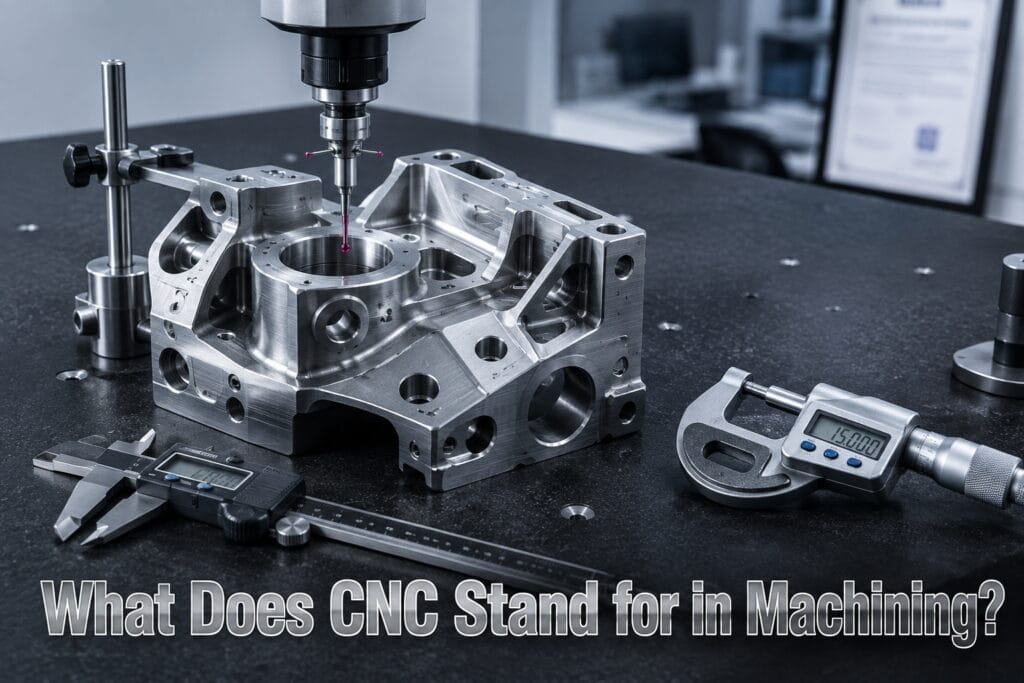
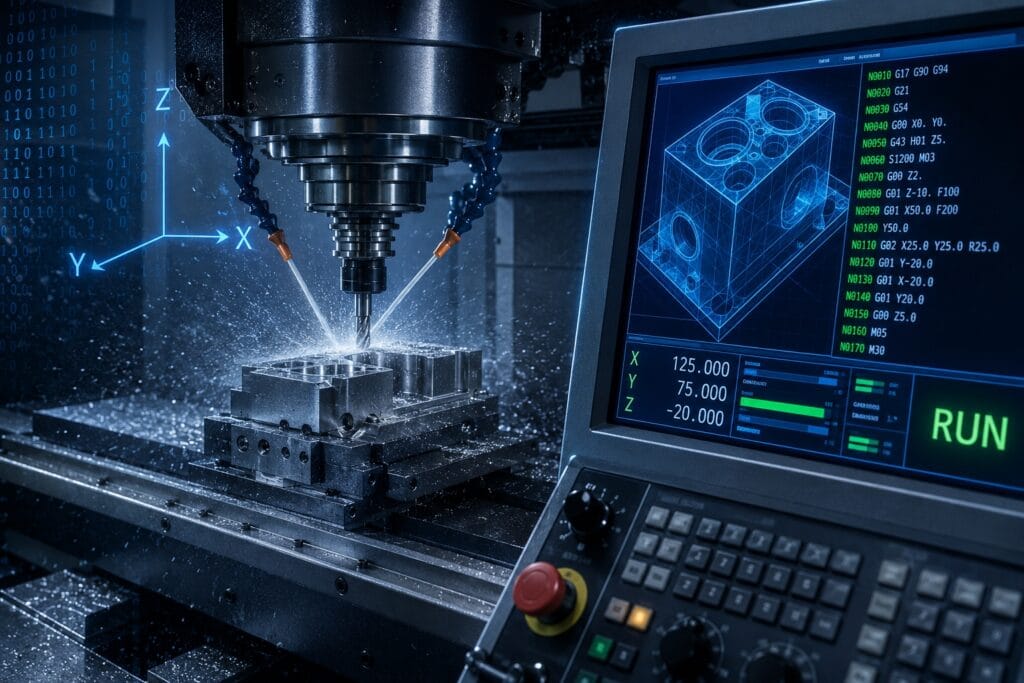
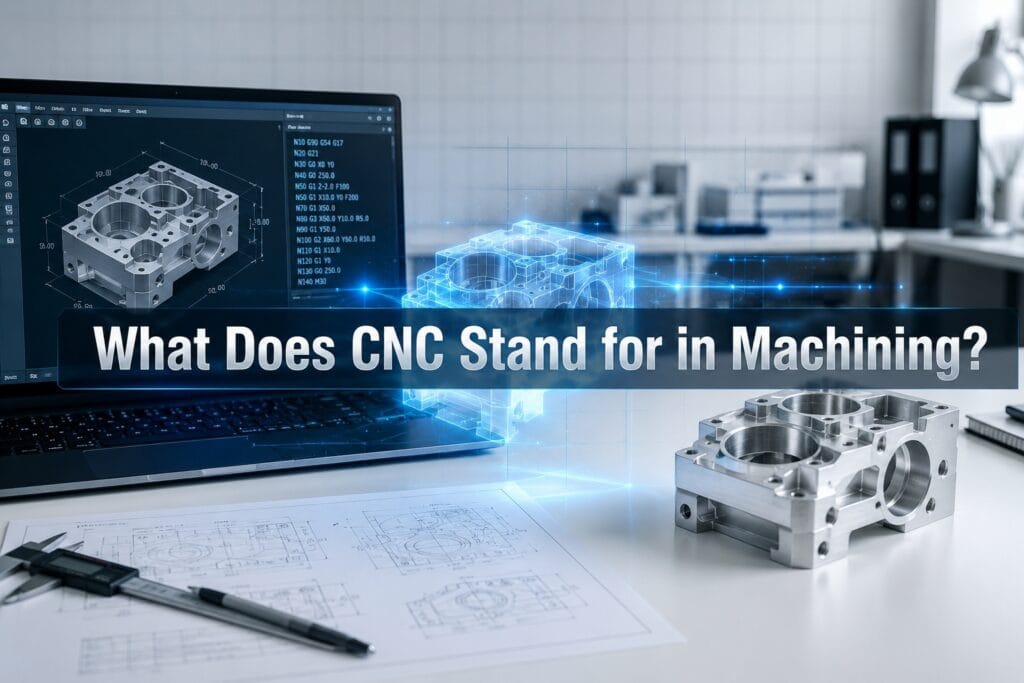
Computer Numerical Control replaces manual manipulation with digitized instructions. Operators and manufacturing engineers translate 3D CAD (Computer-Aided Design) models into numerical commands using CAM (Computer-Aided Manufacturing) software. These commands, typically rendered as standardized G-code and M-code programming, govern critical operational factors: tool velocity, rotational spindle speeds, tool pathways, feed rates, and coolant flow.
Technical Definition: What is G-Code and M-Code?
G-Code (Geometry Code) is the foundational programming language used in numerical control to direct the linear, arc, and rotational movements of machine axes (X, Y, Z, A, B, C). It defines coordinates, cutting speed, and interpolations. M-Code (Miscellaneous Code) manages non-geometric machine actions, including turning coolant supply on or off, executing tool changes, engaging secondary spindles, and signaling program pauses or stops.
By automating positioning and cutting parameters down to sub-micron accuracy, a professional custom CNC machining factory achieves exceptional repeatability across thousands of parts. Whether processing metallic alloys or technical polymers, computer control converts theoretical digital designs into precise physical components.
Core CNC Processes: Milling vs. Turning vs. Multi-Axis Machining
Subtractive manufacturing relies on removing excess material from a solid block or bar (known as the workpiece or billet) to achieve the desired shape. The two primary foundational operations are milling and turning, complemented by multi-axis dynamic configurations.
CNC Milling
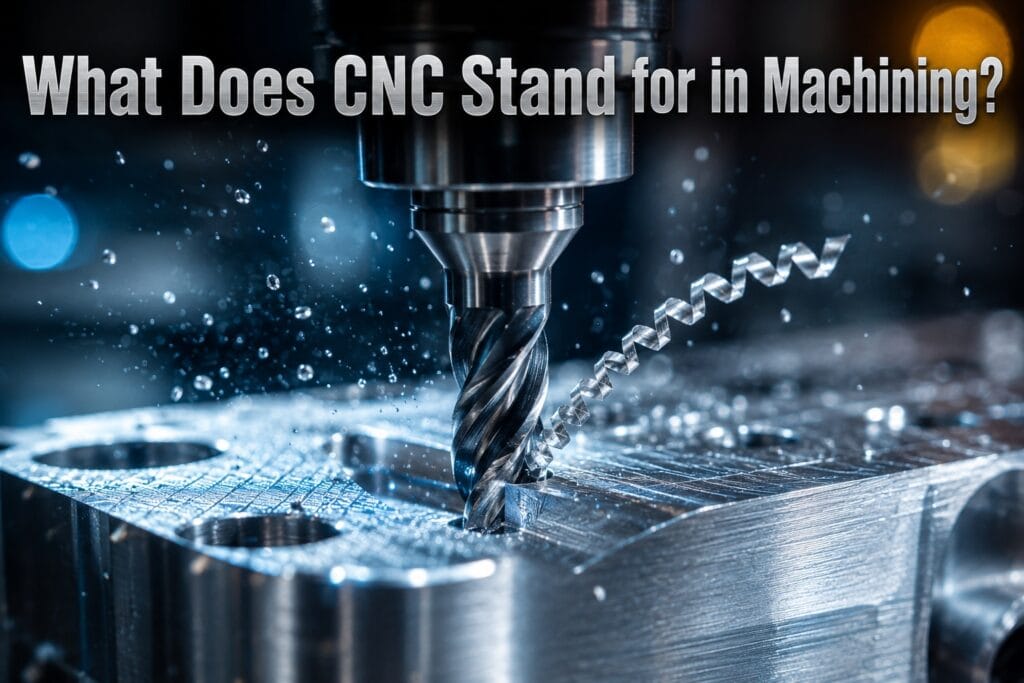
In a milling configuration, the workpiece remains secured on a fixed table or fixture, while a rotating multi-point cutting tool traverses multiple axes to shave off material. Milling excels at producing complex flat faces, pockets, keyways, threads, and complex 3D surface profiles. Advanced setups utilize high-speed spindles and variable-flute end mills to maintain chip load control while accelerating cycle times. For complex prismatic parts, utilizing tailored CNC milling services ensures proper chip evacuation and minimal thermal deformation.
CNC Turning
Unlike milling, turning rotates the workpiece at high speed on a spindle while a single-point cutting tool remains stationary or moves linearly along the axes to remove material. Turning is ideal for cylindrical, conical, or spherical geometries—such as drive shafts, bushings, flanges, and fittings. High-capability CNC turning services frequently incorporate live tooling options, allowing cross-drilling, tapping, and off-center milling within a single chuck setup to eliminate secondary handling errors.
4-Axis and 5-Axis Multi-Axis Machining
Standard machines operate across three linear axes (X, Y, and Z). Advanced precision CNC machining incorporates rotational axes (A, B, and C). A 5-axis machine can manipulate the tool or the workpiece along five distinct directions simultaneously. This multi-axis capability eliminates multiple fixturing setups, reduces compound alignment errors, and enables the production of deep pockets, impellers, and complex aerospace contours that are unmachinable on conventional equipment.
Essential Machining Materials and Engineering Standards
Selecting the appropriate material directly impacts component weight, mechanical strength, corrosion resistance, and total production cost. Modern precision facilities process structural metals, engineering plastics, and exotic alloys.
Machinability is a key metric evaluated by process engineers before tooling selection. Factors influencing machinability include material hardness, thermal conductivity, strain hardening tendencies, and chemical composition.
Technical Definition: What is Machinability?
Machinability describes how easily a material can be cut with a machine tool to achieve an acceptable surface finish and acceptable tool life. It is quantified relative to a benchmark material (such as AISI 1212 steel, rated at 100%). High machinability (>100%) indicates low tool wear, low cutting forces, and clean chip formation; low machinability requires specialized carbide/PVD-coated tooling, lower cutting speeds, and controlled high-pressure coolant strategies.
Engineering teams analyze physical specifications alongside industry benchmark guidelines, such as those established by ISO International Standards and ASTM International, to ensure target parts meet regulatory and mechanical demands. The table below outlines common stock materials processed by a full-service CNC machining supplier:
| Material Category | Common Grades | Tensile Strength (MPa) | Machinability Index (%) | Typical Industrial Applications |
|---|---|---|---|---|
| Aluminum Alloys | 6061-T6, 7075-T6, 2024 | 310 – 570 | 100% – 200% (High) | Aerospace housings, automotive brackets, heat sinks |
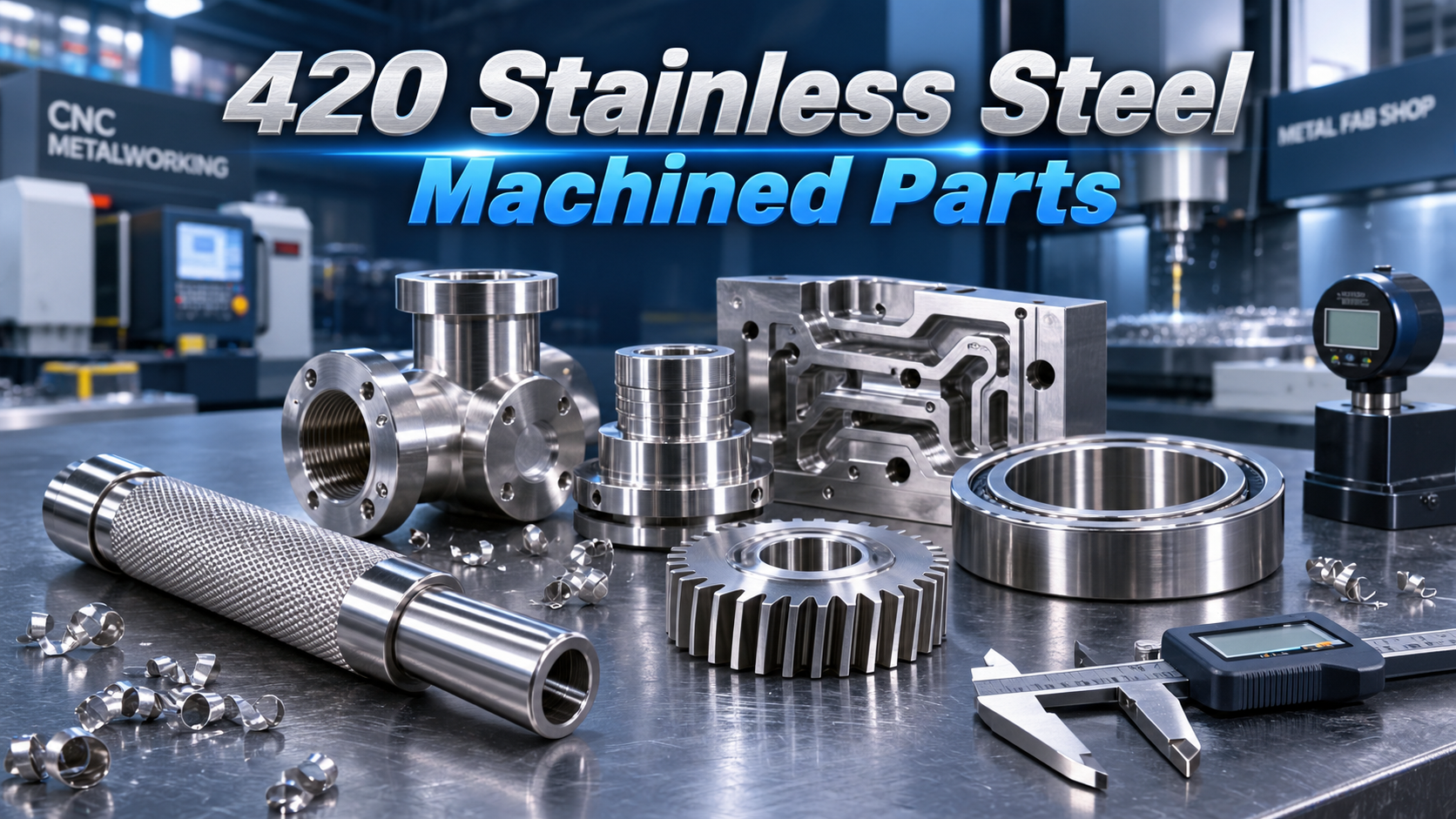
| Steels & Stainless | 1045, 4140, 304, 316L | 500 – 1000+ | 45% – 75% (Moderate) | Surgical instruments, shafts, industrial valves |
| Brass & Copper | C36000, C11000 | 340 – 450 | 100% – 140% (High) | Electrical connectors, plumbing fittings, bushings |
| Titanium Alloys | Grade 5 (Ti-6Al-4V) | 900 – 1000 | 20% – 30% (Low) | Medical implants, jet engine components |
| Engineering Plastics | POM (Delrin), PEEK, PTFE | 50 – 100 | Varies (High heat sensitivity) | Insulators, wear pads, fluid manifolds |
How Precision CNC Manufacturing Serves Demanding Industries
High-end manufacturing sectors rely on stringent dimensional control, verified material traceability, and repeatable quality management systems. A reliable CNC machining factory China supports rigorous global standards across diverse markets.
Aerospace and Aviation
Aerospace applications demand high strength-to-weight ratios and structural integrity under extreme temperature variations. Utilizing aerospace CNC machining methodologies, shops produce engine brackets, structural airframe nodes, and avionics enclosures out of 7075-T6 aluminum and titanium Grade 5. Precision levels must often satisfy strict geometric dimensioning and tolerancing (GD&T) down to ±0.005 mm.
Automotive and Transportation
The automotive industry requires rapid transitions from functional prototype testing to mass volume supply chains. High-level automotive machining covers engine blocks, custom gearbox housings, suspension arms, and EV battery tray connectors. Repeatability ensures every production lot fits seamlessly into automated assembly lines.
Medical and Life Sciences
Medical devices require biocompatibility, ultra-smooth surface finishes, and zero contamination risks. Machining implantable orthopedic screws, surgical drill guides, and diagnostic equipment housings involves biocompatible stainless steels (316L) and specialized polymers (PEEK). Strict quality protocols prevent burr formation and surface degradation during processing.
Electronics and Industrial Machinery
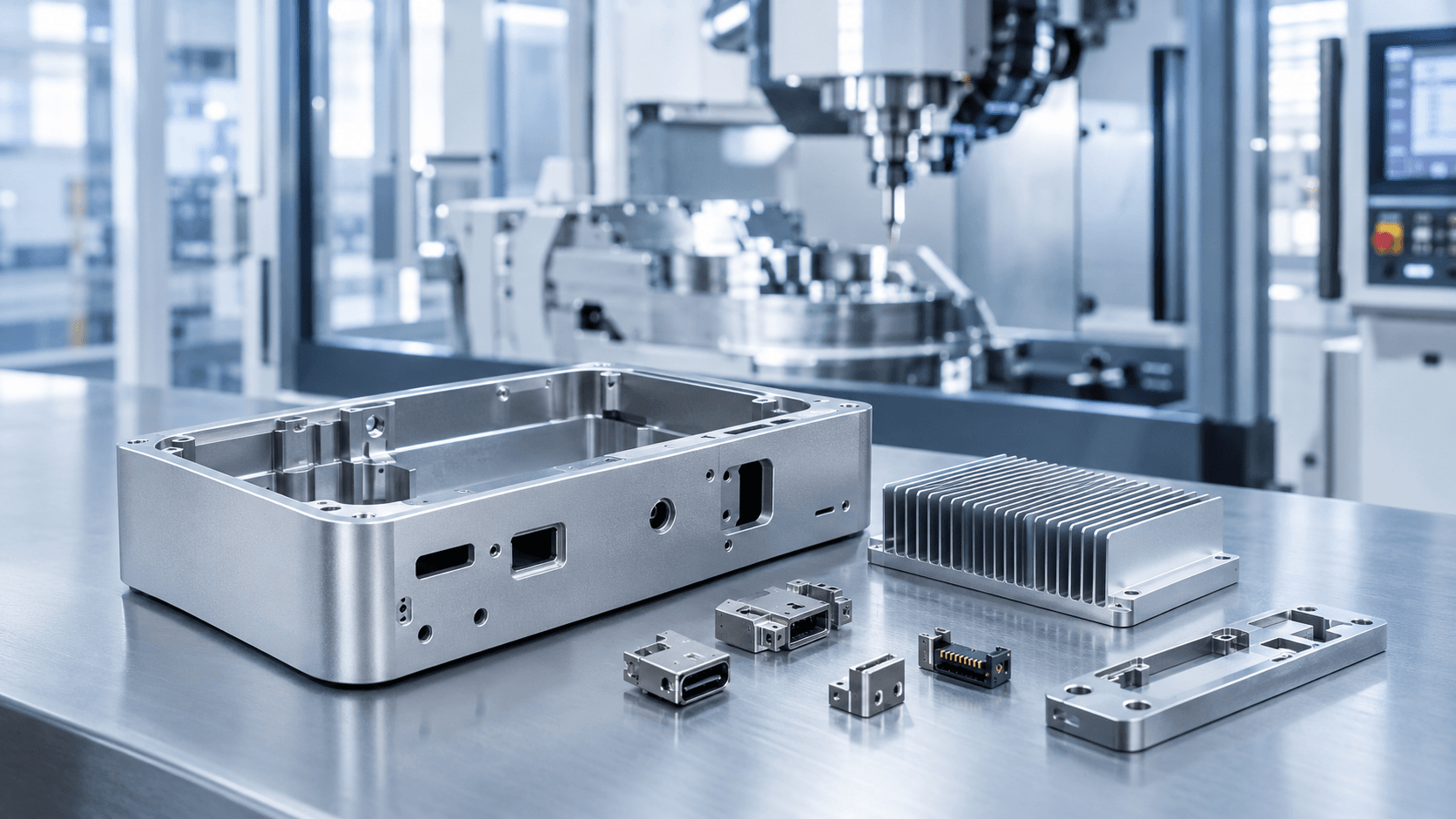
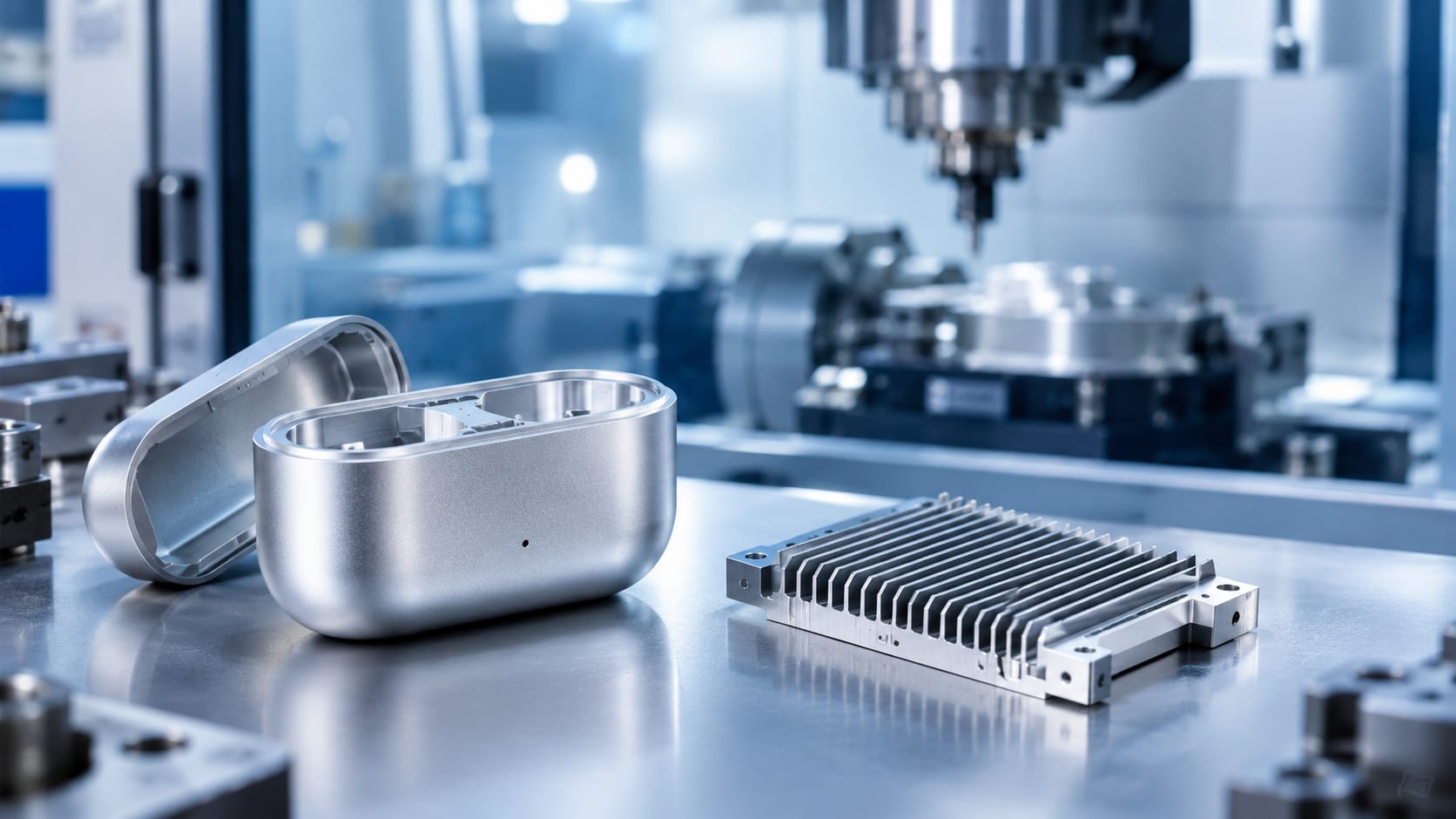
From custom aluminum enclosures providing EMI/RFI shielding to heavy-duty hydraulic manifold blocks, CNC machining electronics components demand burr-free passages, precise thread depth control, and cosmetic surface treatments like anodizing, plating, or bead blasting.
Selecting the Right CNC Machining Supplier in China
Global procurement managers often seek an established CNC machining supplier to balance cost efficiency, speed, and engineering precision. Sourcing high-value CNC machining parts from a verified China CNC machining hub offers substantial supply chain advantages, provided you evaluate candidates systematically.
Key selection criteria when evaluating a China CNC machining facility include:
- Certified Quality Systems: Verify active ISO 9001:2015, CE, or RoHS compliance to guarantee consistent quality management and environmental safety standards.
- Advanced Metrology Equipment: Confirm the factory uses calibrated Coordinate Measuring Machines (CMM), optical profilers, and thread gages to validate dimensions against your technical drawings.
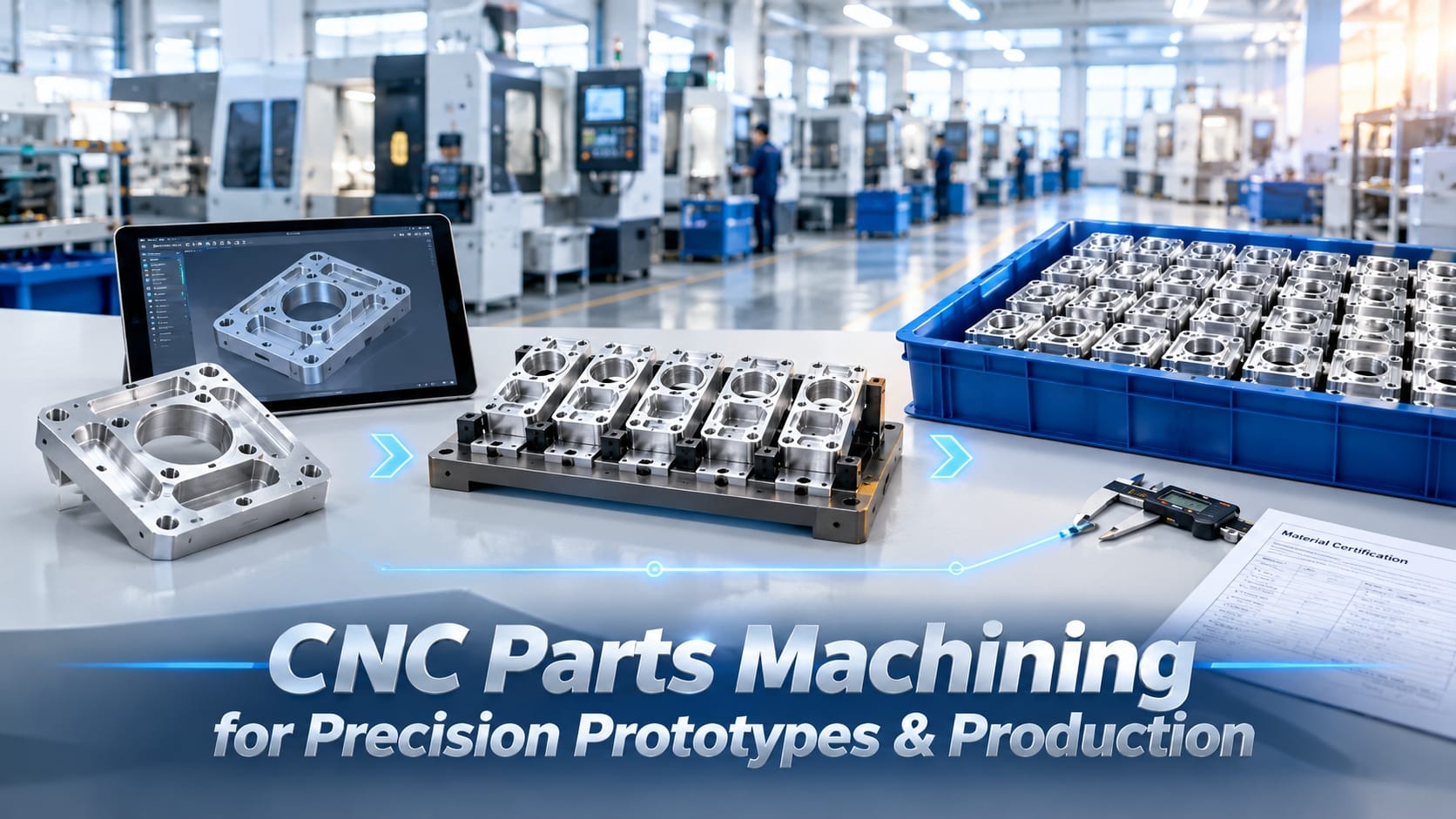
- Flexible Production Capacities: Ensure the facility seamlessly scales from CNC prototype machining and low volume CNC machining to full-scale mass manufacturing.
- In-House Surface Finishing: Facilities providing comprehensive post-processing (anodizing, electroplating, passivation, powder coating) minimize lead times and logistical overhead.
To accelerate project execution and reduce unit costs, buyers should partner with an established partner like Boraco Machining. Their 2,000 sqm production facility in Dongguan, China housing 4-axis and 5-axis machines allows engineering teams to optimize setups and transition smoothly from initial prototypes to full production runs.
Frequently Asked Questions (FAQ)
CNC stands for Computer Numerical Control. It refers to the automated control of machining tools via programmed software instructions, eliminating manual operational variations and delivering ultra-precise component fabrication.
In CNC milling, a rotary cutting tool removes material from a fixed workpiece held in a vice or fixture. In CNC turning, the workpiece rotates on a spindle while a stationary single-point cutting tool shapes the material along linear axes.
Partnering with an established China CNC machining factory provides cost-effective rapid prototyping, advanced multi-axis infrastructure, fast turnarounds, and seamless scalability from low-volume custom runs to large-scale mass production.
Standard industrial precision CNC machining achieves tolerances between ±0.01 mm and ±0.05 mm. Controlled multi-axis setups and climate-controlled metrology environments can achieve specialized tolerances down to ±0.002 mm.
Conclusion
Understanding what CNC stands for in machining highlights the crucial balance between digital programming, material selection, and multi-axis machinery in modern subtractive manufacturing. Partnering with a capable, quality-certified manufacturer ensures your critical components meet strict technical parameters without exceeding project budgets.
Ready to streamline your next manufacturing project with tight-tolerance precision components? Contact Boraco Machining today to upload your 3D CAD files and receive a fast, competitive quote from our engineering team.