Mon - Fri: 9:00 - 17:30

Online store always open

+86 15386139826

24/7 Customer Support

aout@BoracoMachining.com

Personalized service

Industry Standard

ISO 9001

Factory strength

2000

Engineering team

150+

CNC machining equipment

50+

Blog

FAQs

Find quick answers to common plumbing questions, services, and customer enquiries here.

CNC machining
What is CNC machining?

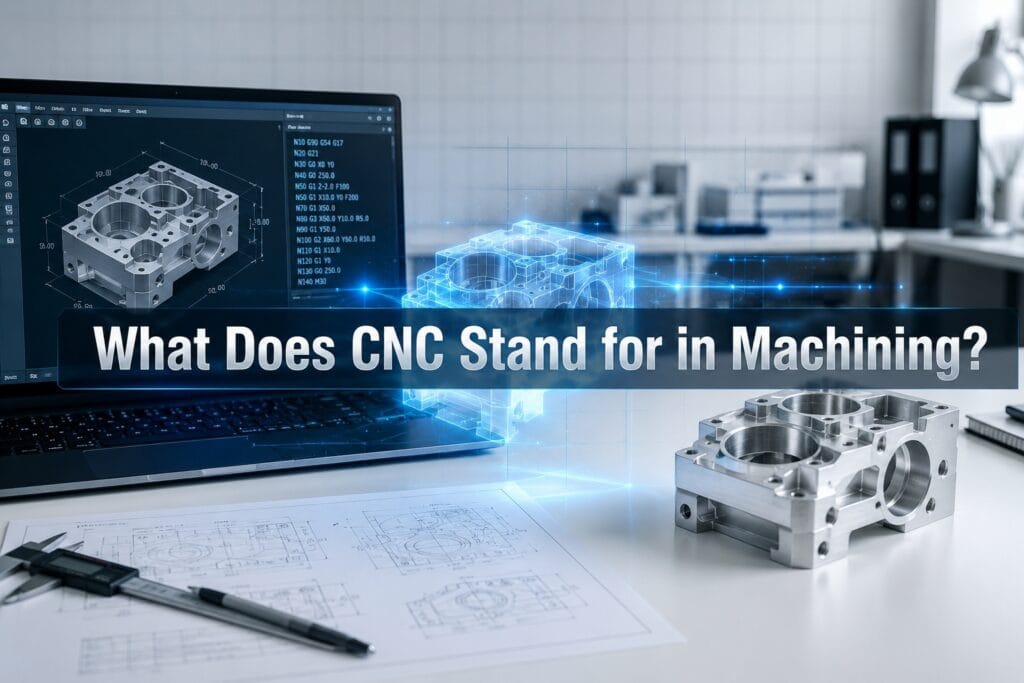
CNC machining (Computer Numerical Control machining) is a manufacturing process that uses pre-programmed computer software to control machine tools. These machines—such as mills, lathes, and routers—automatically cut, shape, and finish materials like metal or plastic with high precision.

By following coded instructions (G-code), CNC machines can produce complex parts with tight tolerances, typically up to ±0.005 mm. This makes CNC machining widely used in industries such as aerospace, automotive, medical devices, and electronics.

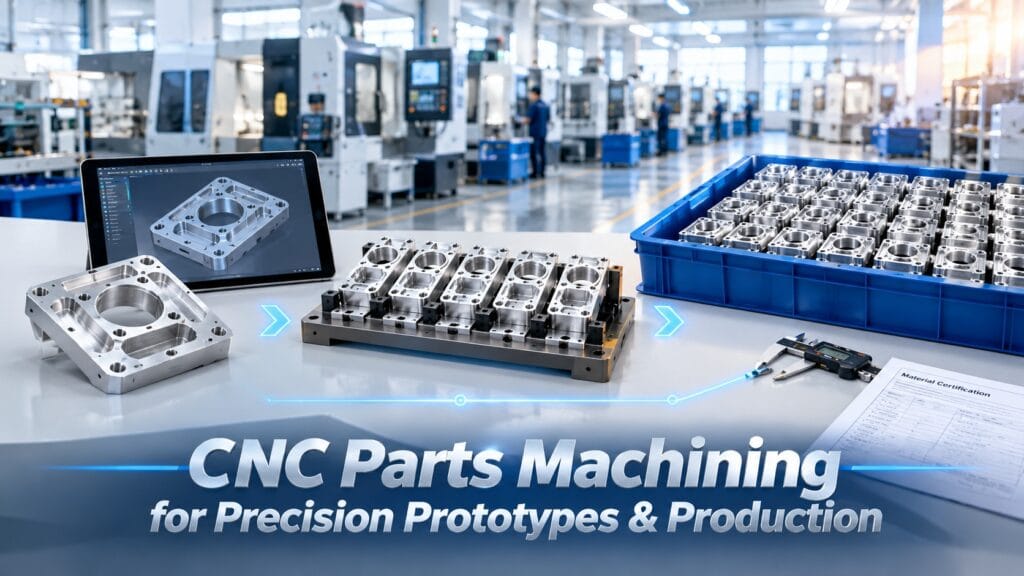
CNC machining operates through a digital workflow that connects design and production:

A part is designed using CAD (Computer-Aided Design) software
The design is converted into toolpaths using CAM (Computer-Aided Manufacturing) software
The toolpaths are translated into machine-readable G-code
The CNC machine executes the instructions to remove material and create the final part

This automated process ensures high consistency, reduces human error, and enables efficient production of both prototypes and large batches.


CNC machining offers several key advantages over traditional manufacturing methods:

High precision and repeatability – Ideal for tight tolerances and complex geometries
Automation and efficiency – Minimizes manual labor and reduces production errors
Flexibility – Suitable for rapid prototyping and low-to-medium volume production with no minimum order quantity (MOQ)
Wide material compatibility – Works with aluminum, steel, stainless steel, titanium, and engineering plastics
Scalability – Supports multi-axis machining (3-axis, 4-axis, and 5-axis) for complex parts

These benefits make CNC machining a core technology in modern precision manufacturing.

Differences between CNC machining


The main difference between CNC milling and CNC turning lies in how the material is shaped:

CNC milling uses rotating cutting tools to remove material from a stationary workpiece, making it ideal for complex geometries, slots, and flat surfaces
CNC turning rotates the workpiece while a fixed cutting tool removes material, making it best for cylindrical or round parts such as shafts, bushings, and threads

If your part has intricate features or multiple faces, CNC milling is typically the better choice. For high-efficiency production of round components, CNC turning is more cost-effective.

Not sure which process fits your design? Send us your drawings, and our engineers will recommend the most efficient machining solution within 24 hours.


The difference between 3-axis, 4-axis, and 5-axis CNC machining comes down to the number of movement directions available during machining:

3-axis machining operates along X, Y, and Z axes, suitable for simpler parts and standard geometries
4-axis machining adds rotational movement, allowing machining on multiple sides without repositioning
5-axis machining enables full multi-directional cutting, ideal for highly complex parts with tight tolerances

Higher-axis machines reduce setup time, improve accuracy, and allow more complex designs—but they may also increase cost depending on part complexity.

Need help balancing cost and precision? Our team can optimize your design for the right machining strategy to reduce cost while maintaining performance.


The key difference between CNC machining and traditional (manual) machining is automation and precision:

CNC machining is controlled by computer programs, ensuring high accuracy, repeatability, and efficiency
Traditional machining relies on manual operation, which is more dependent on operator skill and less consistent for complex or high-volume parts

CNC machining is ideal for industries requiring tight tolerances, scalability, and repeatable quality, while traditional machining may still be used for simple, low-precision tasks.

Looking for a reliable CNC machining partner? We provide high-precision machining (±0.005 mm), no MOQ, and fast turnaround for both prototypes and production runs—contact us today for a free quote.

CNC machining services

China offers significant cost advantages in CNC machining due to its mature manufacturing ecosystem, optimized supply chains, and competitive labor structure. With access to large-scale raw material sourcing and advanced automation, Chinese manufacturers can reduce production costs without compromising quality.

In addition, many factories support no minimum order quantity (MOQ), allowing buyers to start with prototypes or small batches before scaling up—minimizing financial risk.

Looking to reduce your machining costs without sacrificing precision? Send us your drawings for a fast, competitive quote tailored to your project.

China’s top CNC machining suppliers maintain high quality standards through advanced equipment (3-axis to 5-axis machines), strict quality control systems, and experienced engineering teams. Many manufacturers follow international standards such as ISO 9001 and implement full inspection processes, including CMM (Coordinate Measuring Machine) verification.

With over a decade of industry experience, leading factories can consistently achieve tight tolerances (e.g., ±0.005 mm) and deliver reliable results across industries like aerospace, automotive, and medical devices.

Need high-precision parts with guaranteed quality? Contact our engineering team to discuss your specifications and quality requirements.

Choosing a Chinese CNC machining supplier provides a strong combination of speed, scalability, and technical capability. China’s manufacturing infrastructure enables fast turnaround times—from rapid prototyping to mass production—supported by a wide range of machining technologies and material options.

Still waiting?

Contact boraco
immediately